Compare commits
69 Commits
| Author | SHA1 | Date | |
|---|---|---|---|
| e07227194b | |||
| 0a47cf5ee1 | |||
| 69fbc5ad1f | |||
| ce6bd0c96d | |||
| f5d7005e6c | |||
| 9961c1e2ef | |||
| 33be7526c7 | |||
| 4f3b671e47 | |||
| 84f485620c | |||
| c8245f3440 | |||
| aed907958d | |||
| 06923cd1f6 | |||
| 23831668c1 | |||
| 4b7f2579a8 | |||
| 9441bd723f | |||
| a94a228cb4 | |||
| a908bd6a8f | |||
| 6f05eb9b69 | |||
| 731ef69eae | |||
| cff8ea1434 | |||
| 3fd77edecd | |||
| d3b543c2a2 | |||
| ee4bb97ab7 | |||
| 4e79835b34 | |||
| 6701726ba5 | |||
| 28ca655217 | |||
| d5c5390acf | |||
| 736b554691 | |||
| f834c62ffb | |||
| 558ca593f3 | |||
| c98b828950 | |||
| 3934cd7601 | |||
| 6aafb42f2f | |||
| ee268535f6 | |||
| aaa413db3b | |||
| feb497a9e8 | |||
| 1c77f95312 | |||
| bde44f9df4 | |||
| 9d9431109b | |||
| 08a6ac3fc7 | |||
| 84cc3e2c8a | |||
| bb3e7f4719 | |||
| 25162c98ec | |||
| d21d3677a6 | |||
| 514f9232a0 | |||
| b0f7296dde | |||
| db7149da1c | |||
| 5252b7bc93 | |||
| 31d1afcb19 | |||
| 4abf23d34d | |||
| 88e4051afc | |||
| c16572b6e2 | |||
| 339c05bb88 | |||
| ac16efe289 | |||
| 4448391244 | |||
| 946e9473a9 | |||
| 63b1be4f37 | |||
| d779f88149 | |||
| 5be35f270c | |||
| 96f6244336 | |||
| eef726258d | |||
| f8fcbc6bd7 | |||
| e9bf75156e | |||
| e5b013ea41 | |||
| e4c935835f | |||
| c9453daf28 | |||
| b2ea92d36d | |||
| b1563c8411 | |||
| eedd92d711 |

@ -1,245 +0,0 @@
|
||||
trigger:
|
||||
batch: true
|
||||
branches:
|
||||
include:
|
||||
- devel
|
||||
- stable-*
|
||||
|
||||
pr:
|
||||
autoCancel: true
|
||||
branches:
|
||||
include:
|
||||
- devel
|
||||
- stable-*
|
||||
|
||||
schedules:
|
||||
- cron: 0 7 * * *
|
||||
displayName: Nightly
|
||||
always: true
|
||||
branches:
|
||||
include:
|
||||
- devel
|
||||
- stable-*
|
||||
|
||||
variables:
|
||||
- name: checkoutPath
|
||||
value: ansible
|
||||
- name: coverageBranches
|
||||
value: devel
|
||||
- name: entryPoint
|
||||
value: .azure-pipelines/commands/entry-point.sh
|
||||
- name: fetchDepth
|
||||
value: 500
|
||||
- name: defaultContainer
|
||||
value: quay.io/ansible/azure-pipelines-test-container:6.0.0
|
||||
|
||||
pool: Standard
|
||||
|
||||
stages:
|
||||
- stage: Sanity
|
||||
dependsOn: []
|
||||
jobs:
|
||||
- template: templates/matrix.yml
|
||||
parameters:
|
||||
nameFormat: Test {0}
|
||||
testFormat: sanity/{0}
|
||||
targets:
|
||||
- test: 1
|
||||
- test: 2
|
||||
- stage: Units
|
||||
dependsOn: []
|
||||
jobs:
|
||||
- template: templates/matrix.yml
|
||||
parameters:
|
||||
nameFormat: Python {0}
|
||||
testFormat: units/{0}
|
||||
targets:
|
||||
- test: 3.8
|
||||
- test: 3.9
|
||||
- test: '3.10'
|
||||
- test: 3.11
|
||||
- test: 3.12
|
||||
- test: 3.13
|
||||
- stage: Windows
|
||||
dependsOn: []
|
||||
jobs:
|
||||
- template: templates/matrix.yml
|
||||
parameters:
|
||||
nameFormat: Server {0}
|
||||
testFormat: windows/{0}/1
|
||||
targets:
|
||||
- name: 2016 WinRM HTTP
|
||||
test: 2016/winrm/http
|
||||
- name: 2019 WinRM HTTPS
|
||||
test: 2019/winrm/https
|
||||
- name: 2022 WinRM HTTPS
|
||||
test: 2022/winrm/https
|
||||
- name: 2022 PSRP HTTP
|
||||
test: 2022/psrp/http
|
||||
- name: 2022 SSH Key
|
||||
test: 2022/ssh/key
|
||||
- name: 2025 PSRP HTTP
|
||||
test: 2025/psrp/http
|
||||
- name: 2025 SSH Key
|
||||
test: 2025/ssh/key
|
||||
- stage: Remote
|
||||
dependsOn: []
|
||||
jobs:
|
||||
- template: templates/matrix.yml # context/target
|
||||
parameters:
|
||||
targets:
|
||||
- name: macOS 15.3
|
||||
test: macos/15.3
|
||||
- name: RHEL 9.5 py39
|
||||
test: rhel/9.5@3.9
|
||||
- name: RHEL 9.5 py312
|
||||
test: rhel/9.5@3.12
|
||||
- name: RHEL 10.0
|
||||
test: rhel/10.0
|
||||
- name: FreeBSD 13.5
|
||||
test: freebsd/13.5
|
||||
- name: FreeBSD 14.2
|
||||
test: freebsd/14.2
|
||||
groups:
|
||||
- 1
|
||||
- 2
|
||||
- template: templates/matrix.yml # context/controller
|
||||
parameters:
|
||||
targets:
|
||||
- name: macOS 15.3
|
||||
test: macos/15.3
|
||||
- name: RHEL 9.5
|
||||
test: rhel/9.5
|
||||
- name: RHEL 10.0
|
||||
test: rhel/10.0
|
||||
- name: FreeBSD 13.5
|
||||
test: freebsd/13.5
|
||||
- name: FreeBSD 14.2
|
||||
test: freebsd/14.2
|
||||
groups:
|
||||
- 3
|
||||
- 4
|
||||
- 5
|
||||
- template: templates/matrix.yml # context/controller (ansible-test container management)
|
||||
parameters:
|
||||
targets:
|
||||
- name: Alpine 3.21
|
||||
test: alpine/3.21
|
||||
- name: Fedora 41
|
||||
test: fedora/41
|
||||
- name: RHEL 9.5
|
||||
test: rhel/9.5
|
||||
- name: RHEL 10.0
|
||||
test: rhel/10.0
|
||||
- name: Ubuntu 24.04
|
||||
test: ubuntu/24.04
|
||||
groups:
|
||||
- 6
|
||||
- stage: Docker
|
||||
dependsOn: []
|
||||
jobs:
|
||||
- template: templates/matrix.yml # context/target
|
||||
parameters:
|
||||
testFormat: linux/{0}
|
||||
targets:
|
||||
- name: Alpine 3.21
|
||||
test: alpine321
|
||||
- name: Fedora 41
|
||||
test: fedora41
|
||||
- name: Ubuntu 22.04
|
||||
test: ubuntu2204
|
||||
- name: Ubuntu 24.04
|
||||
test: ubuntu2404
|
||||
groups:
|
||||
- 1
|
||||
- 2
|
||||
- template: templates/matrix.yml # context/controller
|
||||
parameters:
|
||||
testFormat: linux/{0}
|
||||
targets:
|
||||
- name: Alpine 3.21
|
||||
test: alpine321
|
||||
- name: Fedora 41
|
||||
test: fedora41
|
||||
- name: Ubuntu 24.04
|
||||
test: ubuntu2404
|
||||
groups:
|
||||
- 3
|
||||
- 4
|
||||
- 5
|
||||
- template: templates/matrix.yml # context/target (dnf-oldest, dnf-latest)
|
||||
parameters:
|
||||
testFormat: linux/{0}
|
||||
targets:
|
||||
- name: Fedora 41
|
||||
test: fedora41
|
||||
groups:
|
||||
- 7
|
||||
- stage: Galaxy
|
||||
dependsOn: []
|
||||
jobs:
|
||||
- template: templates/matrix.yml
|
||||
parameters:
|
||||
nameFormat: Python {0}
|
||||
testFormat: galaxy/{0}/1
|
||||
targets:
|
||||
- test: 3.11
|
||||
- test: 3.12
|
||||
- test: 3.13
|
||||
- stage: Generic
|
||||
dependsOn: []
|
||||
jobs:
|
||||
- template: templates/matrix.yml
|
||||
parameters:
|
||||
nameFormat: Python {0}
|
||||
testFormat: generic/{0}/1
|
||||
targets:
|
||||
- test: 3.11
|
||||
- test: 3.12
|
||||
- test: 3.13
|
||||
- stage: Incidental_Windows
|
||||
displayName: Incidental Windows
|
||||
dependsOn: []
|
||||
jobs:
|
||||
- template: templates/matrix.yml
|
||||
parameters:
|
||||
nameFormat: Server {0}
|
||||
testFormat: i/windows/{0}
|
||||
targets:
|
||||
- name: 2016 WinRM HTTP
|
||||
test: 2016/winrm/http
|
||||
- name: 2019 WinRM HTTPS
|
||||
test: 2019/winrm/https
|
||||
- name: 2022 WinRM HTTPS
|
||||
test: 2022/winrm/https
|
||||
- name: 2022 PSRP HTTP
|
||||
test: 2022/psrp/http
|
||||
- name: 2022 SSH Key
|
||||
test: 2022/ssh/key
|
||||
- name: 2025 PSRP HTTP
|
||||
test: 2025/psrp/http
|
||||
- name: 2025 SSH Key
|
||||
test: 2025/ssh/key
|
||||
- stage: Incidental
|
||||
dependsOn: []
|
||||
jobs:
|
||||
- template: templates/matrix.yml
|
||||
parameters:
|
||||
testFormat: i/{0}/1
|
||||
targets:
|
||||
- name: IOS Python
|
||||
test: ios/csr1000v/
|
||||
- stage: Summary
|
||||
condition: succeededOrFailed()
|
||||
dependsOn:
|
||||
- Sanity
|
||||
- Units
|
||||
- Windows
|
||||
- Remote
|
||||
- Docker
|
||||
- Galaxy
|
||||
- Generic
|
||||
- Incidental_Windows
|
||||
- Incidental
|
||||
jobs:
|
||||
- template: templates/coverage.yml
|
||||
@ -1 +0,0 @@
|
||||
remote.sh
|
||||
@ -1,34 +0,0 @@
|
||||
#!/usr/bin/env bash
|
||||
|
||||
set -o pipefail -eux
|
||||
|
||||
declare -a args
|
||||
IFS='/:' read -ra args <<< "$1"
|
||||
|
||||
cloud="${args[0]}"
|
||||
python="${args[1]}"
|
||||
group="${args[2]}"
|
||||
|
||||
target="shippable/${cloud}/group${group}/"
|
||||
|
||||
stage="${S:-prod}"
|
||||
|
||||
changed_all_target="shippable/${cloud}/smoketest/"
|
||||
|
||||
if ! ansible-test integration "${changed_all_target}" --list-targets > /dev/null 2>&1; then
|
||||
# no smoketest tests are available for this cloud
|
||||
changed_all_target="none"
|
||||
fi
|
||||
|
||||
if [ "${group}" == "1" ]; then
|
||||
# only run smoketest tests for group1
|
||||
changed_all_mode="include"
|
||||
else
|
||||
# smoketest tests already covered by group1
|
||||
changed_all_mode="exclude"
|
||||
fi
|
||||
|
||||
# shellcheck disable=SC2086
|
||||
ansible-test integration --color -v --retry-on-error "${target}" ${COVERAGE:+"$COVERAGE"} ${CHANGED:+"$CHANGED"} ${UNSTABLE:+"$UNSTABLE"} \
|
||||
--remote-terminate always --remote-stage "${stage}" \
|
||||
--docker --python "${python}" --changed-all-target "${changed_all_target}" --changed-all-mode "${changed_all_mode}"
|
||||
@ -1,62 +0,0 @@
|
||||
#!/usr/bin/env bash
|
||||
|
||||
set -o pipefail -eux
|
||||
|
||||
declare -a args
|
||||
IFS='/:' read -ra args <<< "$1"
|
||||
|
||||
script="${args[0]}"
|
||||
|
||||
test="$1"
|
||||
|
||||
docker images
|
||||
docker ps
|
||||
|
||||
for container in $(docker ps --format '{{.Image}} {{.ID}}' | grep -v -e '^quay.io/ansible/azure-pipelines-test-container:' | sed 's/^.* //'); do
|
||||
docker rm -f "${container}" || true # ignore errors
|
||||
done
|
||||
|
||||
docker ps
|
||||
|
||||
export PATH="${PWD}/bin:${PATH}"
|
||||
export PYTHONIOENCODING='utf-8'
|
||||
|
||||
if [ -n "${COVERAGE:-}" ]; then
|
||||
# on-demand coverage reporting triggered by setting the COVERAGE environment variable to a non-empty value
|
||||
export COVERAGE="--coverage"
|
||||
elif [[ "${COMMIT_MESSAGE}" =~ ci_coverage ]]; then
|
||||
# on-demand coverage reporting triggered by having 'ci_coverage' in the latest commit message
|
||||
export COVERAGE="--coverage"
|
||||
else
|
||||
# on-demand coverage reporting disabled (default behavior, always-on coverage reporting remains enabled)
|
||||
export COVERAGE="--coverage-check"
|
||||
fi
|
||||
|
||||
if [ -n "${COMPLETE:-}" ]; then
|
||||
# disable change detection triggered by setting the COMPLETE environment variable to a non-empty value
|
||||
export CHANGED=""
|
||||
elif [[ "${COMMIT_MESSAGE}" =~ ci_complete ]]; then
|
||||
# disable change detection triggered by having 'ci_complete' in the latest commit message
|
||||
export CHANGED=""
|
||||
else
|
||||
# enable change detection (default behavior)
|
||||
export CHANGED="--changed"
|
||||
fi
|
||||
|
||||
if [ "${IS_PULL_REQUEST:-}" == "true" ]; then
|
||||
# run unstable tests which are targeted by focused changes on PRs
|
||||
export UNSTABLE="--allow-unstable-changed"
|
||||
else
|
||||
# do not run unstable tests outside PRs
|
||||
export UNSTABLE=""
|
||||
fi
|
||||
|
||||
if [[ "${COVERAGE:-}" == "--coverage" ]]; then
|
||||
timeout=60
|
||||
else
|
||||
timeout=50
|
||||
fi
|
||||
|
||||
ansible-test env --dump --show --timeout "${timeout}" --color -v
|
||||
|
||||
".azure-pipelines/commands/${script}.sh" "${test}"
|
||||
@ -1 +0,0 @@
|
||||
remote.sh
|
||||
@ -1 +0,0 @@
|
||||
remote.sh
|
||||
@ -1 +0,0 @@
|
||||
cloud.sh
|
||||
@ -1,18 +0,0 @@
|
||||
#!/usr/bin/env bash
|
||||
|
||||
set -o pipefail -eux
|
||||
|
||||
declare -a args
|
||||
IFS='/:' read -ra args <<< "$1"
|
||||
|
||||
python="${args[1]}"
|
||||
|
||||
if [ "${#args[@]}" -gt 2 ]; then
|
||||
target="shippable/generic/group${args[2]}/"
|
||||
else
|
||||
target="shippable/generic/"
|
||||
fi
|
||||
|
||||
# shellcheck disable=SC2086
|
||||
ansible-test integration --color -v --retry-on-error "${target}" ${COVERAGE:+"$COVERAGE"} ${CHANGED:+"$CHANGED"} ${UNSTABLE:+"$UNSTABLE"} \
|
||||
--docker default --python "${python}"
|
||||
@ -1,14 +0,0 @@
|
||||
#!/usr/bin/env bash
|
||||
# Temporary script to support side-by-side testing for incidental code coverage.
|
||||
# Once collection migration has been completed the incidental tests can be combined with the regular tests.
|
||||
|
||||
set -o pipefail -eux
|
||||
|
||||
declare -a args
|
||||
IFS='/:' read -ra args <<< "$1"
|
||||
|
||||
script="${args[1]}"
|
||||
|
||||
IFS='/' test="${args[*]:1}"
|
||||
|
||||
".azure-pipelines/commands/incidental/${script}.sh" "${test}"
|
||||
@ -1 +0,0 @@
|
||||
network.sh
|
||||
@ -1,40 +0,0 @@
|
||||
#!/usr/bin/env bash
|
||||
|
||||
set -o pipefail -eux
|
||||
|
||||
declare -a args
|
||||
IFS='/:' read -ra args <<< "$1"
|
||||
|
||||
platform="${args[0]}"
|
||||
version="${args[1]}"
|
||||
python_version="${args[2]}"
|
||||
|
||||
target="shippable/${platform}/incidental/"
|
||||
|
||||
stage="${S:-prod}"
|
||||
provider="${P:-default}"
|
||||
|
||||
# python versions to test in order
|
||||
# all versions run full tests
|
||||
IFS=' ' read -r -a python_versions <<< \
|
||||
"$(PYTHONPATH="${PWD}/test/lib" python -c 'from ansible_test._internal import constants; print(" ".join(constants.CONTROLLER_PYTHON_VERSIONS))')"
|
||||
|
||||
if [ "${python_version}" ]; then
|
||||
# limit tests to a single python version
|
||||
python_versions=("${python_version}")
|
||||
fi
|
||||
|
||||
for python_version in "${python_versions[@]}"; do
|
||||
# terminate remote instances on the final python version tested
|
||||
if [ "${python_version}" = "${python_versions[-1]}" ]; then
|
||||
terminate="always"
|
||||
else
|
||||
terminate="never"
|
||||
fi
|
||||
|
||||
# shellcheck disable=SC2086
|
||||
ansible-test network-integration --color -v --retry-on-error "${target}" ${COVERAGE:+"$COVERAGE"} ${CHANGED:+"$CHANGED"} ${UNSTABLE:+"$UNSTABLE"} \
|
||||
--platform "${platform}/${version}" \
|
||||
--docker default --python "${python_version}" \
|
||||
--remote-terminate "${terminate}" --remote-stage "${stage}" --remote-provider "${provider}"
|
||||
done
|
||||
@ -1,46 +0,0 @@
|
||||
#!/usr/bin/env bash
|
||||
|
||||
set -o pipefail -eux
|
||||
|
||||
declare -a args
|
||||
IFS='/:' read -ra args <<< "$1"
|
||||
|
||||
version="${args[1]}"
|
||||
connection="${args[2]}"
|
||||
connection_setting="${args[3]}"
|
||||
|
||||
target="shippable/windows/incidental/"
|
||||
|
||||
stage="${S:-prod}"
|
||||
provider="${P:-default}"
|
||||
|
||||
# python version to run full tests on while other versions run minimal tests
|
||||
python_default="$(PYTHONPATH="${PWD}/test/lib" python -c 'from ansible_test._internal import constants; print(constants.CONTROLLER_MIN_PYTHON_VERSION)')"
|
||||
|
||||
# version to test when only testing a single version
|
||||
single_version=2022
|
||||
|
||||
# shellcheck disable=SC2086
|
||||
ansible-test windows-integration --list-targets -v ${CHANGED:+"$CHANGED"} ${UNSTABLE:+"$UNSTABLE"} > /tmp/explain.txt 2>&1 || { cat /tmp/explain.txt && false; }
|
||||
{ grep ' windows-integration: .* (targeted)$' /tmp/explain.txt || true; } > /tmp/windows.txt
|
||||
|
||||
if [ -s /tmp/windows.txt ] || [ "${CHANGED:+$CHANGED}" == "" ]; then
|
||||
echo "Detected changes requiring integration tests specific to Windows:"
|
||||
cat /tmp/windows.txt
|
||||
|
||||
echo "Running Windows integration tests for the version ${version}."
|
||||
else
|
||||
echo "No changes requiring integration tests specific to Windows were detected."
|
||||
echo "Running Windows integration tests for a single version only: ${single_version}"
|
||||
|
||||
if [ "${version}" != "${single_version}" ]; then
|
||||
echo "Skipping this job since it is for: ${version}"
|
||||
exit 0
|
||||
fi
|
||||
fi
|
||||
|
||||
# shellcheck disable=SC2086
|
||||
ansible-test windows-integration --color -v --retry-on-error "${target}" ${COVERAGE:+"$COVERAGE"} ${CHANGED:+"$CHANGED"} ${UNSTABLE:+"$UNSTABLE"} \
|
||||
--controller "docker:default,python=${python_default}" \
|
||||
--target "remote:windows/${version},connection=${connection}+${connection_setting},provider=${provider}" \
|
||||
--remote-terminate always --remote-stage "${stage}"
|
||||
@ -1,18 +0,0 @@
|
||||
#!/usr/bin/env bash
|
||||
|
||||
set -o pipefail -eux
|
||||
|
||||
declare -a args
|
||||
IFS='/:' read -ra args <<< "$1"
|
||||
|
||||
image="${args[1]}"
|
||||
|
||||
if [ "${#args[@]}" -gt 2 ]; then
|
||||
target="shippable/posix/group${args[2]}/"
|
||||
else
|
||||
target="shippable/posix/"
|
||||
fi
|
||||
|
||||
# shellcheck disable=SC2086
|
||||
ansible-test integration --color -v --retry-on-error "${target}" ${COVERAGE:+"$COVERAGE"} ${CHANGED:+"$CHANGED"} ${UNSTABLE:+"$UNSTABLE"} \
|
||||
--docker "${image}"
|
||||
@ -1 +0,0 @@
|
||||
remote.sh
|
||||
@ -1,32 +0,0 @@
|
||||
#!/usr/bin/env bash
|
||||
|
||||
set -o pipefail -eux
|
||||
|
||||
declare -a args
|
||||
IFS='/:' read -ra args <<< "$1"
|
||||
|
||||
platform="${args[0]}"
|
||||
version="${args[1]}"
|
||||
pyver=default
|
||||
|
||||
# check for explicit python version like 8.3@3.8
|
||||
declare -a splitversion
|
||||
IFS='@' read -ra splitversion <<< "$version"
|
||||
|
||||
if [ "${#splitversion[@]}" -gt 1 ]; then
|
||||
version="${splitversion[0]}"
|
||||
pyver="${splitversion[1]}"
|
||||
fi
|
||||
|
||||
if [ "${#args[@]}" -gt 2 ]; then
|
||||
target="shippable/posix/group${args[2]}/"
|
||||
else
|
||||
target="shippable/posix/"
|
||||
fi
|
||||
|
||||
stage="${S:-prod}"
|
||||
provider="${P:-default}"
|
||||
|
||||
# shellcheck disable=SC2086
|
||||
ansible-test integration --color -v --retry-on-error "${target}" ${COVERAGE:+"$COVERAGE"} ${CHANGED:+"$CHANGED"} ${UNSTABLE:+"$UNSTABLE"} \
|
||||
--python "${pyver}" --remote "${platform}/${version}" --remote-terminate always --remote-stage "${stage}" --remote-provider "${provider}" \
|
||||
@ -1 +0,0 @@
|
||||
remote.sh
|
||||
@ -1,41 +0,0 @@
|
||||
#!/usr/bin/env bash
|
||||
|
||||
set -o pipefail -eux
|
||||
|
||||
declare -a args
|
||||
IFS='/:' read -ra args <<< "$1"
|
||||
|
||||
group="${args[1]}"
|
||||
|
||||
group2_include=(
|
||||
ansible-doc
|
||||
changelog
|
||||
package-data
|
||||
pep8
|
||||
pylint
|
||||
validate-modules
|
||||
)
|
||||
|
||||
group1_exclude=(
|
||||
"${group2_include[@]}"
|
||||
)
|
||||
|
||||
options=()
|
||||
|
||||
case "${group}" in
|
||||
1)
|
||||
for name in "${group1_exclude[@]}"; do
|
||||
options+=(--skip-test "${name}")
|
||||
done
|
||||
;;
|
||||
2)
|
||||
for name in "${group2_include[@]}"; do
|
||||
options+=(--test "${name}")
|
||||
done
|
||||
;;
|
||||
esac
|
||||
|
||||
# shellcheck disable=SC2086
|
||||
ansible-test sanity --color -v --junit ${COVERAGE:+"$COVERAGE"} ${CHANGED:+"$CHANGED"} \
|
||||
--docker \
|
||||
"${options[@]}" --allow-disabled
|
||||
@ -1 +0,0 @@
|
||||
remote.sh
|
||||
@ -1,11 +0,0 @@
|
||||
#!/usr/bin/env bash
|
||||
|
||||
set -o pipefail -eux
|
||||
|
||||
declare -a args
|
||||
IFS='/:' read -ra args <<< "$1"
|
||||
|
||||
version="${args[1]}"
|
||||
|
||||
# shellcheck disable=SC2086
|
||||
ansible-test units --color -v --docker default --python "${version}" ${COVERAGE:+"$COVERAGE"} ${CHANGED:+"$CHANGED"} \
|
||||
@ -1,89 +0,0 @@
|
||||
#!/usr/bin/env bash
|
||||
|
||||
set -o pipefail -eux
|
||||
|
||||
declare -a args
|
||||
IFS='/:' read -ra args <<< "$1"
|
||||
|
||||
version="${args[1]}"
|
||||
connection="${args[2]}"
|
||||
connection_setting="${args[3]}"
|
||||
group="${args[4]}"
|
||||
|
||||
target="shippable/windows/group${group}/"
|
||||
|
||||
stage="${S:-prod}"
|
||||
provider="${P:-default}"
|
||||
|
||||
# python versions to test in order
|
||||
IFS=' ' read -r -a python_versions <<< \
|
||||
"$(PYTHONPATH="${PWD}/test/lib" python -c 'from ansible_test._internal import constants; print(" ".join(constants.CONTROLLER_PYTHON_VERSIONS))')"
|
||||
|
||||
# python version to run full tests on while other versions run minimal tests
|
||||
python_default="$(PYTHONPATH="${PWD}/test/lib" python -c 'from ansible_test._internal import constants; print(constants.CONTROLLER_MIN_PYTHON_VERSION)')"
|
||||
|
||||
# version to test when only testing a single version
|
||||
single_version=2022
|
||||
|
||||
# shellcheck disable=SC2086
|
||||
ansible-test windows-integration --list-targets -v ${CHANGED:+"$CHANGED"} ${UNSTABLE:+"$UNSTABLE"} > /tmp/explain.txt 2>&1 || { cat /tmp/explain.txt && false; }
|
||||
{ grep ' windows-integration: .* (targeted)$' /tmp/explain.txt || true; } > /tmp/windows.txt
|
||||
|
||||
if [ -s /tmp/windows.txt ] || [ "${CHANGED:+$CHANGED}" == "" ]; then
|
||||
echo "Detected changes requiring integration tests specific to Windows:"
|
||||
cat /tmp/windows.txt
|
||||
|
||||
echo "Running Windows integration tests for the version ${version}."
|
||||
else
|
||||
echo "No changes requiring integration tests specific to Windows were detected."
|
||||
echo "Running Windows integration tests for a single version only: ${single_version}"
|
||||
|
||||
if [ "${version}" != "${single_version}" ]; then
|
||||
echo "Skipping this job since it is for: ${version}"
|
||||
exit 0
|
||||
fi
|
||||
fi
|
||||
|
||||
for py_version in "${python_versions[@]}"; do
|
||||
changed_all_target="all"
|
||||
changed_all_mode="default"
|
||||
|
||||
if [ "${py_version}" == "${python_default}" ]; then
|
||||
# smoketest tests
|
||||
if [ "${CHANGED}" ]; then
|
||||
# with change detection enabled run tests for anything changed
|
||||
# use the smoketest tests for any change that triggers all tests
|
||||
ci="${target}"
|
||||
changed_all_target="shippable/windows/smoketest/"
|
||||
if [ "${target}" == "shippable/windows/group1/" ]; then
|
||||
# only run smoketest tests for group1
|
||||
changed_all_mode="include"
|
||||
else
|
||||
# smoketest tests already covered by group1
|
||||
changed_all_mode="exclude"
|
||||
fi
|
||||
else
|
||||
# without change detection enabled run entire test group
|
||||
ci="${target}"
|
||||
fi
|
||||
else
|
||||
# only run minimal tests for group1
|
||||
if [ "${target}" != "shippable/windows/group1/" ]; then continue; fi
|
||||
# minimal tests for other python versions
|
||||
ci="shippable/windows/minimal/"
|
||||
fi
|
||||
|
||||
# terminate remote instances on the final python version tested
|
||||
if [ "${py_version}" = "${python_versions[-1]}" ]; then
|
||||
terminate="always"
|
||||
else
|
||||
terminate="never"
|
||||
fi
|
||||
|
||||
# shellcheck disable=SC2086
|
||||
ansible-test windows-integration --color -v --retry-on-error "${ci}" ${COVERAGE:+"$COVERAGE"} ${CHANGED:+"$CHANGED"} ${UNSTABLE:+"$UNSTABLE"} \
|
||||
--changed-all-target "${changed_all_target}" --changed-all-mode "${changed_all_mode}" \
|
||||
--controller "docker:default,python=${py_version}" \
|
||||
--target "remote:windows/${version},connection=${connection}+${connection_setting},provider=${provider}" \
|
||||
--remote-terminate "${terminate}" --remote-stage "${stage}"
|
||||
done
|
||||
@ -1,20 +0,0 @@
|
||||
#!/usr/bin/env bash
|
||||
# Aggregate code coverage results for later processing.
|
||||
|
||||
set -o pipefail -eu
|
||||
|
||||
agent_temp_directory="$1"
|
||||
|
||||
PATH="${PWD}/bin:${PATH}"
|
||||
|
||||
mkdir "${agent_temp_directory}/coverage/"
|
||||
|
||||
options=(--venv --color -v)
|
||||
|
||||
ansible-test coverage combine --group-by command --export "${agent_temp_directory}/coverage/" "${options[@]}"
|
||||
|
||||
if ansible-test coverage analyze targets generate --help >/dev/null 2>&1; then
|
||||
# Only analyze coverage if the installed version of ansible-test supports it.
|
||||
# Doing so allows this script to work unmodified for multiple Ansible versions.
|
||||
ansible-test coverage analyze targets generate "${agent_temp_directory}/coverage/coverage-analyze-targets.json" "${options[@]}"
|
||||
fi
|
||||
@ -1,59 +0,0 @@
|
||||
#!/usr/bin/env python
|
||||
"""
|
||||
Combine coverage data from multiple jobs, keeping the data only from the most recent attempt from each job.
|
||||
Coverage artifacts must be named using the format: "Coverage $(System.JobAttempt) {StableUniqueNameForEachJob}"
|
||||
The recommended coverage artifact name format is: Coverage $(System.JobAttempt) $(System.StageDisplayName) $(System.JobDisplayName)
|
||||
Keep in mind that Azure Pipelines does not enforce unique job display names (only names).
|
||||
It is up to pipeline authors to avoid name collisions when deviating from the recommended format.
|
||||
"""
|
||||
|
||||
from __future__ import annotations
|
||||
|
||||
import os
|
||||
import re
|
||||
import shutil
|
||||
import sys
|
||||
|
||||
|
||||
def main():
|
||||
"""Main program entry point."""
|
||||
source_directory = sys.argv[1]
|
||||
|
||||
if '/ansible_collections/' in os.getcwd():
|
||||
output_path = "tests/output"
|
||||
else:
|
||||
output_path = "test/results"
|
||||
|
||||
destination_directory = os.path.join(output_path, 'coverage')
|
||||
|
||||
if not os.path.exists(destination_directory):
|
||||
os.makedirs(destination_directory)
|
||||
|
||||
jobs = {}
|
||||
count = 0
|
||||
|
||||
for name in os.listdir(source_directory):
|
||||
match = re.search('^Coverage (?P<attempt>[0-9]+) (?P<label>.+)$', name)
|
||||
label = match.group('label')
|
||||
attempt = int(match.group('attempt'))
|
||||
jobs[label] = max(attempt, jobs.get(label, 0))
|
||||
|
||||
for label, attempt in jobs.items():
|
||||
name = 'Coverage {attempt} {label}'.format(label=label, attempt=attempt)
|
||||
source = os.path.join(source_directory, name)
|
||||
source_files = os.listdir(source)
|
||||
|
||||
for source_file in source_files:
|
||||
source_path = os.path.join(source, source_file)
|
||||
destination_path = os.path.join(destination_directory, source_file + '.' + label)
|
||||
print('"%s" -> "%s"' % (source_path, destination_path))
|
||||
shutil.copyfile(source_path, destination_path)
|
||||
count += 1
|
||||
|
||||
print('Coverage file count: %d' % count)
|
||||
print('##vso[task.setVariable variable=coverageFileCount]%d' % count)
|
||||
print('##vso[task.setVariable variable=outputPath]%s' % output_path)
|
||||
|
||||
|
||||
if __name__ == '__main__':
|
||||
main()
|
||||
@ -1,24 +0,0 @@
|
||||
#!/usr/bin/env bash
|
||||
# Check the test results and set variables for use in later steps.
|
||||
|
||||
set -o pipefail -eu
|
||||
|
||||
if [[ "$PWD" =~ /ansible_collections/ ]]; then
|
||||
output_path="tests/output"
|
||||
else
|
||||
output_path="test/results"
|
||||
fi
|
||||
|
||||
echo "##vso[task.setVariable variable=outputPath]${output_path}"
|
||||
|
||||
if compgen -G "${output_path}"'/junit/*.xml' > /dev/null; then
|
||||
echo "##vso[task.setVariable variable=haveTestResults]true"
|
||||
fi
|
||||
|
||||
if compgen -G "${output_path}"'/bot/ansible-test-*' > /dev/null; then
|
||||
echo "##vso[task.setVariable variable=haveBotResults]true"
|
||||
fi
|
||||
|
||||
if compgen -G "${output_path}"'/coverage/*' > /dev/null; then
|
||||
echo "##vso[task.setVariable variable=haveCoverageData]true"
|
||||
fi
|
||||
@ -1,121 +0,0 @@
|
||||
#!/usr/bin/env python
|
||||
"""
|
||||
Upload code coverage reports to codecov.io.
|
||||
Multiple coverage files from multiple languages are accepted and aggregated after upload.
|
||||
Python coverage, as well as PowerShell and Python stubs can all be uploaded.
|
||||
"""
|
||||
from __future__ import annotations
|
||||
|
||||
import argparse
|
||||
import dataclasses
|
||||
import pathlib
|
||||
import shlex
|
||||
import subprocess
|
||||
import tempfile
|
||||
import typing as t
|
||||
import venv
|
||||
|
||||
|
||||
@dataclasses.dataclass(frozen=True)
|
||||
class CoverageFile:
|
||||
name: str
|
||||
path: pathlib.Path
|
||||
flags: t.List[str]
|
||||
|
||||
|
||||
@dataclasses.dataclass(frozen=True)
|
||||
class Args:
|
||||
dry_run: bool
|
||||
path: pathlib.Path
|
||||
|
||||
|
||||
def parse_args() -> Args:
|
||||
parser = argparse.ArgumentParser()
|
||||
parser.add_argument('-n', '--dry-run', action='store_true')
|
||||
parser.add_argument('path', type=pathlib.Path)
|
||||
|
||||
args = parser.parse_args()
|
||||
|
||||
# Store arguments in a typed dataclass
|
||||
fields = dataclasses.fields(Args)
|
||||
kwargs = {field.name: getattr(args, field.name) for field in fields}
|
||||
|
||||
return Args(**kwargs)
|
||||
|
||||
|
||||
def run(*args: str | pathlib.Path) -> None:
|
||||
cmd = [str(arg) for arg in args]
|
||||
print(f'==> {shlex.join(cmd)}', flush=True)
|
||||
subprocess.run(cmd, check=True)
|
||||
|
||||
|
||||
def install_codecov(dest: pathlib.Path) -> pathlib.Path:
|
||||
package = 'codecov-cli'
|
||||
version = '11.0.3'
|
||||
|
||||
venv_dir = dest / 'venv'
|
||||
python_bin = venv_dir / 'bin' / 'python'
|
||||
codecov_bin = venv_dir / 'bin' / 'codecovcli'
|
||||
|
||||
venv.create(venv_dir, with_pip=True)
|
||||
|
||||
run(python_bin, '-m', 'pip', 'install', f'{package}=={version}', '--disable-pip-version-check')
|
||||
|
||||
return codecov_bin
|
||||
|
||||
|
||||
def process_files(directory: pathlib.Path) -> t.Tuple[CoverageFile, ...]:
|
||||
processed = []
|
||||
for file in directory.joinpath('reports').glob('coverage*.xml'):
|
||||
name = file.stem.replace('coverage=', '')
|
||||
|
||||
# Get flags from name
|
||||
flags = name.replace('-powershell', '').split('=') # Drop '-powershell' suffix
|
||||
flags = [flag if not flag.startswith('stub') else flag.split('-')[0] for flag in flags] # Remove "-01" from stub files
|
||||
|
||||
processed.append(CoverageFile(name, file, flags))
|
||||
|
||||
return tuple(processed)
|
||||
|
||||
|
||||
def upload_files(codecov_bin: pathlib.Path, config_file: pathlib.Path, files: t.Tuple[CoverageFile, ...], dry_run: bool = False) -> None:
|
||||
for file in files:
|
||||
cmd = [
|
||||
codecov_bin,
|
||||
'--disable-telem',
|
||||
'--codecov-yml-path',
|
||||
config_file,
|
||||
'upload-process',
|
||||
'--disable-search',
|
||||
'--disable-file-fixes',
|
||||
'--plugin',
|
||||
'noop',
|
||||
'--name',
|
||||
file.name,
|
||||
'--file',
|
||||
file.path,
|
||||
]
|
||||
|
||||
for flag in file.flags:
|
||||
cmd.extend(['--flag', flag])
|
||||
|
||||
if dry_run:
|
||||
cmd.append('--dry-run')
|
||||
|
||||
run(*cmd)
|
||||
|
||||
|
||||
def main() -> None:
|
||||
args = parse_args()
|
||||
|
||||
with tempfile.TemporaryDirectory(prefix='codecov-') as tmpdir:
|
||||
config_file = pathlib.Path(tmpdir) / 'config.yml'
|
||||
config_file.write_text('')
|
||||
|
||||
codecov_bin = install_codecov(pathlib.Path(tmpdir))
|
||||
files = process_files(args.path)
|
||||
upload_files(codecov_bin, config_file, files, args.dry_run)
|
||||
|
||||
|
||||
if __name__ == '__main__':
|
||||
main()
|
||||
@ -1,17 +0,0 @@
|
||||
#!/usr/bin/env bash
|
||||
# Generate code coverage reports for uploading to Azure Pipelines and codecov.io.
|
||||
|
||||
set -o pipefail -eu
|
||||
|
||||
PATH="${PWD}/bin:${PATH}"
|
||||
|
||||
if ! ansible-test --help >/dev/null 2>&1; then
|
||||
# Install the devel version of ansible-test for generating code coverage reports.
|
||||
# This is only used by Ansible Collections, which are typically tested against multiple Ansible versions (in separate jobs).
|
||||
# Since a version of ansible-test is required that can work the output from multiple older releases, the devel version is used.
|
||||
pip install https://github.com/ansible/ansible/archive/devel.tar.gz --disable-pip-version-check
|
||||
fi
|
||||
|
||||
# Generate stubs using docker.
|
||||
# The use of docker is mandatory when Powershell code is present.
|
||||
ansible-test coverage xml --group-by command --stub --docker --color -v
|
||||
@ -1,34 +0,0 @@
|
||||
#!/usr/bin/env bash
|
||||
# Configure the test environment and run the tests.
|
||||
|
||||
set -o pipefail -eu
|
||||
|
||||
entry_point="$1"
|
||||
test="$2"
|
||||
read -r -a coverage_branches <<< "$3" # space separated list of branches to run code coverage on for scheduled builds
|
||||
|
||||
export COMMIT_MESSAGE
|
||||
export COMPLETE
|
||||
export COVERAGE
|
||||
export IS_PULL_REQUEST
|
||||
|
||||
if [ "${SYSTEM_PULLREQUEST_TARGETBRANCH:-}" ]; then
|
||||
IS_PULL_REQUEST=true
|
||||
COMMIT_MESSAGE=$(git log --format=%B -n 1 HEAD^2)
|
||||
else
|
||||
IS_PULL_REQUEST=
|
||||
COMMIT_MESSAGE=$(git log --format=%B -n 1 HEAD)
|
||||
fi
|
||||
|
||||
COMPLETE=
|
||||
COVERAGE=
|
||||
|
||||
if [ "${BUILD_REASON}" = "Schedule" ]; then
|
||||
COMPLETE=yes
|
||||
|
||||
if printf '%s\n' "${coverage_branches[@]}" | grep -q "^${BUILD_SOURCEBRANCHNAME}$"; then
|
||||
COVERAGE=yes
|
||||
fi
|
||||
fi
|
||||
|
||||
"${entry_point}" "${test}" 2>&1 | "$(dirname "$0")/time-command.py"
|
||||
@ -1,24 +0,0 @@
|
||||
#!/usr/bin/env python
|
||||
"""Prepends a relative timestamp to each input line from stdin and writes it to stdout."""
|
||||
|
||||
from __future__ import annotations
|
||||
|
||||
import sys
|
||||
import time
|
||||
|
||||
|
||||
def main():
|
||||
"""Main program entry point."""
|
||||
start = time.time()
|
||||
|
||||
sys.stdin.reconfigure(errors='surrogateescape')
|
||||
sys.stdout.reconfigure(errors='surrogateescape')
|
||||
|
||||
for line in sys.stdin:
|
||||
seconds = time.time() - start
|
||||
sys.stdout.write('%02d:%02d %s' % (seconds // 60, seconds % 60, line))
|
||||
sys.stdout.flush()
|
||||
|
||||
|
||||
if __name__ == '__main__':
|
||||
main()
|
||||
@ -1,29 +0,0 @@
|
||||
# This template adds a job for processing code coverage data.
|
||||
# It will upload results to Azure Pipelines and codecov.io.
|
||||
# Use it from a job stage that completes after all other jobs have completed.
|
||||
# This can be done by placing it in a separate summary stage that runs after the test stage(s) have completed.
|
||||
|
||||
jobs:
|
||||
- job: Coverage
|
||||
displayName: Code Coverage
|
||||
container: $[ variables.defaultContainer ]
|
||||
workspace:
|
||||
clean: all
|
||||
steps:
|
||||
- checkout: self
|
||||
fetchDepth: $(fetchDepth)
|
||||
path: $(checkoutPath)
|
||||
- task: DownloadPipelineArtifact@2
|
||||
displayName: Download Coverage Data
|
||||
inputs:
|
||||
path: coverage/
|
||||
patterns: "Coverage */*=coverage.combined"
|
||||
- bash: .azure-pipelines/scripts/combine-coverage.py coverage/
|
||||
displayName: Combine Coverage Data
|
||||
- bash: .azure-pipelines/scripts/report-coverage.sh
|
||||
displayName: Generate Coverage Report
|
||||
condition: gt(variables.coverageFileCount, 0)
|
||||
- bash: .azure-pipelines/scripts/publish-codecov.py "$(outputPath)"
|
||||
displayName: Publish to codecov.io
|
||||
condition: gt(variables.coverageFileCount, 0)
|
||||
continueOnError: true
|
||||
@ -1,55 +0,0 @@
|
||||
# This template uses the provided targets and optional groups to generate a matrix which is then passed to the test template.
|
||||
# If this matrix template does not provide the required functionality, consider using the test template directly instead.
|
||||
|
||||
parameters:
|
||||
# A required list of dictionaries, one per test target.
|
||||
# Each item in the list must contain a "test" or "name" key.
|
||||
# Both may be provided. If one is omitted, the other will be used.
|
||||
- name: targets
|
||||
type: object
|
||||
|
||||
# An optional list of values which will be used to multiply the targets list into a matrix.
|
||||
# Values can be strings or numbers.
|
||||
- name: groups
|
||||
type: object
|
||||
default: []
|
||||
|
||||
# An optional format string used to generate the job name.
|
||||
# - {0} is the name of an item in the targets list.
|
||||
- name: nameFormat
|
||||
type: string
|
||||
default: "{0}"
|
||||
|
||||
# An optional format string used to generate the test name.
|
||||
# - {0} is the name of an item in the targets list.
|
||||
- name: testFormat
|
||||
type: string
|
||||
default: "{0}"
|
||||
|
||||
# An optional format string used to add the group to the job name.
|
||||
# {0} is the formatted name of an item in the targets list.
|
||||
# {{1}} is the group -- be sure to include the double "{{" and "}}".
|
||||
- name: nameGroupFormat
|
||||
type: string
|
||||
default: "{0} - {{1}}"
|
||||
|
||||
# An optional format string used to add the group to the test name.
|
||||
# {0} is the formatted test of an item in the targets list.
|
||||
# {{1}} is the group -- be sure to include the double "{{" and "}}".
|
||||
- name: testGroupFormat
|
||||
type: string
|
||||
default: "{0}/{{1}}"
|
||||
|
||||
jobs:
|
||||
- template: test.yml
|
||||
parameters:
|
||||
jobs:
|
||||
- ${{ if eq(length(parameters.groups), 0) }}:
|
||||
- ${{ each target in parameters.targets }}:
|
||||
- name: ${{ format(parameters.nameFormat, coalesce(target.name, target.test)) }}
|
||||
test: ${{ format(parameters.testFormat, coalesce(target.test, target.name)) }}
|
||||
- ${{ if not(eq(length(parameters.groups), 0)) }}:
|
||||
- ${{ each group in parameters.groups }}:
|
||||
- ${{ each target in parameters.targets }}:
|
||||
- name: ${{ format(format(parameters.nameGroupFormat, parameters.nameFormat), coalesce(target.name, target.test), group) }}
|
||||
test: ${{ format(format(parameters.testGroupFormat, parameters.testFormat), coalesce(target.test, target.name), group) }}
|
||||
@ -1,45 +0,0 @@
|
||||
# This template uses the provided list of jobs to create test one or more test jobs.
|
||||
# It can be used directly if needed, or through the matrix template.
|
||||
|
||||
parameters:
|
||||
# A required list of dictionaries, one per test job.
|
||||
# Each item in the list must contain a "job" and "name" key.
|
||||
- name: jobs
|
||||
type: object
|
||||
|
||||
jobs:
|
||||
- ${{ each job in parameters.jobs }}:
|
||||
- job: test_${{ replace(replace(replace(replace(job.test, '/', '_'), '.', '_'), '-', '_'), '@', '_') }}
|
||||
displayName: ${{ job.name }}
|
||||
container: $[ variables.defaultContainer ]
|
||||
workspace:
|
||||
clean: all
|
||||
steps:
|
||||
- checkout: self
|
||||
fetchDepth: $(fetchDepth)
|
||||
path: $(checkoutPath)
|
||||
- bash: .azure-pipelines/scripts/run-tests.sh "$(entryPoint)" "${{ job.test }}" "$(coverageBranches)"
|
||||
displayName: Run Tests
|
||||
- bash: .azure-pipelines/scripts/process-results.sh
|
||||
condition: succeededOrFailed()
|
||||
displayName: Process Results
|
||||
- bash: .azure-pipelines/scripts/aggregate-coverage.sh "$(Agent.TempDirectory)"
|
||||
condition: eq(variables.haveCoverageData, 'true')
|
||||
displayName: Aggregate Coverage Data
|
||||
- task: PublishTestResults@2
|
||||
condition: eq(variables.haveTestResults, 'true')
|
||||
inputs:
|
||||
testResultsFiles: "$(outputPath)/junit/*.xml"
|
||||
displayName: Publish Test Results
|
||||
- task: PublishPipelineArtifact@1
|
||||
condition: eq(variables.haveBotResults, 'true')
|
||||
displayName: Publish Bot Results
|
||||
inputs:
|
||||
targetPath: "$(outputPath)/bot/"
|
||||
artifactName: "Bot $(System.JobAttempt) $(System.StageDisplayName) $(System.JobDisplayName)"
|
||||
- task: PublishPipelineArtifact@1
|
||||
condition: eq(variables.haveCoverageData, 'true')
|
||||
displayName: Publish Coverage Data
|
||||
inputs:
|
||||
targetPath: "$(Agent.TempDirectory)/coverage/"
|
||||
artifactName: "Coverage $(System.JobAttempt) $(System.StageDisplayName) $(System.JobDisplayName)"
|
||||
@ -1,5 +0,0 @@
|
||||
team = "ansible"
|
||||
repo = "ansible"
|
||||
check_sha = "f31421576b00f0b167cdbe61217c31c21a41ac02" # the very first commit in repo
|
||||
fix_commit_msg = false # Don't replace "#" with "GH-"
|
||||
default_branch = "devel"
|
||||
@ -1,6 +0,0 @@
|
||||
# .git-blame-ignore-revs
|
||||
# Bulk PowerShell sanity fixes
|
||||
6def4a3180fe03981ba64c6d8db28fed3bb39c0c
|
||||
716631189cb5a3f66b3add98f39e64e98bc17bf7
|
||||
# Bulk update of strings from triple single quotes to triple double quotes
|
||||
a0495fc31497798a7a833ba7406a9729e1528dd8
|
||||
1
.gitattributes
vendored
1
.gitattributes
vendored
@ -1 +0,0 @@
|
||||
.github/ export-ignore
|
||||
3
.github/CODE_OF_CONDUCT.md
vendored
3
.github/CODE_OF_CONDUCT.md
vendored
@ -1,3 +0,0 @@
|
||||
# Community Code of Conduct
|
||||
|
||||
Please see the official [Ansible Community Code of Conduct](https://docs.ansible.com/ansible/latest/community/code_of_conduct.html).
|
||||
78
.github/CONTRIBUTING.md
vendored
78
.github/CONTRIBUTING.md
vendored
@ -1,78 +0,0 @@
|
||||
# WELCOME TO ANSIBLE GITHUB
|
||||
|
||||
Hi! Nice to see you here!
|
||||
|
||||
## QUESTIONS ?
|
||||
|
||||
If you have questions about anything related to Ansible, get in touch with us!
|
||||
See [Communicating with the Ansible community](https://docs.ansible.com/ansible/devel/community/communication.html) to find out how.
|
||||
|
||||
The [Community Guide](https://docs.ansible.com/ansible/devel/community/index.html) also explains how to contribute
|
||||
and interact with the project, including how to submit bug reports and code to Ansible.
|
||||
|
||||
Please note that the GitHub issue tracker is not the best place to ask questions for several reasons.
|
||||
You'll get more helpful, and quicker, responses in the forum.
|
||||
|
||||
## CONTRIBUTING ?
|
||||
|
||||
By contributing to this project you agree to the [Developer Certificate of Origin (DCO)](#developer-certificate-of-origin-dco).
|
||||
|
||||
The Ansible project is licensed under the [GPL-3.0](COPYING) or later. Some portions of the code fall under other licenses as noted in individual files.
|
||||
|
||||
The Ansible project accepts contributions through GitHub pull requests.
|
||||
Please review the [Community Guide](https://docs.ansible.com/ansible/devel/community/index.html) for more information on contributing to Ansible.
|
||||
|
||||
## BUG TO REPORT ?
|
||||
|
||||
First and foremost, also check the [Community Guide](https://docs.ansible.com/ansible/devel/community/index.html).
|
||||
|
||||
You can report bugs or make enhancement requests at
|
||||
the [Ansible GitHub issue page](http://github.com/ansible/ansible/issues/new/choose) by filling out the issue template that will be presented.
|
||||
|
||||
Also please make sure you are testing on the latest released version of Ansible or the development branch.
|
||||
See the [Installation Guide](https://docs.ansible.com/ansible/latest/installation_guide/intro_installation.html) for details.
|
||||
|
||||
Thanks!
|
||||
|
||||
## DEVELOPER CERTIFICATE OF ORIGIN (DCO)
|
||||
|
||||
This document was created by the Linux Kernel community and is a simple statement that you, as a contributor, have the legal right to make the contribution.
|
||||
|
||||
```text
|
||||
Developer Certificate of Origin
|
||||
Version 1.1
|
||||
|
||||
Copyright (C) 2004, 2006 The Linux Foundation and its contributors.
|
||||
1 Letterman Drive
|
||||
Suite D4700
|
||||
San Francisco, CA, 94129
|
||||
|
||||
Everyone is permitted to copy and distribute verbatim copies of this
|
||||
license document, but changing it is not allowed.
|
||||
|
||||
Developer's Certificate of Origin 1.1
|
||||
|
||||
By making a contribution to this project, I certify that:
|
||||
|
||||
(a) The contribution was created in whole or in part by me and I
|
||||
have the right to submit it under the open source license
|
||||
indicated in the file; or
|
||||
|
||||
(b) The contribution is based upon previous work that, to the best
|
||||
of my knowledge, is covered under an appropriate open source
|
||||
license and I have the right under that license to submit that
|
||||
work with modifications, whether created in whole or in part
|
||||
by me, under the same open source license (unless I am
|
||||
permitted to submit under a different license), as indicated
|
||||
in the file; or
|
||||
|
||||
(c) The contribution was provided directly to me by some other
|
||||
person who certified (a), (b) or (c) and I have not modified
|
||||
it.
|
||||
|
||||
(d) I understand and agree that this project and the contribution
|
||||
are public and that a record of the contribution (including all
|
||||
personal information I submit with it, including my sign-off) is
|
||||
maintained indefinitely and may be redistributed consistent with
|
||||
this project or the open source license(s) involved.
|
||||
```
|
||||
1
.github/ISSUE_TEMPLATE.md
vendored
1
.github/ISSUE_TEMPLATE.md
vendored
@ -1 +0,0 @@
|
||||
Please raise issues via the [new interface](https://github.com/ansible/ansible/issues/new/choose)
|
||||
250
.github/ISSUE_TEMPLATE/bug_report.yml
vendored
250
.github/ISSUE_TEMPLATE/bug_report.yml
vendored
@ -1,250 +0,0 @@
|
||||
---
|
||||
name: 🐛 Bug report
|
||||
description: Create a report to help us improve
|
||||
|
||||
body:
|
||||
- type: markdown
|
||||
attributes:
|
||||
value: >
|
||||
**Thank you for wanting to report a bug in ansible-core!**
|
||||
|
||||
|
||||
⚠
|
||||
Verify first that your issue is not [already reported on
|
||||
GitHub][issue search] and keep in mind that we may have to keep
|
||||
the current behavior because [every change breaks someone's
|
||||
workflow][XKCD 1172].
|
||||
We try to be mindful about this.
|
||||
|
||||
Also test if the latest release and devel branch are affected too.
|
||||
|
||||
|
||||
**Tip:** If you are seeking community support, please see
|
||||
[Communicating with the Ansible community][communication] to
|
||||
get in touch and ask questions.
|
||||
|
||||
|
||||
|
||||
[communication]:
|
||||
https://docs.ansible.com/ansible/devel/community/communication.html
|
||||
|
||||
[issue search]: ../search?q=is%3Aissue&type=issues
|
||||
|
||||
[XKCD 1172]: https://xkcd.com/1172/
|
||||
|
||||
|
||||
- type: textarea
|
||||
attributes:
|
||||
label: Summary
|
||||
description: Explain the problem briefly below.
|
||||
placeholder: >-
|
||||
When I try to do X with ansible-core from the devel branch on GitHub, Y
|
||||
breaks in a way Z under the env E. Here are all the details I know
|
||||
about this problem...
|
||||
validations:
|
||||
required: true
|
||||
|
||||
- type: dropdown
|
||||
attributes:
|
||||
label: Issue Type
|
||||
description: This is a marker for our automatic bot. Do not change it.
|
||||
options:
|
||||
- Bug Report
|
||||
validations:
|
||||
required: true
|
||||
|
||||
- type: input
|
||||
attributes:
|
||||
label: Component Name
|
||||
description: >
|
||||
Write the short name of the rst file, module, plugin, task or
|
||||
feature below, *use your best guess if unsure*.
|
||||
|
||||
|
||||
**Tip:** Cannot find it in this repository? Please be advised that
|
||||
the source for some parts of the documentation are hosted outside
|
||||
of this repository. If the page you are reporting describes
|
||||
modules/plugins/etc that are not officially supported by the
|
||||
Ansible Core Engineering team, there is a good chance that it is
|
||||
coming from one of the [Ansible Collections maintained by the
|
||||
community][collections org]. If this is the case, please make sure
|
||||
to file an issue under the appropriate project there instead.
|
||||
|
||||
|
||||
[collections org]: /ansible-collections
|
||||
placeholder: dnf, apt, pip, user etc.
|
||||
validations:
|
||||
required: true
|
||||
|
||||
- type: textarea
|
||||
attributes:
|
||||
label: Ansible Version
|
||||
description: >-
|
||||
Paste verbatim output from `ansible --version` below, under
|
||||
the prompt line. Please don't wrap it with triple backticks — your
|
||||
whole input will be turned into a code snippet automatically.
|
||||
render: console
|
||||
value: |
|
||||
$ ansible --version
|
||||
placeholder: |
|
||||
$ ansible --version
|
||||
ansible [core 2.11.0b4.post0] (detached HEAD ref: refs/) last updated 2021/04/02 00:33:35 (GMT +200)
|
||||
config file = None
|
||||
configured module search path = ['~/.ansible/plugins/modules', '/usr/share/ansible/plugins/modules']
|
||||
ansible python module location = ~/src/github/ansible/ansible/lib/ansible
|
||||
ansible collection location = ~/.ansible/collections:/usr/share/ansible/collections
|
||||
executable location = bin/ansible
|
||||
python version = 3.9.0 (default, Oct 26 2020, 13:08:59) [GCC 10.2.0]
|
||||
jinja version = 2.11.3
|
||||
libyaml = True
|
||||
validations:
|
||||
required: true
|
||||
|
||||
- type: textarea
|
||||
attributes:
|
||||
label: Configuration
|
||||
description: >-
|
||||
Paste verbatim output from `ansible-config dump --only-changed -t all` below, under the prompt line.
|
||||
(if using a version older than ansible-core 2.12 you should omit the '-t all')
|
||||
Please don't wrap it with triple backticks — your
|
||||
whole input will be turned into a code snippet automatically.
|
||||
render: console
|
||||
value: |
|
||||
# if using a version older than ansible-core 2.12 you should omit the '-t all'
|
||||
$ ansible-config dump --only-changed -t all
|
||||
placeholder: |
|
||||
# if using a version older than ansible-core 2.12 you should omit the '-t all'
|
||||
$ ansible-config dump --only-changed -t all
|
||||
DEFAULT_GATHERING(~/src/github/ansible/ansible/ansible.cfg) = smart
|
||||
DEFAULT_HOST_LIST(~/src/github/ansible/ansible/ansible.cfg) = ['~/src/github/ansible/ansible/hosts']
|
||||
DEFAULT_VAULT_PASSWORD_FILE(~/src/github/ansible/ansible/ansible.cfg) = ~/src/github/ansible/ansible/vault/print-password.sh
|
||||
validations:
|
||||
required: true
|
||||
|
||||
- type: textarea
|
||||
attributes:
|
||||
label: OS / Environment
|
||||
description: >-
|
||||
Provide all relevant information below, e.g. target OS versions,
|
||||
network device firmware, etc.
|
||||
placeholder: RHEL 8, CentOS Stream etc.
|
||||
validations:
|
||||
required: true
|
||||
|
||||
|
||||
- type: textarea
|
||||
attributes:
|
||||
label: Steps to Reproduce
|
||||
description: |
|
||||
Describe exactly how to reproduce the problem, using a minimal test-case. It would *really* help us understand your problem if you could also provide any playbooks, configs and commands you used.
|
||||
|
||||
**HINT:** You can paste https://gist.github.com links for larger files.
|
||||
value: |
|
||||
<!--- Paste example playbooks or commands between quotes below -->
|
||||
```yaml (paste below)
|
||||
|
||||
```
|
||||
placeholder: |
|
||||
1. Implement the following playbook:
|
||||
|
||||
```yaml
|
||||
---
|
||||
# ping.yml
|
||||
- hosts: all
|
||||
gather_facts: false
|
||||
tasks:
|
||||
- ping:
|
||||
...
|
||||
```
|
||||
2. Then run `ANSIBLE_DEBUG=1 ansible-playbook ping.yml -vvvvv`
|
||||
3. An error occurs.
|
||||
validations:
|
||||
required: true
|
||||
|
||||
- type: textarea
|
||||
attributes:
|
||||
label: Expected Results
|
||||
description: >-
|
||||
Describe what you expected to happen when running the steps above.
|
||||
placeholder: >-
|
||||
I expected X to happen because I assumed Y and was shocked
|
||||
that it did not.
|
||||
validations:
|
||||
required: true
|
||||
|
||||
- type: textarea
|
||||
attributes:
|
||||
label: Actual Results
|
||||
description: |
|
||||
Describe what actually happened. If possible run with extra verbosity (`-vvvv`).
|
||||
|
||||
Paste verbatim command output and don't wrap it with triple backticks — your
|
||||
whole input will be turned into a code snippet automatically.
|
||||
render: console
|
||||
placeholder: >-
|
||||
Certificate did not match expected hostname: files.pythonhosted.org. Certificate: {'notAfter': 'Apr 28 19:20:25 2021 GMT', 'subjectAltName': ((u'DNS', 'r.ssl.fastly.net'), (u'DNS', '*.catchpoint.com'), (u'DNS', '*.cnn.io'), (u'DNS', '*.dollarshaveclub.com'), (u'DNS', '*.eater.com'), (u'DNS', '*.fastly.picmonkey.com'), (u'DNS', '*.files.saymedia-content.com'), (u'DNS', '*.ft.com'), (u'DNS', '*.meetupstatic.com'), (u'DNS', '*.nfl.com'), (u'DNS', '*.pagar.me'), (u'DNS', '*.picmonkey.com'), (u'DNS', '*.realself.com'), (u'DNS', '*.sbnation.com'), (u'DNS', '*.shakr.com'), (u'DNS', '*.streamable.com'), (u'DNS', '*.surfly.com'), (u'DNS', '*.theverge.com'), (u'DNS', '*.thrillist.com'), (u'DNS', '*.vox-cdn.com'), (u'DNS', '*.vox.com'), (u'DNS', '*.voxmedia.com'), (u'DNS', 'eater.com'), (u'DNS', 'ft.com'), (u'DNS', 'i.gse.io'), (u'DNS', 'picmonkey.com'), (u'DNS', 'realself.com'), (u'DNS', 'static.wixstatic.com'), (u'DNS', 'streamable.com'), (u'DNS', 'surfly.com'), (u'DNS', 'theverge.com'), (u'DNS', 'vox-cdn.com'), (u'DNS', 'vox.com'), (u'DNS', 'www.joyent.com')), 'subject': ((('countryName', u'US'),), (('stateOrProvinceName', u'California'),), (('localityName', u'San Francisco'),), (('organizationName', u'Fastly, Inc'),), (('commonName', u'r.ssl.fastly.net'),))}
|
||||
Exception:
|
||||
Traceback (most recent call last):
|
||||
File "/usr/local/lib/python2.6/dist-packages/pip/basecommand.py", line 215, in main
|
||||
status = self.run(options, args)
|
||||
File "/usr/local/lib/python2.6/dist-packages/pip/commands/install.py", line 335, in run
|
||||
wb.build(autobuilding=True)
|
||||
File "/usr/local/lib/python2.6/dist-packages/pip/wheel.py", line 749, in build
|
||||
self.requirement_set.prepare_files(self.finder)
|
||||
File "/usr/local/lib/python2.6/dist-packages/pip/req/req_set.py", line 380, in prepare_files
|
||||
ignore_dependencies=self.ignore_dependencies))
|
||||
File "/usr/local/lib/python2.6/dist-packages/pip/req/req_set.py", line 620, in _prepare_file
|
||||
session=self.session, hashes=hashes)
|
||||
File "/usr/local/lib/python2.6/dist-packages/pip/download.py", line 821, in unpack_url
|
||||
hashes=hashes
|
||||
File "/usr/local/lib/python2.6/dist-packages/pip/download.py", line 659, in unpack_http_url
|
||||
hashes)
|
||||
File "/usr/local/lib/python2.6/dist-packages/pip/download.py", line 853, in _download_http_url
|
||||
stream=True,
|
||||
File "/usr/local/lib/python2.6/dist-packages/pip/_vendor/requests/sessions.py", line 521, in get
|
||||
return self.request('GET', url, **kwargs)
|
||||
File "/usr/local/lib/python2.6/dist-packages/pip/download.py", line 386, in request
|
||||
return super(PipSession, self).request(method, url, *args, **kwargs)
|
||||
File "/usr/local/lib/python2.6/dist-packages/pip/_vendor/requests/sessions.py", line 508, in request
|
||||
resp = self.send(prep, **send_kwargs)
|
||||
File "/usr/local/lib/python2.6/dist-packages/pip/_vendor/requests/sessions.py", line 618, in send
|
||||
r = adapter.send(request, **kwargs)
|
||||
File "/usr/local/lib/python2.6/dist-packages/pip/_vendor/cachecontrol/adapter.py", line 47, in send
|
||||
resp = super(CacheControlAdapter, self).send(request, **kw)
|
||||
File "/usr/local/lib/python2.6/dist-packages/pip/_vendor/requests/adapters.py", line 506, in send
|
||||
raise SSLError(e, request=request)
|
||||
SSLError: HTTPSConnectionPool(host='files.pythonhosted.org', port=443): Max retries exceeded with url: /packages/ef/ab/aa12712415809bf698e719b307419f953e25344e8f42d557533d7a02b276/netapp_lib-2020.7.16-py2-none-any.whl (Caused by SSLError(CertificateError("hostname 'files.pythonhosted.org' doesn't match either of 'r.ssl.fastly.net', '*.catchpoint.com', '*.cnn.io', '*.dollarshaveclub.com', '*.eater.com', '*.fastly.picmonkey.com', '*.files.saymedia-content.com', '*.ft.com', '*.meetupstatic.com', '*.nfl.com', '*.pagar.me', '*.picmonkey.com', '*.realself.com', '*.sbnation.com', '*.shakr.com', '*.streamable.com', '*.surfly.com', '*.theverge.com', '*.thrillist.com', '*.vox-cdn.com', '*.vox.com', '*.voxmedia.com', 'eater.com', 'ft.com', 'i.gse.io', 'picmonkey.com', 'realself.com', 'static.wixstatic.com', 'streamable.com', 'surfly.com', 'theverge.com', 'vox-cdn.com', 'vox.com', 'www.joyent.com'",),))
|
||||
ERROR: Command "/usr/bin/python2.6 /root/ansible/test/lib/ansible_test/_data/quiet_pip.py install --disable-pip-version-check -r /root/ansible/test/lib/ansible_test/_data/requirements/units.txt -r tests/unit/requirements.txt -c /root/ansible/test/lib/ansible_test/_data/requirements/constraints.txt" returned exit status 2.
|
||||
ERROR: Command "docker exec d47eb360db4ce779c1f690db964655b76e68895c4360ff252c46fe7fe6f5c75a /usr/bin/env ANSIBLE_TEST_CONTENT_ROOT=/root/ansible_collections/netapp/ontap LC_ALL=en_US.UTF-8 /usr/bin/python3.6 /root/ansible/bin/ansible-test units --metadata tests/output/.tmp/metadata-9i2qfrcl.json --truncate 200 --redact --color yes --requirements --python default --requirements-mode only" returned exit status 1.
|
||||
validations:
|
||||
required: true
|
||||
|
||||
|
||||
- type: markdown
|
||||
attributes:
|
||||
value: >
|
||||
*One last thing...*
|
||||
|
||||
|
||||
*Please, complete **all** sections as described, this form
|
||||
is [processed automatically by a robot][ansibot help].*
|
||||
|
||||
|
||||
Thank you for your collaboration!
|
||||
|
||||
|
||||
[ansibot help]:
|
||||
/ansible/ansibotmini#ansibotmini
|
||||
|
||||
|
||||
- type: checkboxes
|
||||
attributes:
|
||||
label: Code of Conduct
|
||||
description: |
|
||||
Read the [Ansible Code of Conduct][CoC] first.
|
||||
|
||||
[CoC]: https://docs.ansible.com/ansible/devel/community/code_of_conduct.html?utm_medium=github&utm_source=issue_form--bug_report.yml
|
||||
options:
|
||||
- label: I agree to follow the Ansible Code of Conduct
|
||||
required: true
|
||||
...
|
||||
26
.github/ISSUE_TEMPLATE/config.yml
vendored
26
.github/ISSUE_TEMPLATE/config.yml
vendored
@ -1,26 +0,0 @@
|
||||
# Ref: https://help.github.com/en/github/building-a-strong-community/configuring-issue-templates-for-your-repository#configuring-the-template-chooser
|
||||
blank_issues_enabled: false # default: true
|
||||
contact_links:
|
||||
- name: 🔐 Security bug report 🔥
|
||||
url: https://docs.ansible.com/ansible/devel/community/reporting_bugs_and_features.html?utm_medium=github&utm_source=issue_template_chooser
|
||||
about: |
|
||||
Please learn how to report security vulnerabilities here.
|
||||
|
||||
For all security related bugs, email security@ansible.com
|
||||
instead of using this issue tracker and you will receive
|
||||
a prompt response.
|
||||
|
||||
For more information, see
|
||||
https://docs.ansible.com/ansible/devel/community/reporting_bugs_and_features.html
|
||||
- name: 📝 Ansible Code of Conduct
|
||||
url: https://docs.ansible.com/ansible/devel/community/code_of_conduct.html?utm_medium=github&utm_source=issue_template_chooser
|
||||
about: ❤ Be nice to other members of the community. ☮ Behave.
|
||||
- name: 💬 Talk to the community
|
||||
url: https://docs.ansible.com/ansible/devel/community/communication.html?utm_medium=github&utm_source=issue_template_chooser#forum
|
||||
about: Please ask and answer usage questions here
|
||||
- name: ⚡ Working groups
|
||||
url: https://forum.ansible.com/g?utm_medium=github&utm_source=issue_template_chooser
|
||||
about: Interested in improving a specific area? Become a part of a working group!
|
||||
- name: 💼 For Enterprise
|
||||
url: https://www.ansible.com/products/engine?utm_medium=github&utm_source=issue_template_chooser
|
||||
about: Red Hat offers support for the Ansible Automation Platform
|
||||
201
.github/ISSUE_TEMPLATE/documentation_report.yml
vendored
201
.github/ISSUE_TEMPLATE/documentation_report.yml
vendored
@ -1,201 +0,0 @@
|
||||
---
|
||||
name: 📝 Documentation Report
|
||||
description: Ask us about docs
|
||||
|
||||
body:
|
||||
- type: markdown
|
||||
attributes:
|
||||
value: >
|
||||
**Thank you for wanting to report a problem with ansible-core
|
||||
documentation!**
|
||||
|
||||
|
||||
Please fill out your suggestions below. If the problem seems
|
||||
straightforward, feel free to go ahead and
|
||||
[submit a pull request] instead!
|
||||
|
||||
|
||||
⚠
|
||||
Verify first that your issue is not [already reported on
|
||||
GitHub][issue search].
|
||||
|
||||
Also test if the latest release and devel branch are affected too.
|
||||
|
||||
|
||||
**Tip:** If you are seeking community support, please see
|
||||
[Communicating with the Ansible community][communication] to
|
||||
get in touch and ask questions.
|
||||
|
||||
|
||||
|
||||
[communication]:
|
||||
https://docs.ansible.com/ansible/devel/community/communication.html
|
||||
|
||||
[issue search]: ../search?q=is%3Aissue&type=issues
|
||||
|
||||
[submit a pull request]:
|
||||
https://docs.ansible.com/ansible-core/devel/community/documentation_contributions.html
|
||||
|
||||
- type: markdown
|
||||
attributes:
|
||||
value: >
|
||||
**Check the repository for your issue.**
|
||||
|
||||
Source files for Ansible community documentation are
|
||||
hosted in different repositories. Please make sure to file an
|
||||
issue in the correct project.
|
||||
|
||||
Documentation for modules/plugins/etc that are officially
|
||||
supported by the Ansible Core Engineering team is available
|
||||
in this (`ansible/ansible`) repository.
|
||||
|
||||
The Installation Guide, Playbook Guide, Developer Guide,
|
||||
and other documentation is available in the
|
||||
[ansible/ansible-documentation] repository.
|
||||
Documentation for other modules/plugins/etc is likely to be
|
||||
available in one of the [Ansible Collections][collections index].
|
||||
If available in the collection documentation, select the
|
||||
**Issue Tracker** button to go directly to the GitHub issues.
|
||||
|
||||
|
||||
[ansible/ansible-documentation]: /ansible/ansible-documentation
|
||||
|
||||
[collections index]:
|
||||
https://docs.ansible.com/ansible/latest/collections/index.html
|
||||
|
||||
- type: textarea
|
||||
attributes:
|
||||
label: Summary
|
||||
description: >
|
||||
Explain the problem briefly below, add suggestions to wording
|
||||
or structure.
|
||||
|
||||
|
||||
**HINT:** Did you know the documentation has a `View on GitHub`
|
||||
link on some pages? Feel free to use it to start a pull request
|
||||
right from the GitHub UI!
|
||||
placeholder: >-
|
||||
I was reading the ansible-core documentation of version X and I'm having
|
||||
problems understanding Y. It would be very helpful if that got
|
||||
rephrased as Z.
|
||||
validations:
|
||||
required: true
|
||||
|
||||
- type: dropdown
|
||||
attributes:
|
||||
label: Issue Type
|
||||
description: This is a marker for our automatic bot. Do not change it.
|
||||
options:
|
||||
- Documentation Report
|
||||
validations:
|
||||
required: true
|
||||
|
||||
- type: input
|
||||
attributes:
|
||||
label: Component Name
|
||||
description: >
|
||||
Write the short name of the rst file, module, plugin, task or
|
||||
feature below, *use your best guess if unsure*.
|
||||
|
||||
placeholder: lib/ansible/modules/copy.py
|
||||
validations:
|
||||
required: true
|
||||
|
||||
- type: textarea
|
||||
attributes:
|
||||
label: Ansible Version
|
||||
description: >-
|
||||
Paste verbatim output from `ansible --version` below, under
|
||||
the prompt line. Please don't wrap it with triple backticks — your
|
||||
whole input will be turned into a code snippet automatically.
|
||||
render: console
|
||||
value: |
|
||||
$ ansible --version
|
||||
placeholder: |
|
||||
$ ansible --version
|
||||
ansible [core 2.11.0b4.post0] (detached HEAD ref: refs/) last updated 2021/04/02 00:33:35 (GMT +200)
|
||||
config file = None
|
||||
configured module search path = ['~/.ansible/plugins/modules', '/usr/share/ansible/plugins/modules']
|
||||
ansible python module location = ~/src/github/ansible/ansible/lib/ansible
|
||||
ansible collection location = ~/.ansible/collections:/usr/share/ansible/collections
|
||||
executable location = bin/ansible
|
||||
python version = 3.9.0 (default, Oct 26 2020, 13:08:59) [GCC 10.2.0]
|
||||
jinja version = 2.11.3
|
||||
libyaml = True
|
||||
validations:
|
||||
required: true
|
||||
|
||||
- type: textarea
|
||||
attributes:
|
||||
label: Configuration
|
||||
description: >-
|
||||
Paste verbatim output from `ansible-config dump --only-changed -t all` below, under the prompt line.
|
||||
(if using a version older than ansible-core 2.12 you should omit the '-t all')
|
||||
Please don't wrap it with triple backticks — your
|
||||
whole input will be turned into a code snippet automatically.
|
||||
render: console
|
||||
value: |
|
||||
# if using a version older than ansible-core 2.12 you should omit the '-t all'
|
||||
$ ansible-config dump --only-changed -t all
|
||||
placeholder: |
|
||||
# if using a version older than ansible-core 2.12 you should omit the '-t all'
|
||||
$ ansible-config dump --only-changed -t all
|
||||
DEFAULT_GATHERING(~/src/github/ansible/ansible/ansible.cfg) = smart
|
||||
DEFAULT_HOST_LIST(~/src/github/ansible/ansible/ansible.cfg) = ['~/src/github/ansible/ansible/hosts']
|
||||
DEFAULT_VAULT_PASSWORD_FILE(~/src/github/ansible/ansible/ansible.cfg) = ~/src/github/ansible/ansible/vault/print-password.sh
|
||||
validations:
|
||||
required: true
|
||||
|
||||
- type: textarea
|
||||
attributes:
|
||||
label: OS / Environment
|
||||
description: >-
|
||||
Provide all relevant information below, e.g. OS version,
|
||||
browser, etc.
|
||||
placeholder: Fedora 33, Firefox etc.
|
||||
validations:
|
||||
required: true
|
||||
|
||||
|
||||
- type: textarea
|
||||
attributes:
|
||||
label: Additional Information
|
||||
description: |
|
||||
Describe how this improves the documentation, e.g. before/after situation or screenshots.
|
||||
|
||||
**HINT:** You can paste https://gist.github.com links for larger files.
|
||||
placeholder: >-
|
||||
When the improvement is applied, it makes it more straightforward
|
||||
to understand X.
|
||||
validations:
|
||||
required: true
|
||||
|
||||
|
||||
- type: markdown
|
||||
attributes:
|
||||
value: >
|
||||
*One last thing...*
|
||||
|
||||
|
||||
*Please, complete **all** sections as described, this form
|
||||
is [processed automatically by a robot][ansibot help].*
|
||||
|
||||
|
||||
Thank you for your collaboration!
|
||||
|
||||
|
||||
[ansibot help]:
|
||||
/ansible/ansibotmini#ansibotmini
|
||||
|
||||
|
||||
- type: checkboxes
|
||||
attributes:
|
||||
label: Code of Conduct
|
||||
description: |
|
||||
Read the [Ansible Code of Conduct][CoC] first.
|
||||
|
||||
[CoC]: https://docs.ansible.com/ansible/devel/community/code_of_conduct.html?utm_medium=github&utm_source=issue_form--documentation_report.yml
|
||||
options:
|
||||
- label: I agree to follow the Ansible Code of Conduct
|
||||
required: true
|
||||
...
|
||||
176
.github/ISSUE_TEMPLATE/feature_request.yml
vendored
176
.github/ISSUE_TEMPLATE/feature_request.yml
vendored
@ -1,176 +0,0 @@
|
||||
---
|
||||
name: ✨ Feature request
|
||||
description: Suggest an idea for this project
|
||||
|
||||
body:
|
||||
- type: markdown
|
||||
attributes:
|
||||
value: >
|
||||
**Thank you for wanting to suggest a feature for ansible-core!**
|
||||
|
||||
|
||||
|
||||
💡
|
||||
Before you go ahead with your request, please first consider if it
|
||||
would be useful for majority of the ansible-core users. As a
|
||||
general rule of thumb, any feature that is only of interest to a
|
||||
small sub group should be [implemented in a third-party Ansible
|
||||
Collection][contribute to collections] or maybe even just your
|
||||
project alone. Be mindful of the fact that the essential
|
||||
ansible-core features have a broad impact.
|
||||
|
||||
If unsure, consider filing a [new proposal] instead outlining your
|
||||
use-cases, the research and implementation considerations. Then,
|
||||
start a discussion in the [Ansible forum][forum].
|
||||
|
||||
|
||||
<details>
|
||||
<summary>
|
||||
❗ Every change breaks someone's workflow.
|
||||
</summary>
|
||||
|
||||
|
||||
[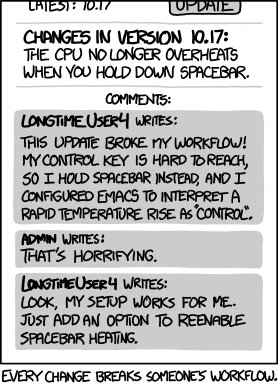
|
||||
](https://xkcd.com/1172/)
|
||||
</details>
|
||||
|
||||
|
||||
⚠
|
||||
Verify first that your idea is not [already requested on
|
||||
GitHub][issue search].
|
||||
|
||||
Also test if the devel branch does not already implement this.
|
||||
|
||||
|
||||
**Tip:** If you are seeking community support, please see
|
||||
[Communicating with the Ansible community][communication] to
|
||||
get in touch and ask questions.
|
||||
|
||||
|
||||
|
||||
[contribute to collections]:
|
||||
https://docs.ansible.com/ansible-core/devel/community/contributing_maintained_collections.html?utm_medium=github&utm_source=issue_form--feature_request.yml
|
||||
|
||||
[communication]:
|
||||
https://docs.ansible.com/ansible/devel/community/communication.html
|
||||
|
||||
[issue search]: ../search?q=is%3Aissue&type=issues
|
||||
|
||||
[forum help]:
|
||||
https://forum.ansible.com/c/help/6
|
||||
|
||||
[new proposal]: ../../proposals/issues/new
|
||||
|
||||
|
||||
- type: textarea
|
||||
attributes:
|
||||
label: Summary
|
||||
description: >
|
||||
Describe the new feature/improvement you would like briefly below.
|
||||
|
||||
|
||||
What's the problem this feature will solve?
|
||||
|
||||
What are you trying to do, that you are unable to achieve
|
||||
with ansible-core as it currently stands?
|
||||
|
||||
|
||||
* Provide examples of real-world use cases that this would enable
|
||||
and how it solves the problem you described.
|
||||
|
||||
* How do you solve this now?
|
||||
|
||||
* Have you tried to work around the problem using other tools?
|
||||
|
||||
* Could there be a different approach to solving this issue?
|
||||
|
||||
|
||||
*Know **exactly** what you want?* Consider filing a [new proposal]
|
||||
instead outlining your research and implementation considerations.
|
||||
|
||||
|
||||
[new proposal]: ../../proposals/issues/new
|
||||
placeholder: >-
|
||||
I am trying to do X with ansible-core from the devel branch on GitHub and
|
||||
I think that implementing a feature Y would be very helpful for me and
|
||||
every other user of ansible-core because of Z.
|
||||
validations:
|
||||
required: true
|
||||
|
||||
- type: dropdown
|
||||
attributes:
|
||||
label: Issue Type
|
||||
description: This is a marker for our automatic bot. Do not change it.
|
||||
options:
|
||||
- Feature Idea
|
||||
validations:
|
||||
required: true
|
||||
|
||||
- type: input
|
||||
attributes:
|
||||
label: Component Name
|
||||
description: >
|
||||
Write the short name of the module, plugin, task or feature below,
|
||||
*use your best guess if unsure*.
|
||||
|
||||
|
||||
Be aware that a lot of content that used to reside in this repository
|
||||
previously, is now hosted under [individual collection
|
||||
projects][collections org].
|
||||
If this is the case, please make sure to file an issue under the
|
||||
appropriate project there instead.
|
||||
|
||||
|
||||
[collections org]: /ansible-collections
|
||||
placeholder: dnf, apt, pip, user etc.
|
||||
validations:
|
||||
required: true
|
||||
|
||||
- type: textarea
|
||||
attributes:
|
||||
label: Additional Information
|
||||
description: |
|
||||
Describe how the feature would be used, why it is needed and what it would solve.
|
||||
|
||||
**HINT:** You can paste https://gist.github.com links for larger files.
|
||||
value: |
|
||||
<!--- Paste example playbooks or commands between quotes below -->
|
||||
```yaml (paste below)
|
||||
|
||||
```
|
||||
placeholder: >-
|
||||
I asked on https://stackoverflow.com/.... and the community
|
||||
advised me to do X, Y and Z.
|
||||
validations:
|
||||
required: true
|
||||
|
||||
|
||||
- type: markdown
|
||||
attributes:
|
||||
value: >
|
||||
*One last thing...*
|
||||
|
||||
|
||||
*Please, complete **all** sections as described, this form
|
||||
is [processed automatically by a robot][ansibot help].*
|
||||
|
||||
|
||||
Thank you for your collaboration!
|
||||
|
||||
|
||||
[ansibot help]:
|
||||
/ansible/ansibotmini#ansibotmini
|
||||
|
||||
|
||||
- type: checkboxes
|
||||
attributes:
|
||||
label: Code of Conduct
|
||||
description: |
|
||||
Read the [Ansible Code of Conduct][CoC] first.
|
||||
|
||||
[CoC]: https://docs.ansible.com/ansible/devel/community/code_of_conduct.html?utm_medium=github&utm_source=issue_form--feature_request.yml
|
||||
options:
|
||||
- label: I agree to follow the Ansible Code of Conduct
|
||||
required: true
|
||||
...
|
||||
10
.github/ISSUE_TEMPLATE/internal_issue.md
vendored
10
.github/ISSUE_TEMPLATE/internal_issue.md
vendored
@ -1,10 +0,0 @@
|
||||
---
|
||||
name: Internal Issue
|
||||
about: Free-form issue creation for core maintainer use only.
|
||||
title: ''
|
||||
labels: [core-internal]
|
||||
assignees: ''
|
||||
---
|
||||
|
||||
|
||||
@ansibot bot_skip
|
||||
42
.github/ISSUE_TEMPLATE/pre_release.yml
vendored
42
.github/ISSUE_TEMPLATE/pre_release.yml
vendored
@ -1,42 +0,0 @@
|
||||
name: Pre-Release Bug Report
|
||||
description: File a bug report against a pre-release version
|
||||
labels:
|
||||
- bug
|
||||
- pre_release
|
||||
assignees:
|
||||
- nitzmahone
|
||||
- mattclay
|
||||
body:
|
||||
- type: markdown
|
||||
attributes:
|
||||
value: |
|
||||
## Bug Report
|
||||
- type: textarea
|
||||
attributes:
|
||||
label: Ansible Version
|
||||
description: Paste the full output from `ansible --version` below.
|
||||
render: console
|
||||
placeholder: $ ansible --version
|
||||
validations:
|
||||
required: true
|
||||
- type: textarea
|
||||
attributes:
|
||||
label: Summary
|
||||
description: Describe the issue with any relevant steps to reproduce.
|
||||
validations:
|
||||
required: true
|
||||
- type: dropdown
|
||||
attributes:
|
||||
label: <!-- Bot instructions (ignore this) -->
|
||||
options:
|
||||
- |
|
||||
<!--
|
||||
### Component Name
|
||||
bin/ansible
|
||||
### Issue Type
|
||||
Bug Report
|
||||
### Configuration
|
||||
### OS / Environment
|
||||
-->
|
||||
validations:
|
||||
required: true
|
||||
1
.github/PULL_REQUEST_TEMPLATE.md
vendored
1
.github/PULL_REQUEST_TEMPLATE.md
vendored
@ -1 +0,0 @@
|
||||
PULL_REQUEST_TEMPLATE/Unclear purpose or motivation.md
|
||||
9
.github/PULL_REQUEST_TEMPLATE/Bug fix.md
vendored
9
.github/PULL_REQUEST_TEMPLATE/Bug fix.md
vendored
@ -1,9 +0,0 @@
|
||||
##### SUMMARY
|
||||
|
||||
<!--- Describe the change below, including rationale and design decisions -->
|
||||
|
||||
<!--- Add "Fixes #1234" or steps to reproduce the problem if there is no corresponding issue -->
|
||||
|
||||
##### ISSUE TYPE
|
||||
|
||||
- Bugfix Pull Request
|
||||
@ -1,9 +0,0 @@
|
||||
##### SUMMARY
|
||||
|
||||
<!--- Describe the change below, including rationale -->
|
||||
|
||||
<!--- Add "Fixes #1234" if there is a corresponding issue -->
|
||||
|
||||
##### ISSUE TYPE
|
||||
|
||||
- Docs Pull Request
|
||||
9
.github/PULL_REQUEST_TEMPLATE/New feature.md
vendored
9
.github/PULL_REQUEST_TEMPLATE/New feature.md
vendored
@ -1,9 +0,0 @@
|
||||
##### SUMMARY
|
||||
|
||||
<!--- Describe the change below, including rationale and design decisions -->
|
||||
|
||||
<!--- Add "Fixes #1234" if there is a corresponding issue -->
|
||||
|
||||
##### ISSUE TYPE
|
||||
|
||||
- Feature Pull Request
|
||||
@ -1 +0,0 @@
|
||||
Unclear purpose or motivation.md
|
||||
9
.github/PULL_REQUEST_TEMPLATE/Tests.md
vendored
9
.github/PULL_REQUEST_TEMPLATE/Tests.md
vendored
@ -1,9 +0,0 @@
|
||||
##### SUMMARY
|
||||
|
||||
<!--- Describe the change below, including rationale and design decisions -->
|
||||
|
||||
<!--- Add "Fixes #1234" if there is a corresponding issue -->
|
||||
|
||||
##### ISSUE TYPE
|
||||
|
||||
- Test Pull Request
|
||||
@ -1,14 +0,0 @@
|
||||
##### SUMMARY
|
||||
|
||||
<!--- Describe the change below, including rationale and design decisions -->
|
||||
|
||||
<!--- Add "Fixes #1234" or steps to reproduce the problem if there is no corresponding issue -->
|
||||
|
||||
##### ISSUE TYPE
|
||||
|
||||
<!--- Pick one below and delete the rest -->
|
||||
|
||||
- Bugfix Pull Request
|
||||
- Docs Pull Request
|
||||
- Feature Pull Request
|
||||
- Test Pull Request
|
||||
21
.github/RELEASE_NAMES.txt
vendored
21
.github/RELEASE_NAMES.txt
vendored
@ -1,21 +0,0 @@
|
||||
2.20.0 TBD
|
||||
2.19.0 What Is and What Should Never Be
|
||||
2.18.0 Fool in the Rain
|
||||
2.17.0 Gallows Pole
|
||||
2.16.0 All My Love
|
||||
2.15.0 Ten Years Gone
|
||||
2.14.0 C'mon Everybody
|
||||
2.13.0 Nobody's Fault but Mine
|
||||
2.12.0 Dazed and Confused
|
||||
2.11.0 Hey Hey, What Can I Do
|
||||
2.10.0 When the Levee Breaks
|
||||
2.9.0 Immigrant Song
|
||||
2.8.0 How Many More Times
|
||||
2.7.0 In the Light
|
||||
2.6.0 Heartbreaker
|
||||
2.5.0 Kashmir
|
||||
2.4.0 Dancing Days
|
||||
2.3.0 Ramble On
|
||||
2.2.0 The Battle of Evermore
|
||||
2.1.0 The Song Remains the Same
|
||||
2.0.0 Over the Hills and Far Away
|
||||
15
.github/SECURITY.md
vendored
15
.github/SECURITY.md
vendored
@ -1,15 +0,0 @@
|
||||
# Security Policy
|
||||
|
||||
## Supported Versions
|
||||
|
||||
Ansible applies security fixes according to the 3-versions-back support
|
||||
policy. Please find more information in [our docs](
|
||||
https://docs.ansible.com/ansible/devel/reference_appendices/release_and_maintenance.html#release-status
|
||||
).
|
||||
|
||||
## Reporting a Vulnerability
|
||||
|
||||
We encourage responsible disclosure practices for security
|
||||
vulnerabilities. Please read our [policies for reporting bugs](
|
||||
https://docs.ansible.com/ansible/devel/community/reporting_bugs_and_features.html#reporting-a-bug
|
||||
) if you want to report a security issue that might affect Ansible.
|
||||
115
.gitignore
vendored
115
.gitignore
vendored
@ -1,11 +1,9 @@
|
||||
# build products...
|
||||
*.py[co]
|
||||
build
|
||||
AUTHORS.TXT
|
||||
# Emacs backup and autosave files...
|
||||
# Emacs backup files...
|
||||
*~
|
||||
.\#*
|
||||
\#*
|
||||
# RPM stuff...
|
||||
MANIFEST
|
||||
dist
|
||||
@ -15,115 +13,18 @@ rpm-build
|
||||
.pydevproject
|
||||
# PyCharm stuff...
|
||||
.idea
|
||||
#IntelliJ IDEA stuff..
|
||||
*.iml
|
||||
#VSCode stuff..
|
||||
.vscode/
|
||||
# Mac OS X stuff...
|
||||
.DS_Store
|
||||
# manpage build stuff...
|
||||
docs/man/man1/ansible*.1
|
||||
docs/man/man1/ansible*.1.asciidoc.in
|
||||
docs/man/man3/*
|
||||
# Sublime stuff
|
||||
*.sublime-project
|
||||
*.sublime-workspace
|
||||
# docsite stuff...
|
||||
docs/docsite/_build
|
||||
docs/docsite/*.html
|
||||
docs/docsite/htmlout
|
||||
docs/docsite/rst/conf.py
|
||||
docs/docsite/rst/index.rst
|
||||
docs/docsite/rst/cli/ansible-*.rst
|
||||
docs/docsite/rst/cli/ansible.rst
|
||||
docs/docsite/rst/dev_guide/collections_galaxy_meta.rst
|
||||
docs/docsite/rst/dev_guide/testing/sanity/index.rst.new
|
||||
docs/docsite/rst/dev_guide/index.rst
|
||||
docs/docsite/rst/modules/*.rst
|
||||
docs/docsite/rst/collections/*.rst
|
||||
!docs/docsite/rst/collections/all_plugins.rst
|
||||
docs/docsite/rst/collections/*/*.rst
|
||||
docs/docsite/rst/playbooks_directives.rst
|
||||
docs/docsite/rst/plugins_by_category.rst
|
||||
docs/docsite/rst/plugins/*/*.rst
|
||||
docs/docsite/rst/reference_appendices/config.rst
|
||||
docs/docsite/rst/reference_appendices/playbooks_keywords.rst
|
||||
docs/docsite/rst_warnings
|
||||
docs/docsite/searchindex.js
|
||||
docs/docsite/_static/*.gif
|
||||
docs/docsite/_static/*.png
|
||||
docs/docsite/_static/websupport.js
|
||||
# Vim swap files
|
||||
*.swp
|
||||
*.swo
|
||||
[._]*.un~
|
||||
credentials.yml
|
||||
# test output
|
||||
*.retry
|
||||
*.out
|
||||
.pytest_cache/
|
||||
.tox
|
||||
.cache
|
||||
.pytest_cache
|
||||
results.xml
|
||||
coverage.xml
|
||||
/test/units/cover-html
|
||||
/test/integration/inventory
|
||||
/test/integration/targets/*/backup/
|
||||
/test/cache/*
|
||||
# Development
|
||||
/test/develop
|
||||
# Environments
|
||||
.env
|
||||
.venv
|
||||
env/
|
||||
venv/
|
||||
ENV/
|
||||
env.bak/
|
||||
venv.bak/
|
||||
venv
|
||||
env
|
||||
Vagrantfile
|
||||
.vagrant
|
||||
# Backwards compatibility with `stable-2.9` and earlier branches.
|
||||
# Also used in the `devel` branch during early Ansible 2.10 development.
|
||||
/lib/ansible.egg-info/
|
||||
# First used in the `devel` branch during Ansible 2.10 development.
|
||||
/lib/ansible_base.egg-info/
|
||||
# First used in the `devel` branch during Ansible 2.11 development.
|
||||
/lib/ansible_core.egg-info/
|
||||
# First used in the `devel` branch during Ansible 2.18 development.
|
||||
/ansible_core.egg-info/
|
||||
# vendored lib dir
|
||||
lib/ansible/_vendor/*
|
||||
!lib/ansible/_vendor/__init__.py
|
||||
# PowerShell signed hashlist
|
||||
lib/ansible/config/powershell_signatures.psd1
|
||||
*.authenticode
|
||||
# test stuff
|
||||
/test/integration/cloud-config-*.*
|
||||
!/test/integration/cloud-config-*.*.template
|
||||
.python-version
|
||||
# Release directory
|
||||
packaging/release/ansible_release
|
||||
/.cache/
|
||||
/test/results/
|
||||
/test/integration/cloud-config-aws.yml
|
||||
/test/integration/inventory.networking
|
||||
/test/integration/inventory.winrm
|
||||
/test/integration/cloud-config-aws.yml
|
||||
/test/integration/cloud-config-cs.ini
|
||||
# python 'rope' stuff
|
||||
.ropeproject
|
||||
# local 'ack' config files
|
||||
.ackrc
|
||||
# default 'coverage html' results
|
||||
htmlcov/
|
||||
# default 'coverage' tool data
|
||||
.coverage
|
||||
# ansible-test coverage results
|
||||
test/units/.coverage.*
|
||||
/test/integration/cloud-config-azure.yml
|
||||
/SYMLINK_CACHE.json
|
||||
changelogs/.plugin-cache.yaml
|
||||
.ansible-test-timeout.json
|
||||
docsite/rst/modules
|
||||
docsite/*.html
|
||||
docsite/_static/*.gif
|
||||
docsite/_static/*.png
|
||||
docsite/_static/websupport.js
|
||||
# deb building stuff...
|
||||
debian/
|
||||
|
||||
36
.mailmap
36
.mailmap
@ -1,36 +0,0 @@
|
||||
Michael DeHaan <michael.dehaan@gmail.com> <michael@ansibleworks.com>
|
||||
Michael DeHaan <michael.dehaan@gmail.com> Michael DeHaan <michael@ansibleworks.com>
|
||||
Michael DeHaan <michael.dehaan@gmail.com> <michael@ansible.com>
|
||||
<bcoca@ansible.com> <brian.coca+git@gmail.com>
|
||||
<bcoca@ansible.com> <briancoca+ansible@gmail.com>
|
||||
<bcoca@ansible.com> <briancoca+dev@gmail.com>
|
||||
<bcoca@ansible.com> <bcoca@tablethotels.com>
|
||||
<a.badger@gmail.com> <toshio@fedoraproject.org>
|
||||
James Tanner <tanner.jc@gmail.com>
|
||||
<jimi@sngx.net> <jcammarata@ansibleworks.com>
|
||||
Michael Scherer <misc@zarb.org> mscherer <misc@zarb.org>
|
||||
<misc@zarb.org> <misc@ephaone.org>
|
||||
<misc@zarb.org> <mscherer@users.noreply.github.com>
|
||||
James Martin <jmartin@ansible.com> <jmartin@basho.com>
|
||||
James Laska <jlaska@ansible.com> <jlaska@redhat.com>
|
||||
James Laska <jlaska@ansible.com> <jlaska@ansibleworks.com>
|
||||
James Laska <jlaska@ansible.com> <jlaska@James-Laskas-MacBook-Pro.local>
|
||||
James Laska <jlaska@ansible.com> <jlaska@users.noreply.github.com>
|
||||
Jason McKerr <mckerrj@gmail.com> <jmckerr@jmckerr-OSX.local>
|
||||
Chris Houseknecht <chouseknecht@ansible.com>
|
||||
Chris Houseknecht <chouseknecht@ansible.com> chouseknecht <chouse@ansible.com>
|
||||
Chris Houseknecht <chouseknecht@ansible.com> Chris Houseknecht <chouse@ansibleworks.com>
|
||||
Stephen Fromm <sfromm@gmail.com> Stephen Fromm <stephenf@nero.net>
|
||||
Sandra Wills <docschick@ansible.com> Sandra Wills <swills@ansible.com>
|
||||
Will Thames <will@thames.id.au> willthames <will@thames.id.au>
|
||||
Will Thames <will@thames.id.au> Will Thames <willdthames@gmail.com>
|
||||
Will Thames <will@thames.id.au> willthames <willdthames@gmail.com>
|
||||
Will Thames <will@thames.id.au> willthames <will@musc.org.uk>
|
||||
Will Thames <will@thames.id.au> u348095 <will.thames@suncorp.com.au>
|
||||
Will Thames <will@thames.id.au> willthames <will.thames@suncorp.com.au>
|
||||
Will Thames <will@thames.id.au> Will Thames <will.thames@xvt.com.au>
|
||||
nitzmahone <mdavis@ansible.com> Matt Davis <nitzmahone@users.noreply.github.com>
|
||||
Dag Wieers <dag@wieers.com> Dag Wieërs <dag@wieers.com>
|
||||
Dag Wieers <dag@wieers.com> Dag Wieers <dag.wieers@gmail.com>
|
||||
Rene Moser <mail@renemoser.net> René Moser <mail@renemoser.net>
|
||||
Rene Moser <mail@renemoser.net> Rene Moser <rene.moser@swisstxt.ch>
|
||||
341
CHANGELOG.md
Normal file
341
CHANGELOG.md
Normal file
@ -0,0 +1,341 @@
|
||||
Ansible Changes By Release
|
||||
==========================
|
||||
|
||||
0.8 "Cathedral" -- Oct 19, 2012
|
||||
|
||||
Highlighted Core Changes:
|
||||
|
||||
* fireball mode -- ansible can bootstrap a ephemeral 0mq (zeromq) daemon that runs as a given user and expires after X period of time. It is very fast.
|
||||
* playbooks with errors now return 2 on failure. 1 indicates a more fatal syntax error. Similar for /usr/bin/ansible
|
||||
* server side action code (template, etc) are now fully pluggable
|
||||
* ability to write lookup plugins, like the code powering "with_fileglob" (see below)
|
||||
|
||||
Other Core Changes:
|
||||
|
||||
* ansible config file can also go in '.ansible.cfg' in cwd in addition to ~/.ansible.cfg and /etc/ansible/ansible.cfg
|
||||
* fix for inventory hosts at API level when hosts spec is a list and not a colon delimited string
|
||||
* ansible-pull example now sets up logrotate for the ansible-pull cron job log
|
||||
* negative host matching (!hosts) fixed for external inventory script usage
|
||||
* internals: os.executable check replaced with utils function so it plays nice on AIX
|
||||
* Debian packaging now includes ansible-pull manpage
|
||||
* magic variable 'ansible_ssh_host' can override the hostname (great for usage with tunnels)
|
||||
* date command usage in build scripts fixed for OS X
|
||||
* don't use SSH agent with paramiko if a password is specified
|
||||
* make output be cleaner on multi-line command/shell errors
|
||||
* /usr/bin/ansible now prints things when tasks are skipped, like when creates= is used with -m command and /usr/bin/ansible
|
||||
* when trying to async a module that is not a 'normal' asyncable module, ansible will now let you know
|
||||
* ability to access inventory variables via 'hostvars' for hosts not yet included in any play, using on demand lookups
|
||||
* merged ansible-plugins, ansible-resources, and ansible-docs into the main project
|
||||
* you can set ANSIBLE_NOCOWS=1 if you want to disable cowsay if it is installed. Though no one should ever want to do this! Cows are great!
|
||||
* you can set ANSIBLE_FORCECOLOR=1 to force color mode even when running without a TTY
|
||||
* fatal errors are now properly colored red.
|
||||
* skipped messages are now cyan, to differentiate them from unchanged messages.
|
||||
* extensive documentation upgrades
|
||||
* delegate_action to localhost (aka local_action) will always use the local connection type
|
||||
|
||||
Highlighted playbook changes:
|
||||
|
||||
* is_set is available for use inside of an only_if expression: is_set('ansible_eth0'). We intend to further upgrade this with a 'when'
|
||||
keyword providing better options to 'only_if' in the next release. Also is_unset('ansible_eth0')
|
||||
* playbooks can import playbooks in other directories and then be able to import tasks relative to them
|
||||
* FILE($path) now allows access of contents of file in a path, very good for use with SSH keys
|
||||
* similarly PIPE($command) will run a local command and return the results of executing this command
|
||||
* if all hosts in a play fail, stop the playbook, rather than letting the console log spool on by
|
||||
* only_if using register variables that are booleans now works in a boolean way like you'd expect
|
||||
* task includes now work with with_items (such as: include: path/to/wordpress.yml user=$item)
|
||||
* when using a $list variable with $var or ${var} syntax it will automatically join with commas
|
||||
* setup is not run more than once when we know it is has already been run in a play that included another play, etc
|
||||
* can set/override sudo and sudo_user on individual tasks in a play, defaults to what is set in the play if not present
|
||||
* ability to use with_fileglob to iterate over local file patterns
|
||||
* templates now use Jinja2's 'trim_blocks=True' to avoid stray newlines, small changes to templates may
|
||||
be required in rare cases.
|
||||
|
||||
Other playbook changes:
|
||||
|
||||
* to_yaml and from_yaml are available as Jinja2 filters
|
||||
* $group and $group_names are now accessible in with_items
|
||||
* where 'stdout' is provided a new 'stdout_lines' variable (type == list) is now generated and usable with with_items
|
||||
* when local_action is used the transport is automatically overridden to the local type
|
||||
* output on failed playbook commands is now nicely split for stderr/stdout and syntax errors
|
||||
* if local_action is not used and delegate_to was 127.0.0.1 or localhost, use local connection regardless
|
||||
* when running a playbook, and the statement has changed, prints 'changed:' now versus 'ok:' so it is obvious without colored mode
|
||||
* variables now usable within vars_prompt (just not host/group vars)
|
||||
* setup facts are now retained across plays (dictionary just gets updated as needed)
|
||||
* --sudo-user now works with --extra-vars
|
||||
* fix for multi_line strings with only_if
|
||||
|
||||
New Modules:
|
||||
|
||||
* ini_file module for manipulating INI files
|
||||
* new LSB facts (release, distro, etc)
|
||||
* pause module -- (pause seconds=10) (pause minutes=1) (pause prompt=foo) -- it's an action plugin
|
||||
* a module for adding entries to the main crontab (though you may still wish to just drop template files into cron.d)
|
||||
* debug module can be used for outputing messages without using 'shell echo'
|
||||
* a fail module is now available for causing errors, you might want to use it with only_if to fail in certain conditions
|
||||
|
||||
Other module Changes, Upgrades, and Fixes:
|
||||
|
||||
* removes= exists on command just like creates=
|
||||
* postgresql modules now take an optional port= parameter
|
||||
* /proc/cmdline info is now available in Linux facts
|
||||
* public host key detection for OS X
|
||||
* lineinfile module now uses 'search' not exact 'match' in regexes, making it much more intuitive and not needing regex syntax most of the time
|
||||
* added force=yes|no (default no) option for file module, which allows transition between files to directories and so on
|
||||
* additional facts for SunOS virtualization
|
||||
* copy module is now atomic when used across volumes
|
||||
* url_get module now returns 'dest' with the location of the file saved
|
||||
* fix for yum module when using local RPMs vs downloading
|
||||
* cleaner error messages with copy if destination directory does not exist
|
||||
* setup module now still works if PATH is not set
|
||||
* service module status now correct for services with 'subsys locked' status
|
||||
* misc fixes/upgrades to the wait_for module
|
||||
* git module now expands any "~" in provided destination paths
|
||||
* ignore stop error code failure for service module with state=restarted, always try to start
|
||||
* inline documentation for modules allows documentation source to built without pull requests to the ansible-docs project, among other things
|
||||
* variable '$ansible_managed' is now great to include at the top of your templates and includes useful information and a warning that it will be replaced
|
||||
* "~" now expanded in command module when using creates/removes
|
||||
* mysql module can do dumps and imports
|
||||
* selinux policy is only required if setting to not disabled
|
||||
* various fixes for yum module when working with packages not in any present repo
|
||||
|
||||
0.7 "Panama" -- Sept 6 2012
|
||||
|
||||
Module changes:
|
||||
|
||||
* login_unix_socket option for mysql user and database modules (see PR #781 for doc notes)
|
||||
* new modules -- pip, easy_install, apt_repository, supervisorctl
|
||||
* error handling for setup module when SELinux is in a weird state
|
||||
* misc yum module fixes
|
||||
* better changed=True/False detection in user module on older Linux distros
|
||||
* nicer errors from modules when arguments are not key=value
|
||||
* backup option on copy (backup=yes), as well as template, assemble, and lineinfile
|
||||
* file module will not recurse on directory properties
|
||||
* yum module now workable without having repoquery installed, but doesn't support comparisons or list= if so
|
||||
* setup module now detects interfaces with aliases
|
||||
* better handling of VM guest type detection in setup module
|
||||
* new module boilerplate code to check for mutually required arguments, arguments required together, exclusive args
|
||||
* add pattern= as a paramter to the service module (for init scripts that don't do status, or do poor status)
|
||||
* various fixes to mysql & postresql modules
|
||||
* added a thirsty= option (boolean, default no) to the get_url module to decide to download the file every time or not
|
||||
* added a wait_for module to poll for ports being open
|
||||
* added a nagios module for controlling outage windows and alert statuses
|
||||
* added a seboolean module for getsebool/setsebool type operations
|
||||
* added a selinux module for controlling overall SELinux policy
|
||||
* added a subversion module
|
||||
* added lineinfile for adding and removing lines from basic files
|
||||
* added facts for ARM-based CPUs
|
||||
* support for systemd in the service module
|
||||
* git moduleforce reset behavior is now controllable
|
||||
* file module can now operate on special files (block devices, etc)
|
||||
|
||||
Core changes:
|
||||
|
||||
* ansible --version will now give branch/SHA information if running from git
|
||||
* better sudo permissions when encountering different umasks
|
||||
* when using paramiko and SFTP is not accessible, do not traceback, but return a nice human readable msg
|
||||
* use -vvv for extreme debug levels. -v gives more playbook output as before
|
||||
* -vv shows module arguments to all module calls (and maybe some other things later)
|
||||
* don not pass "--" to sudo to work on older EL5
|
||||
* make remote_md5 internal function work with non-bash shells
|
||||
* allow user to be passed in via --extra-vars (regression)
|
||||
* add --limit option, which can be used to further confine the pattern given in ansible-playbooks
|
||||
* adds ranged patterns like dbservers[0-49] for usage with patterns or --limit
|
||||
* -u and user: defaults to current user, rather than root, override as before
|
||||
* /etc/ansible/ansible.cfg and ~/ansible.cfg now available to set default values and other things
|
||||
* (developers) ANSIBLE_KEEP_REMOTE_FILES=1 can be used in debugging (envrionment variable)
|
||||
* (developers) connection types are now plugins
|
||||
* (developers) callbacks can now be extended via plugins
|
||||
* added FreeBSD ports packaging scripts
|
||||
* check for terminal properties prior to engaging color modes
|
||||
* explicitly disable password auth with -c ssh, as it is not used anyway
|
||||
|
||||
Playbooks:
|
||||
|
||||
* YAML syntax errors detected and show where the problem is
|
||||
* if you ctrl+c a playbook it will not traceback (usually)
|
||||
* vars_prompt now has encryption options (see examples/playbooks/prompts.yml)
|
||||
* allow variables in parameterized task include parameters (regression)
|
||||
* add ability to store the result of any command in a register (see examples/playbooks/register_logic.yml)
|
||||
* --list-hosts to show what hosts are included in each play of a playbook
|
||||
* fix a variable ordering issue that could affect vars_files with selective file source lists
|
||||
* adds 'delegate_to' for a task, which can be used to signal outage windows and load balancers on behalf of hosts
|
||||
* adds 'serial' to playbook, allowing you to specify how many hosts can be processing a playbook at one time (default 0=all)
|
||||
* adds 'local_action: <action parameters>' as an alias to 'delegate_to: 127.0.0.1'
|
||||
|
||||
0.6 "Cabo" -- August 6, 2012
|
||||
|
||||
playbooks:
|
||||
|
||||
* support to tag tasks and includes and use --tags in playbook CLI
|
||||
* playbooks can now include other playbooks (example/playbooks/nested_playbooks.yml)
|
||||
* vars_files now usable with with_items, provided file paths don't contain host specific facts
|
||||
* error reporting if with_items value is unbound
|
||||
* with_items no longer creates lots of tasks, creates one task that makes multiple calls
|
||||
* can use host_specific facts inside with_items (see above)
|
||||
* at the top level of a playbook, set 'gather_facts: False' to skip fact gathering
|
||||
* first_available_file and with_items used together will now raise an error
|
||||
* to catch typos, like 'var' for 'vars', playbooks and tasks now yell on invalid parameters
|
||||
* automatically load (directory_of_inventory_file)/group_vars/groupname and /host_vars/hostname in vars_files
|
||||
* playbook is now colorized, set ANSIBLE_NOCOLOR=1 if you do not like this, does not colorize if not a TTY
|
||||
* hostvars now preserved between plays (regression in 0.5 from 0.4), useful for sharing vars in multinode configs
|
||||
* ignore_errors: True on a task can be used to allow a task to fail and not stop the play
|
||||
* with_items with the apt/yum module will install/remove/update everything in a single command
|
||||
|
||||
inventory:
|
||||
|
||||
* groups variable available as a hash to return the hosts in each group name
|
||||
* in YAML inventory, hosts can list their groups in inverted order now also (see tests/yaml_hosts)
|
||||
* YAML inventory is deprecated and will be removed in 0.7
|
||||
* ec2 inventory script
|
||||
* support ranges of hosts in the host file, like www[001-100].example.com (supports leading zeros and also not)
|
||||
|
||||
modules:
|
||||
|
||||
* fetch module now does not fail a system when requesting file paths (ex: logs) that don't exist
|
||||
* apt module now takes an optional install-recommends=yes|no (default yes)
|
||||
* fixes to the return codes of the copy module
|
||||
* copy module takes a remote md5sum to avoid large file transfer
|
||||
* various user and group module fixes (error handling, etc)
|
||||
* apt module now takes an optional force parameter
|
||||
* slightly better psychic service status handling for the service module
|
||||
* fetch module fixes for SSH connection type
|
||||
* modules now consistently all take yes/no for boolean parameters (and DWIM on true/false/1/0/y/n/etc)
|
||||
* setup module no longer saves to disk, template module now only used in playbooks
|
||||
* setup module no longer needs to run twice per playbook
|
||||
* apt module now passes DEBIAN_FRONTEND=noninteractive
|
||||
* mount module (manages active mounts + fstab)
|
||||
* setup module fixes if no ipv6 support
|
||||
* internals: template in common module boilerplate, also causes less SSH operations when used
|
||||
* git module fixes
|
||||
* setup module overhaul, more modular
|
||||
* minor caching logic added to inventory to reduce hammering of inventory scripts.
|
||||
* MySQL and PostgreSQL modules for user and db management
|
||||
* vars_prompt now supports private password entry (see examples/playbooks/prompts.yml)
|
||||
* yum module modified to be more tolerant of plugins spewing random console messages (ex: RHN)
|
||||
|
||||
internals:
|
||||
|
||||
* when sudoing to root, still use /etc/ansible/setup as the metadata path, as if root
|
||||
* paramiko is now only imported if needed when running from source checkout
|
||||
* cowsay support on Ubuntu
|
||||
* various ssh connection fixes for old Ubuntu clients
|
||||
* ./hacking/test-module now supports options like ansible takes and has a debugger mode
|
||||
* sudoing to a user other than root now works more seamlessly (uses /tmp, avoids umask issues)
|
||||
|
||||
0.5 "Amsterdam" ------- July 04, 2012
|
||||
|
||||
* Service module gets more accurate service states when running with upstart
|
||||
* Jinja2 usage in playbooks (not templates), reinstated, supports %include directive
|
||||
* support for --connection ssh (supports Kerberos, bastion hosts, etc), requires ControlMaster
|
||||
* misc tracebacks replaced with error messages
|
||||
* various API/internals refactoring
|
||||
* vars can be built from other variables
|
||||
* support for exclusion of hosts/groups with "!groupname"
|
||||
* various changes to support md5 tool differences for FreeBSD nodes & OS X clients
|
||||
* "unparseable" command output shows in command output for easier debugging
|
||||
* mktemp is no longer required on remotes (not available on BSD)
|
||||
* support for older versions of python-apt in the apt module
|
||||
* a new "assemble" module, for constructing files from pieces of files (inspired by Puppet "fragments" idiom)
|
||||
* ability to override most default values with ANSIBLE_FOO environment variables
|
||||
* --module-path parameter can support multiple directories seperated with the OS path seperator
|
||||
* with_items can take a variable of type list
|
||||
* ansible_python_interpreter variable available for systems with more than one Python
|
||||
* BIOS and VMware "fact" upgrades
|
||||
* cowsay is used by ansible-playbook if installed to improve output legibility (try installing it)
|
||||
* authorized_key module
|
||||
* SELinux facts now sourced from the python selinux library
|
||||
* removed module debug option -D
|
||||
* added --verbose, which shows output from successful playbook operations
|
||||
* print the output of the raw command inside /usr/bin/ansible as with command/shell
|
||||
* basic setup module support for Solaris
|
||||
* ./library relative to the playbook is always in path so modules can be included in tarballs with playbooks
|
||||
|
||||
0.4 "Unchained" ------- May 23, 2012
|
||||
|
||||
Internals/Core
|
||||
* internal inventory API now more object oriented, parsers decoupled
|
||||
* async handling improvements
|
||||
* misc fixes for running ansible on OS X (overlord only)
|
||||
* sudo improvements, now works much more smoothly
|
||||
* sudo to a particular user with -U/--sudo-user, or using 'sudo_user: foo' in a playbook
|
||||
* --private-key CLI option to work with pem files
|
||||
|
||||
Inventory
|
||||
* can use -i host1,host2,host3:port to specify hosts not in inventory (replaces --override-hosts)
|
||||
* ansible INI style format can do groups of groups [groupname:children] and group vars [groupname:vars]
|
||||
* groups and users module takes an optional system=yes|no on creation (default no)
|
||||
* list of hosts in playbooks can be expressed as a YAML list in addition to ; delimited
|
||||
|
||||
Playbooks
|
||||
* variables can be replaced like ${foo.nested_hash_key.nested_subkey[array_index]}
|
||||
* unicode now ok in templates (assumes utf8)
|
||||
* able to pass host specifier or group name in to "hosts:" with --extra-vars
|
||||
* ansible-pull script and example playbook (extreme scaling, remediation)
|
||||
* inventory_hostname variable available that contains the value of the host as ansible knows it
|
||||
* variables in the 'all' section can be used to define other variables based on those values
|
||||
* 'group_names' is now a variable made available to templates
|
||||
* first_available_file feature, see selective_file_sources.yml in examples/playbooks for info
|
||||
* --extra-vars="a=2 b=3" etc, now available to inject parameters into playbooks from CLI
|
||||
|
||||
Incompatible Changes
|
||||
* jinja2 is only usable in templates, not playbooks, use $foo instead
|
||||
* --override-hosts removed, can use -i with comma notation (-i "ahost,bhost")
|
||||
* modules can no longer include stderr output (paramiko limitation from sudo)
|
||||
|
||||
Module Changes
|
||||
* tweaks to SELinux implementation for file module
|
||||
* fixes for yum module corner cases on EL5
|
||||
* file module now correctly returns the mode in octal
|
||||
* fix for symlink handling in the file module
|
||||
* service takes an enable=yes|no which works with chkconfig or updates-rc.d as appropriate
|
||||
* service module works better on Ubuntu
|
||||
* git module now does resets and such to work more smoothly on updates
|
||||
* modules all now log to syslog
|
||||
* enabled=yes|no on a service can be used to toggle chkconfig & updates-rc.d states
|
||||
* git module supports branch=
|
||||
* service fixes to better detect status using return codes of the service script
|
||||
* custom facts provided by the setup module mean no dependency on Ruby, facter, or ohai
|
||||
* service now has a state=reloaded
|
||||
* raw module for bootstrapping and talking to routers w/o Python, etc
|
||||
|
||||
Misc Bugfixes
|
||||
* fixes for variable parsing in only_if lines
|
||||
* misc fixes to key=value parsing
|
||||
* variables with mixed case now legal
|
||||
* fix to internals of hacking/test-module development script
|
||||
|
||||
|
||||
0.3 "Baluchitherium" -- April 23, 2012
|
||||
|
||||
* Packaging for Debian, Gentoo, and Arch
|
||||
* Improvements to the apt and yum modules
|
||||
* A virt module
|
||||
* SELinux support for the file module
|
||||
* Ability to use facts from other systems in templates (aka exported
|
||||
resources like support)
|
||||
* Built in Ansible facts so you don't need ohai, facter, or Ruby
|
||||
* tempdir selections that work with noexec mounted /tmp
|
||||
* templates happen locally, not remotely, so no dependency on
|
||||
python-jinja2 for remote computers
|
||||
* advanced inventory format in YAML allows more control over variables
|
||||
per host and per group
|
||||
* variables in playbooks can be structured/nested versus just a flat namespace
|
||||
* manpage upgrades (docs)
|
||||
* various bugfixes
|
||||
* can specify a default --user for playbooks rather than specifying it
|
||||
in the playbook file
|
||||
* able to specify ansible port in ansible host file (see docs)
|
||||
* refactored Inventory API to make it easier to write scripts using Ansible
|
||||
* looping capability for playbooks (with_items)
|
||||
* support for using sudo with a password
|
||||
* module arguments can be unicode
|
||||
* A local connection type, --connection=local, for use with cron or
|
||||
in kickstarts
|
||||
* better module debugging with -D
|
||||
* fetch module for pulling in files from remote hosts
|
||||
* command task supports creates=foo for idempotent semantics, won't run if file foo already exists
|
||||
|
||||
0.0.2 and 0.0.1
|
||||
|
||||
* Initial stages of project
|
||||
|
||||
59
CONTRIBUTING.md
Normal file
59
CONTRIBUTING.md
Normal file
@ -0,0 +1,59 @@
|
||||
Contributing to Ansible
|
||||
=======================
|
||||
|
||||
It is required that you read the following information to learn how to contribute to this project.
|
||||
|
||||
Branch Info
|
||||
===========
|
||||
|
||||
Here's how to understand the branches.
|
||||
|
||||
* The devel branch corresponds to the latest ongoing release
|
||||
* Various release-X.Y branches exist for previous releases
|
||||
* All feature work happens on the development branch.
|
||||
* Major bug fixes will be made to the last release branch only
|
||||
* See CHANGELOG.md for release notes to track each release.
|
||||
|
||||
Patch Instructions
|
||||
==================
|
||||
|
||||
Contributions to the core and modules are greatly welcome.
|
||||
|
||||
* Required Process:
|
||||
* Submit github pull requests to the "ansible/devel" branch for features
|
||||
* Fixes for bugs may also be submitted to "ansible/release-X.Y" for the last release
|
||||
* Make sure "make tests" passes before submitting any requests.
|
||||
* Bonus points:
|
||||
* Joining the mailing list
|
||||
* Fixing bugs instead of sending bug reports.
|
||||
* Using squash merges
|
||||
* Updating the "rst/*" files in the "docsite/" directory and "docs/" manpage content
|
||||
* Adding more unit tests
|
||||
* Avoid:
|
||||
* Sending patches to the mailing list directly.
|
||||
* Sending feature pull requests to the 'release' branch instead of the devel branch
|
||||
* Sending pull requests to mpdehaan's personal ansible fork.
|
||||
* Sending pull requests about more than one feature in the same pull request.
|
||||
* Whitespace restructuring
|
||||
* Large scale refactoring without a discussion on the list
|
||||
|
||||
Coding Standards
|
||||
================
|
||||
|
||||
We're not too strict on style considerations, but we require:
|
||||
|
||||
* python 2.6 compliant code, unless in ansible modules, then python *2.4* compliant code (no 'with', etc)
|
||||
* 4-space indents, no tabs except in Makefiles
|
||||
* under_scores for method names and variables, not camelCase
|
||||
* GPLv3 license headers on all files, with copyright on new files with your name on it
|
||||
* no single-line if statements, deeply nested list comprehensions, or clever use of metaclasses -- keep it simple
|
||||
* comments where appropriate
|
||||
|
||||
Contributors License Agreement
|
||||
==============================
|
||||
|
||||
By contributing you agree that these contributions are your own (or approved by your employer) and you grant a full, complete, irrevocable
|
||||
copyright license to all users and developers of the project, present and future, persusant to the license of the project.
|
||||
|
||||
|
||||
|
||||
9
COPYING
9
COPYING
@ -1,7 +1,7 @@
|
||||
GNU GENERAL PUBLIC LICENSE
|
||||
Version 3, 29 June 2007
|
||||
|
||||
Copyright (C) 2007 Free Software Foundation, Inc. <https://fsf.org/>
|
||||
Copyright (C) 2007 Free Software Foundation, Inc. <http://fsf.org/>
|
||||
Everyone is permitted to copy and distribute verbatim copies
|
||||
of this license document, but changing it is not allowed.
|
||||
|
||||
@ -645,7 +645,7 @@ the "copyright" line and a pointer to where the full notice is found.
|
||||
GNU General Public License for more details.
|
||||
|
||||
You should have received a copy of the GNU General Public License
|
||||
along with this program. If not, see <https://www.gnu.org/licenses/>.
|
||||
along with this program. If not, see <http://www.gnu.org/licenses/>.
|
||||
|
||||
Also add information on how to contact you by electronic and paper mail.
|
||||
|
||||
@ -664,11 +664,12 @@ might be different; for a GUI interface, you would use an "about box".
|
||||
You should also get your employer (if you work as a programmer) or school,
|
||||
if any, to sign a "copyright disclaimer" for the program, if necessary.
|
||||
For more information on this, and how to apply and follow the GNU GPL, see
|
||||
<https://www.gnu.org/licenses/>.
|
||||
<http://www.gnu.org/licenses/>.
|
||||
|
||||
The GNU General Public License does not permit incorporating your program
|
||||
into proprietary programs. If your program is a subroutine library, you
|
||||
may consider it more useful to permit linking proprietary applications with
|
||||
the library. If this is what you want to do, use the GNU Lesser General
|
||||
Public License instead of this License. But first, please read
|
||||
<https://www.gnu.org/licenses/why-not-lgpl.html>.
|
||||
<http://www.gnu.org/philosophy/why-not-lgpl.html>.
|
||||
|
||||
|
||||
18
MANIFEST.in
18
MANIFEST.in
@ -1,10 +1,8 @@
|
||||
include COPYING
|
||||
include changelogs/CHANGELOG*.rst
|
||||
include changelogs/changelog.yaml
|
||||
include licenses/*.txt
|
||||
include requirements.txt
|
||||
recursive-include packaging *.py *.j2
|
||||
recursive-include test/integration *
|
||||
recursive-include test/sanity *.in *.json *.py *.txt *.ini
|
||||
recursive-include test/support *.py *.ps1 *.psm1 *.cs *.md
|
||||
recursive-include test/units *
|
||||
include README.md packaging/rpm/ansible.spec COPYING
|
||||
include examples/hosts
|
||||
include examples/ansible.cfg
|
||||
graft examples/playbooks
|
||||
include packaging/distutils/setup.py
|
||||
recursive-include docs *
|
||||
recursive-include library *
|
||||
include Makefile
|
||||
|
||||
182
Makefile
Normal file
182
Makefile
Normal file
@ -0,0 +1,182 @@
|
||||
#!/usr/bin/make
|
||||
# WARN: gmake syntax
|
||||
########################################################
|
||||
# Makefile for Ansible
|
||||
#
|
||||
# useful targets:
|
||||
# make sdist ---------------- produce a tarball
|
||||
# make rpm ----------------- produce RPMs
|
||||
# make deb ------------------ produce a DEB
|
||||
# make docs ----------------- rebuild the manpages (results are checked in)
|
||||
# make tests ---------------- run the tests
|
||||
# make pyflakes, make pep8 -- source code checks
|
||||
|
||||
########################################################
|
||||
# variable section
|
||||
|
||||
NAME = "ansible"
|
||||
OS = $(shell uname -s)
|
||||
|
||||
# Manpages are currently built with asciidoc -- would like to move to markdown
|
||||
# This doesn't evaluate until it's called. The -D argument is the
|
||||
# directory of the target file ($@), kinda like `dirname`.
|
||||
ASCII2MAN = a2x -D $(dir $@) -d manpage -f manpage $<
|
||||
ASCII2HTMLMAN = a2x -D docs/html/man/ -d manpage -f xhtml
|
||||
MANPAGES := docs/man/man1/ansible.1 docs/man/man1/ansible-playbook.1 docs/man/man1/ansible-pull.1
|
||||
|
||||
SITELIB = $(shell python -c "from distutils.sysconfig import get_python_lib; print get_python_lib()")
|
||||
|
||||
# VERSION file provides one place to update the software version
|
||||
VERSION := $(shell cat VERSION)
|
||||
|
||||
### Get the branch information from git
|
||||
ifneq ($(shell which git),)
|
||||
GIT_DATE := $(shell git log -n 1 --format="%ai")
|
||||
endif
|
||||
|
||||
ifeq ($(OS), FreeBSD)
|
||||
DATE := $(shell date -j -f "%Y-%m-%d %H:%M:%s" "$(GIT_DATE)" +%Y%m%d%H%M)
|
||||
else
|
||||
ifeq ($(OS), Darwin)
|
||||
DATE := $(shell date -j -f "%Y-%m-%d %H:%M:%S" "$(GIT_DATE)" +%Y%m%d%H%M)
|
||||
else
|
||||
DATE := $(shell date --utc --date="$(GIT_DATE)" +%Y%m%d%H%M)
|
||||
endif
|
||||
endif
|
||||
|
||||
# RPM build parameters
|
||||
RPMSPECDIR= packaging/rpm
|
||||
RPMSPEC = $(RPMSPECDIR)/ansible.spec
|
||||
RPMDIST = $(shell rpm --eval '%dist')
|
||||
RPMRELEASE = 1
|
||||
ifeq ($(OFFICIAL),)
|
||||
RPMRELEASE = 0.git$(DATE)
|
||||
endif
|
||||
RPMNVR = "$(NAME)-$(VERSION)-$(RPMRELEASE)$(RPMDIST)"
|
||||
|
||||
########################################################
|
||||
|
||||
all: clean python
|
||||
|
||||
tests:
|
||||
PYTHONPATH=./lib nosetests -d -v
|
||||
|
||||
# To force a rebuild of the docs run 'touch VERSION && make docs'
|
||||
docs: $(MANPAGES) modulepages
|
||||
|
||||
# Regenerate %.1.asciidoc if %.1.asciidoc.in has been modified more
|
||||
# recently than %.1.asciidoc.
|
||||
%.1.asciidoc: %.1.asciidoc.in
|
||||
sed "s/%VERSION%/$(VERSION)/" $< > $@
|
||||
|
||||
# Regenerate %.1 if %.1.asciidoc or VERSION has been modified more
|
||||
# recently than %.1. (Implicitly runs the %.1.asciidoc recipe)
|
||||
%.1: %.1.asciidoc VERSION
|
||||
$(ASCII2MAN)
|
||||
|
||||
loc:
|
||||
sloccount lib library bin
|
||||
|
||||
pep8:
|
||||
@echo "#############################################"
|
||||
@echo "# Running PEP8 Compliance Tests"
|
||||
@echo "#############################################"
|
||||
-pep8 -r --ignore=E501,E221,W291,W391,E302,E251,E203,W293,E231,E303,E201,E225,E261,E241 lib/ bin/
|
||||
-pep8 -r --ignore=E501,E221,W291,W391,E302,E251,E203,W293,E231,E303,E201,E225,E261,E241 --filename "*" library/
|
||||
|
||||
pyflakes:
|
||||
pyflakes lib/ansible/*.py bin/*
|
||||
|
||||
clean:
|
||||
@echo "Cleaning up distutils stuff"
|
||||
rm -rf build
|
||||
rm -rf dist
|
||||
@echo "Cleaning up byte compiled python stuff"
|
||||
find . -type f -regex ".*\.py[co]$$" -delete
|
||||
@echo "Cleaning up editor backup files"
|
||||
find . -type f \( -name "*~" -or -name "#*" \) -delete
|
||||
find . -type f \( -name "*.swp" \) -delete
|
||||
@echo "Cleaning up manpage stuff"
|
||||
find ./docs/man -type f -name "*.xml" -delete
|
||||
find ./docs/man -type f -name "*.asciidoc" -delete
|
||||
find ./docs/man/man3 -type f -name "*.3" -delete
|
||||
@echo "Cleaning up output from test runs"
|
||||
rm -rf test/test_data
|
||||
@echo "Cleaning up RPM building stuff"
|
||||
rm -rf MANIFEST rpm-build
|
||||
@echo "Cleaning up Debian building stuff"
|
||||
rm -rf debian
|
||||
rm -rf deb-build
|
||||
rm -rf docs/json
|
||||
rm -rf docs/js
|
||||
|
||||
python:
|
||||
python setup.py build
|
||||
|
||||
install:
|
||||
python setup.py install
|
||||
|
||||
sdist: clean docs
|
||||
python setup.py sdist -t MANIFEST.in
|
||||
|
||||
rpmcommon: sdist
|
||||
@mkdir -p rpm-build
|
||||
@cp dist/*.gz rpm-build/
|
||||
@sed -e 's#^Version:.*#Version: $(VERSION)#' -e 's#^Release:.*#Release: $(RPMRELEASE)%{?dist}#' $(RPMSPEC) >rpm-build/$(NAME).spec
|
||||
|
||||
srpm: rpmcommon
|
||||
@rpmbuild --define "_topdir %(pwd)/rpm-build" \
|
||||
--define "_builddir %{_topdir}" \
|
||||
--define "_rpmdir %{_topdir}" \
|
||||
--define "_srcrpmdir %{_topdir}" \
|
||||
--define "_specdir $(RPMSPECDIR)" \
|
||||
--define "_sourcedir %{_topdir}" \
|
||||
-bs rpm-build/$(NAME).spec
|
||||
@rm -f rpm-build/$(NAME).spec
|
||||
@echo "#############################################"
|
||||
@echo "Ansible SRPM is built:"
|
||||
@echo " rpm-build/$(RPMNVR).src.rpm"
|
||||
@echo "#############################################"
|
||||
|
||||
rpm: rpmcommon
|
||||
@rpmbuild --define "_topdir %(pwd)/rpm-build" \
|
||||
--define "_builddir %{_topdir}" \
|
||||
--define "_rpmdir %{_topdir}" \
|
||||
--define "_srcrpmdir %{_topdir}" \
|
||||
--define "_specdir $(RPMSPECDIR)" \
|
||||
--define "_sourcedir %{_topdir}" \
|
||||
--define "_rpmfilename $(RPMNVR).%%{ARCH}.rpm" \
|
||||
-ba rpm-build/$(NAME).spec
|
||||
@rm -f rpm-build/$(NAME).spec
|
||||
@echo "#############################################"
|
||||
@echo "Ansible RPM is built:"
|
||||
@echo " rpm-build/$(RPMNVR).noarch.rpm"
|
||||
@echo "#############################################"
|
||||
|
||||
debian: sdist
|
||||
deb: debian
|
||||
cp -r packaging/debian ./
|
||||
chmod 755 debian/rules
|
||||
fakeroot debian/rules clean
|
||||
fakeroot dh_install
|
||||
fakeroot debian/rules binary
|
||||
|
||||
# for arch or gentoo, read instructions in the appropriate 'packaging' subdirectory directory
|
||||
|
||||
modulepages:
|
||||
hacking/module_formatter.py -A $(VERSION) -t man -o docs/man/man3/ --module-dir=library --template-dir=hacking/templates
|
||||
|
||||
modulejson:
|
||||
mkdir -p docs/json
|
||||
hacking/module_formatter.py -A $(VERSION) -t json -o docs/json --module-dir=library --template-dir=hacking/templates
|
||||
|
||||
modulejs:
|
||||
mkdir -p docs/js
|
||||
make modulejson
|
||||
hacking/module_formatter.py -A $(VERSION) -t js -o docs/js --module-dir=docs/json --template-dir=hacking/templates
|
||||
|
||||
# because this requires Sphinx it is not run as part of every build, those building the RPM and so on can ignore this
|
||||
|
||||
webdocs:
|
||||
(cd docsite; make docs)
|
||||
|
||||
117
README.md
117
README.md
@ -1,101 +1,42 @@
|
||||
[](https://pypi.org/project/ansible-core)
|
||||
[](https://docs.ansible.com/ansible/latest/)
|
||||
[](https://docs.ansible.com/ansible/devel/community/communication.html)
|
||||
[](https://dev.azure.com/ansible/ansible/_build/latest?definitionId=20&branchName=devel)
|
||||
[](https://docs.ansible.com/ansible/devel/community/code_of_conduct.html)
|
||||
[](https://docs.ansible.com/ansible/devel/community/communication.html#mailing-list-information)
|
||||
[](COPYING)
|
||||
[](https://bestpractices.coreinfrastructure.org/projects/2372)
|
||||
Ansible
|
||||
=======
|
||||
|
||||
# Ansible
|
||||
Ansible is a radically simple configuration-management, deployment, task-execution, and
|
||||
multinode orchestration framework.
|
||||
|
||||
Ansible is a radically simple IT automation system. It handles
|
||||
configuration management, application deployment, cloud provisioning,
|
||||
ad-hoc task execution, network automation, and multi-node orchestration. Ansible makes complex
|
||||
changes like zero-downtime rolling updates with load balancers easy. More information on the Ansible [website](https://ansible.com/).
|
||||
Read the documentation and more at http://ansible.cc
|
||||
|
||||
## Design Principles
|
||||
Design Principles
|
||||
=================
|
||||
|
||||
* Have an extremely simple setup process with a minimal learning curve.
|
||||
* Manage machines quickly and in parallel.
|
||||
* Avoid custom-agents and additional open ports, be agentless by
|
||||
leveraging the existing SSH daemon.
|
||||
* Describe infrastructure in a language that is both machine and human
|
||||
friendly.
|
||||
* Focus on security and easy auditability/review/rewriting of content.
|
||||
* Manage new remote machines instantly, without bootstrapping any
|
||||
software.
|
||||
* Allow module development in any dynamic language, not just Python.
|
||||
* Be usable as non-root.
|
||||
* Be the easiest IT automation system to use, ever.
|
||||
* Dead simple setup
|
||||
* Super fast & parallel by default
|
||||
* No server or client daemons; use existing SSHd
|
||||
* No additional software required on client boxes
|
||||
* Modules can be written in ANY language
|
||||
* Awesome API for creating very powerful distributed scripts
|
||||
* Be usable as non-root
|
||||
* The easiest config management system to use, ever.
|
||||
|
||||
## Use Ansible
|
||||
Get Involved
|
||||
============
|
||||
|
||||
You can install a released version of Ansible with `pip` or a package manager. See our
|
||||
[installation guide](https://docs.ansible.com/ansible/latest/installation_guide/intro_installation.html) for details on installing Ansible
|
||||
on a variety of platforms.
|
||||
* [ansible-project mailing list](http://groups.google.com/group/ansible-project)
|
||||
* irc.freenode.net: #ansible
|
||||
|
||||
Power users and developers can run the `devel` branch, which has the latest
|
||||
features and fixes, directly. Although it is reasonably stable, you are more likely to encounter
|
||||
breaking changes when running the `devel` branch. We recommend getting involved
|
||||
in the Ansible community if you want to run the `devel` branch.
|
||||
Branch Info
|
||||
===========
|
||||
|
||||
## Communication
|
||||
* Releases are named after Van Halen songs.
|
||||
* The devel branch corresponds to the release actively under development.
|
||||
* Various release-X.Y branches exist for previous releases
|
||||
* We'd love to have your contributions, read "CONTRIBUTING.md" for process notes.
|
||||
|
||||
Join the Ansible forum to ask questions, get help, and interact with the
|
||||
community.
|
||||
Author
|
||||
======
|
||||
|
||||
* [Get Help](https://forum.ansible.com/c/help/6): Find help or share your Ansible knowledge to help others.
|
||||
Use tags to filter and subscribe to posts, such as the following:
|
||||
* Posts tagged with [ansible](https://forum.ansible.com/tag/ansible)
|
||||
* Posts tagged with [ansible-core](https://forum.ansible.com/tag/ansible-core)
|
||||
* Posts tagged with [playbook](https://forum.ansible.com/tag/playbook)
|
||||
* [Social Spaces](https://forum.ansible.com/c/chat/4): Meet and interact with fellow enthusiasts.
|
||||
* [News & Announcements](https://forum.ansible.com/c/news/5): Track project-wide announcements including social events.
|
||||
* [Bullhorn newsletter](https://docs.ansible.com/ansible/devel/community/communication.html#the-bullhorn): Get release announcements and important changes.
|
||||
Michael DeHaan -- michael.dehaan@gmail.com
|
||||
|
||||
For more ways to get in touch, see [Communicating with the Ansible community](https://docs.ansible.com/ansible/devel/community/communication.html).
|
||||
[http://michaeldehaan.net](http://michaeldehaan.net/)
|
||||
|
||||
## Contribute to Ansible
|
||||
|
||||
* Check out the [Contributor's Guide](./.github/CONTRIBUTING.md).
|
||||
* Read [Community Information](https://docs.ansible.com/ansible/devel/community) for all
|
||||
kinds of ways to contribute to and interact with the project,
|
||||
including how to submit bug reports and code to Ansible.
|
||||
* Submit a proposed code update through a pull request to the `devel` branch.
|
||||
* Talk to us before making larger changes
|
||||
to avoid duplicate efforts. This not only helps everyone
|
||||
know what is going on, but it also helps save time and effort if we decide
|
||||
some changes are needed.
|
||||
|
||||
## Coding Guidelines
|
||||
|
||||
We document our Coding Guidelines in the [Developer Guide](https://docs.ansible.com/ansible/devel/dev_guide/). We particularly suggest you review:
|
||||
|
||||
* [Contributing your module to Ansible](https://docs.ansible.com/ansible/devel/dev_guide/developing_modules_checklist.html)
|
||||
* [Conventions, tips, and pitfalls](https://docs.ansible.com/ansible/devel/dev_guide/developing_modules_best_practices.html)
|
||||
|
||||
## Branch Info
|
||||
|
||||
* The `devel` branch corresponds to the release actively under development.
|
||||
* The `stable-2.X` branches correspond to stable releases.
|
||||
* Create a branch based on `devel` and set up a [dev environment](https://docs.ansible.com/ansible/devel/dev_guide/developing_modules_general.html#common-environment-setup) if you want to open a PR.
|
||||
* See the [Ansible release and maintenance](https://docs.ansible.com/ansible/devel/reference_appendices/release_and_maintenance.html) page for information about active branches.
|
||||
|
||||
## Roadmap
|
||||
|
||||
Based on team and community feedback, an initial roadmap will be published for a major or minor version (ex: 2.7, 2.8).
|
||||
The [Ansible Roadmap page](https://docs.ansible.com/ansible/devel/roadmap/) details what is planned and how to influence the roadmap.
|
||||
|
||||
## Authors
|
||||
|
||||
Ansible was created by [Michael DeHaan](https://github.com/mpdehaan)
|
||||
and has contributions from over 5000 users (and growing). Thanks everyone!
|
||||
|
||||
[Ansible](https://www.ansible.com) is sponsored by [Red Hat, Inc.](https://www.redhat.com)
|
||||
|
||||
## License
|
||||
|
||||
GNU General Public License v3.0 or later
|
||||
|
||||
See [COPYING](COPYING) to see the full text.
|
||||
|
||||
13
RELEASES.txt
Normal file
13
RELEASES.txt
Normal file
@ -0,0 +1,13 @@
|
||||
Ansible Releases at a Glance
|
||||
============================
|
||||
|
||||
0.8 "Cathedral" ------- pending
|
||||
0.7 "Panama" ---------- 9-06-2012
|
||||
0.6 "Cabo" ------------ 8-06-2012
|
||||
0.5 "Amsterdam" ------- 7-04-2012
|
||||
0.4 "Unchained" ------- 5-23-2012
|
||||
0.3 "Baluchitherium" -- 4-23-2012
|
||||
0.0.2 Untitled
|
||||
0.0.1 Untitled
|
||||
|
||||
|
||||
@ -1 +0,0 @@
|
||||
../lib/ansible/cli/adhoc.py
|
||||
139
bin/ansible
Executable file
139
bin/ansible
Executable file
@ -0,0 +1,139 @@
|
||||
#!/usr/bin/env python
|
||||
|
||||
# (c) 2012, Michael DeHaan <michael.dehaan@gmail.com>
|
||||
#
|
||||
# This file is part of Ansible
|
||||
#
|
||||
# Ansible is free software: you can redistribute it and/or modify
|
||||
# it under the terms of the GNU General Public License as published by
|
||||
# the Free Software Foundation, either version 3 of the License, or
|
||||
# (at your option) any later version.
|
||||
#
|
||||
# Ansible is distributed in the hope that it will be useful,
|
||||
# but WITHOUT ANY WARRANTY; without even the implied warranty of
|
||||
# MERCHANTABILITY or FITNESS FOR A PARTICULAR PURPOSE. See the
|
||||
# GNU General Public License for more details.
|
||||
#
|
||||
# You should have received a copy of the GNU General Public License
|
||||
# along with Ansible. If not, see <http://www.gnu.org/licenses/>.
|
||||
|
||||
########################################################
|
||||
|
||||
import sys
|
||||
import getpass
|
||||
|
||||
from ansible.runner import Runner
|
||||
import ansible.constants as C
|
||||
from ansible import utils
|
||||
from ansible import errors
|
||||
from ansible import callbacks
|
||||
from ansible import inventory
|
||||
|
||||
########################################################
|
||||
|
||||
class Cli(object):
|
||||
''' code behind bin/ansible '''
|
||||
|
||||
# ----------------------------------------------
|
||||
|
||||
def __init__(self):
|
||||
self.stats = callbacks.AggregateStats()
|
||||
self.callbacks = callbacks.CliRunnerCallbacks()
|
||||
|
||||
# ----------------------------------------------
|
||||
|
||||
def parse(self):
|
||||
''' create an options parser for bin/ansible '''
|
||||
|
||||
parser = utils.base_parser(constants=C, runas_opts=True, subset_opts=True, async_opts=True,
|
||||
output_opts=True, connect_opts=True, usage='%prog <host-pattern> [options]')
|
||||
parser.add_option('-a', '--args', dest='module_args',
|
||||
help="module arguments", default=C.DEFAULT_MODULE_ARGS)
|
||||
parser.add_option('-m', '--module-name', dest='module_name',
|
||||
help="module name to execute (default=%s)" % C.DEFAULT_MODULE_NAME,
|
||||
default=C.DEFAULT_MODULE_NAME)
|
||||
options, args = parser.parse_args()
|
||||
self.callbacks.options = options
|
||||
|
||||
if len(args) == 0 or len(args) > 1:
|
||||
parser.print_help()
|
||||
sys.exit(1)
|
||||
return (options, args)
|
||||
|
||||
# ----------------------------------------------
|
||||
|
||||
def run(self, options, args):
|
||||
''' use Runner lib to do SSH things '''
|
||||
|
||||
pattern = args[0]
|
||||
|
||||
inventory_manager = inventory.Inventory(options.inventory)
|
||||
hosts = inventory_manager.list_hosts(pattern)
|
||||
if len(hosts) == 0:
|
||||
print >>sys.stderr, "No hosts matched"
|
||||
sys.exit(1)
|
||||
|
||||
sshpass = None
|
||||
sudopass = None
|
||||
if options.ask_pass:
|
||||
sshpass = getpass.getpass(prompt="SSH password: ")
|
||||
if options.ask_sudo_pass:
|
||||
sudopass = getpass.getpass(prompt="sudo password: ")
|
||||
options.sudo = True
|
||||
if options.sudo_user:
|
||||
options.sudo = True
|
||||
options.sudo_user = options.sudo_user or C.DEFAULT_SUDO_USER
|
||||
if options.tree:
|
||||
utils.prepare_writeable_dir(options.tree)
|
||||
|
||||
runner = Runner(
|
||||
module_name=options.module_name, module_path=options.module_path,
|
||||
module_args=options.module_args,
|
||||
remote_user=options.remote_user, remote_pass=sshpass,
|
||||
inventory=inventory_manager, timeout=options.timeout,
|
||||
private_key_file=options.private_key_file,
|
||||
forks=options.forks,
|
||||
pattern=pattern,
|
||||
callbacks=self.callbacks, sudo=options.sudo,
|
||||
sudo_pass=sudopass,sudo_user=options.sudo_user,
|
||||
transport=options.connection, subset=options.subset
|
||||
)
|
||||
|
||||
if options.seconds:
|
||||
print "background launch...\n\n"
|
||||
results, poller = runner.run_async(options.seconds)
|
||||
results = self.poll_while_needed(poller, options)
|
||||
else:
|
||||
results = runner.run()
|
||||
|
||||
return (runner, results)
|
||||
|
||||
# ----------------------------------------------
|
||||
|
||||
def poll_while_needed(self, poller, options):
|
||||
''' summarize results from Runner '''
|
||||
|
||||
# BACKGROUND POLL LOGIC when -B and -P are specified
|
||||
if options.seconds and options.poll_interval > 0:
|
||||
poller.wait(options.seconds, options.poll_interval)
|
||||
|
||||
return poller.results
|
||||
|
||||
|
||||
########################################################
|
||||
|
||||
if __name__ == '__main__':
|
||||
cli = Cli()
|
||||
(options, args) = cli.parse()
|
||||
try:
|
||||
(runner, results) = cli.run(options, args)
|
||||
for result in results['contacted'].values():
|
||||
if 'failed' in result or result.get('rc', 0) != 0:
|
||||
sys.exit(2)
|
||||
if results['dark']:
|
||||
sys.exit(2)
|
||||
except errors.AnsibleError, e:
|
||||
# Generic handler for ansible specific errors
|
||||
print "ERROR: %s" % str(e)
|
||||
sys.exit(1)
|
||||
|
||||
@ -1 +0,0 @@
|
||||
../lib/ansible/cli/config.py
|
||||
@ -1 +0,0 @@
|
||||
../lib/ansible/cli/console.py
|
||||
@ -1 +0,0 @@
|
||||
../lib/ansible/cli/doc.py
|
||||
@ -1 +0,0 @@
|
||||
../lib/ansible/cli/galaxy.py
|
||||
@ -1 +0,0 @@
|
||||
../lib/ansible/cli/inventory.py
|
||||
@ -1 +0,0 @@
|
||||
../lib/ansible/cli/playbook.py
|
||||
168
bin/ansible-playbook
Executable file
168
bin/ansible-playbook
Executable file
@ -0,0 +1,168 @@
|
||||
#!/usr/bin/env python
|
||||
# (C) 2012, Michael DeHaan, <michael.dehaan@gmail.com>
|
||||
|
||||
# This file is part of Ansible
|
||||
#
|
||||
# Ansible is free software: you can redistribute it and/or modify
|
||||
# it under the terms of the GNU General Public License as published by
|
||||
# the Free Software Foundation, either version 3 of the License, or
|
||||
# (at your option) any later version.
|
||||
#
|
||||
# Ansible is distributed in the hope that it will be useful,
|
||||
# but WITHOUT ANY WARRANTY; without even the implied warranty of
|
||||
# MERCHANTABILITY or FITNESS FOR A PARTICULAR PURPOSE. See the
|
||||
# GNU General Public License for more details.
|
||||
#
|
||||
# You should have received a copy of the GNU General Public License
|
||||
# along with Ansible. If not, see <http://www.gnu.org/licenses/>.
|
||||
|
||||
#######################################################
|
||||
|
||||
import os
|
||||
import sys
|
||||
import getpass
|
||||
|
||||
import ansible.playbook
|
||||
import ansible.constants as C
|
||||
from ansible import errors
|
||||
from ansible import callbacks
|
||||
from ansible import utils
|
||||
from ansible.color import ANSIBLE_COLOR, stringc
|
||||
|
||||
def colorize(lead, num, color):
|
||||
""" Print 'lead' = 'num' in 'color' """
|
||||
if num != 0 and ANSIBLE_COLOR:
|
||||
return "%s%s%-15s" % (stringc(lead, color), stringc("=", color), stringc(str(num), color))
|
||||
else:
|
||||
return "%s=%-4s" % (lead, str(num))
|
||||
|
||||
def hostcolor(host, stats):
|
||||
if ANSIBLE_COLOR:
|
||||
if stats['failures'] != 0 or stats['unreachable'] != 0:
|
||||
return "%-41s" % stringc(host, 'red')
|
||||
elif stats['changed'] != 0:
|
||||
return "%-41s" % stringc(host, 'yellow')
|
||||
else:
|
||||
return "%-41s" % stringc(host, 'green')
|
||||
return "%-30s" % host
|
||||
|
||||
|
||||
def main(args):
|
||||
''' run ansible-playbook operations '''
|
||||
|
||||
# create parser for CLI options
|
||||
usage = "%prog playbook.yml"
|
||||
parser = utils.base_parser(constants=C, usage=usage, connect_opts=True, runas_opts=True, subset_opts=True)
|
||||
parser.add_option('-e', '--extra-vars', dest="extra_vars", default=None,
|
||||
help="set additional key=value variables from the CLI")
|
||||
parser.add_option('-t', '--tags', dest='tags', default='all',
|
||||
help="only run plays and tasks tagged with these values")
|
||||
parser.add_option('--list-hosts', dest='listhosts', action='store_true',
|
||||
help="dump out a list of hosts, each play will run against, does not run playbook!")
|
||||
parser.add_option('--syntax-check', dest='syntax', action='store_true',
|
||||
help="do a playbook syntax check on the playbook, do not execute the playbook")
|
||||
|
||||
options, args = parser.parse_args(args)
|
||||
|
||||
if len(args) == 0:
|
||||
parser.print_help(file=sys.stderr)
|
||||
return 1
|
||||
|
||||
sshpass = None
|
||||
sudopass = None
|
||||
if not options.listhosts:
|
||||
if options.ask_pass:
|
||||
sshpass = getpass.getpass(prompt="SSH password: ")
|
||||
if options.ask_sudo_pass:
|
||||
sudopass = getpass.getpass(prompt="sudo password: ")
|
||||
options.sudo = True
|
||||
if options.sudo_user:
|
||||
options.sudo = True
|
||||
options.sudo_user = options.sudo_user or C.DEFAULT_SUDO_USER
|
||||
extra_vars = utils.parse_kv(options.extra_vars)
|
||||
only_tags = options.tags.split(",")
|
||||
|
||||
# run all playbooks specified on the command line
|
||||
for playbook in args:
|
||||
|
||||
stats = callbacks.AggregateStats()
|
||||
playbook_cb = callbacks.PlaybookCallbacks(verbose=utils.VERBOSITY)
|
||||
runner_cb = callbacks.PlaybookRunnerCallbacks(stats, verbose=utils.VERBOSITY)
|
||||
|
||||
pb = ansible.playbook.PlayBook(
|
||||
playbook=playbook,
|
||||
module_path=options.module_path,
|
||||
host_list=options.inventory,
|
||||
forks=options.forks,
|
||||
remote_user=options.remote_user,
|
||||
remote_pass=sshpass,
|
||||
callbacks=playbook_cb,
|
||||
runner_callbacks=runner_cb,
|
||||
stats=stats,
|
||||
timeout=options.timeout,
|
||||
transport=options.connection,
|
||||
sudo=options.sudo,
|
||||
sudo_user=options.sudo_user,
|
||||
sudo_pass=sudopass,
|
||||
extra_vars=extra_vars,
|
||||
private_key_file=options.private_key_file,
|
||||
only_tags=only_tags,
|
||||
subset=options.subset,
|
||||
)
|
||||
|
||||
if options.listhosts:
|
||||
playnum = 0
|
||||
for play in pb.playbook:
|
||||
playnum += 1
|
||||
if 'hosts' in play:
|
||||
label = 'unnamed'
|
||||
if 'name' in play:
|
||||
label = play['name']
|
||||
print 'hosts in play %s: %s' % (playnum, label)
|
||||
for host in pb.inventory.list_hosts(play['hosts']):
|
||||
print ' %s' % host
|
||||
print '\n'
|
||||
return 0
|
||||
|
||||
if options.syntax:
|
||||
# if we've not exited by now then we are fine.
|
||||
print 'Playbook Syntax is fine'
|
||||
return 0
|
||||
|
||||
|
||||
try:
|
||||
|
||||
pb.run()
|
||||
|
||||
hosts = sorted(pb.stats.processed.keys())
|
||||
print callbacks.banner("PLAY RECAP")
|
||||
playbook_cb.on_stats(pb.stats)
|
||||
for h in hosts:
|
||||
t = pb.stats.summarize(h)
|
||||
print "%-30s : %s %s %s %s " % (
|
||||
hostcolor(h, t),
|
||||
colorize('ok', t['ok'], 'green'),
|
||||
colorize('changed', t['changed'], 'yellow'),
|
||||
colorize('unreachable', t['unreachable'], 'red'),
|
||||
colorize('failed', t['failures'], 'red'))
|
||||
|
||||
print "\n"
|
||||
for h in hosts:
|
||||
stats = pb.stats.summarize(h)
|
||||
if stats['failures'] != 0 or stats['unreachable'] != 0:
|
||||
return 2
|
||||
|
||||
except errors.AnsibleError, e:
|
||||
print >>sys.stderr, "ERROR: %s" % e
|
||||
return 1
|
||||
|
||||
return 0
|
||||
|
||||
|
||||
if __name__ == "__main__":
|
||||
try:
|
||||
sys.exit(main(sys.argv[1:]))
|
||||
except errors.AnsibleError, e:
|
||||
print >>sys.stderr, "ERROR: %s" % e
|
||||
sys.exit(1)
|
||||
|
||||
@ -1 +0,0 @@
|
||||
../lib/ansible/cli/pull.py
|
||||
148
bin/ansible-pull
Executable file
148
bin/ansible-pull
Executable file
@ -0,0 +1,148 @@
|
||||
#!/usr/bin/env python
|
||||
|
||||
# (c) 2012, Stephen Fromm <sfromm@gmail.com>
|
||||
#
|
||||
# Ansible is free software: you can redistribute it and/or modify
|
||||
# it under the terms of the GNU General Public License as published by
|
||||
# the Free Software Foundation, either version 3 of the License, or
|
||||
# (at your option) any later version.
|
||||
#
|
||||
# Ansible is distributed in the hope that it will be useful,
|
||||
# but WITHOUT ANY WARRANTY; without even the implied warranty of
|
||||
# MERCHANTABILITY or FITNESS FOR A PARTICULAR PURPOSE. See the
|
||||
# GNU General Public License for more details.
|
||||
#
|
||||
# You should have received a copy of the GNU General Public License
|
||||
# along with Ansible. If not, see <http://www.gnu.org/licenses/>.
|
||||
# ansible-pull is a script that runs ansible in local mode
|
||||
# after checking out a playbooks directory from git. There is an
|
||||
# example playbook to bootstrap this script in the examples/ dir which
|
||||
# installs ansible and sets it up to run on cron.
|
||||
|
||||
# usage:
|
||||
# ansible-pull -d /var/lib/ansible \
|
||||
# -U http://example.net/content.git [-C production] \
|
||||
# [path/playbook.yml]
|
||||
#
|
||||
# the -d and -U arguments are required; the -C argument is optional.
|
||||
#
|
||||
# ansible-pull accepts an optional argument to specify a playbook
|
||||
# location underneath the workdir and then searches the git repo
|
||||
# for playbooks in the following order, stopping at the first match:
|
||||
#
|
||||
# 1. $workdir/path/playbook.yml, if specified
|
||||
# 2. $workdir/$hostname.yml
|
||||
# 3. $workdir/local.yml
|
||||
#
|
||||
# the git repo must contain at least one of these playbooks.
|
||||
|
||||
import os
|
||||
import shutil
|
||||
import subprocess
|
||||
import sys
|
||||
import datetime
|
||||
import socket
|
||||
from optparse import OptionParser
|
||||
|
||||
DEFAULT_PLAYBOOK = 'local.yml'
|
||||
PLAYBOOK_ERRORS = { 1: 'File does not exist',
|
||||
2: 'File is not readable' }
|
||||
|
||||
def _run(cmd):
|
||||
print >>sys.stderr, "Running: '%s'" % cmd
|
||||
cmd = subprocess.Popen(cmd, shell=True,
|
||||
stdout=subprocess.PIPE, stderr=subprocess.PIPE)
|
||||
(out, err) = cmd.communicate()
|
||||
print out
|
||||
if cmd.returncode != 0:
|
||||
print >>sys.stderr, err
|
||||
return cmd.returncode
|
||||
|
||||
def try_playbook(path):
|
||||
if not os.path.exists(path):
|
||||
return 1
|
||||
if not os.access(path, os.R_OK):
|
||||
return 2
|
||||
return 0
|
||||
|
||||
def select_playbook(path, args):
|
||||
playbook = None
|
||||
if len(args) > 0 and args[0] is not None:
|
||||
playbook = "%s/%s" % (path, args[0])
|
||||
rc = try_playbook(playbook)
|
||||
if rc != 0:
|
||||
print >>sys.stderr, "%s: %s" % (playbook, PLAYBOOK_ERRORS[rc])
|
||||
return None
|
||||
return playbook
|
||||
else:
|
||||
hostpb = "%s/%s.yml" % (path, socket.getfqdn())
|
||||
localpb = "%s/%s" % (path, DEFAULT_PLAYBOOK)
|
||||
errors = []
|
||||
for pb in [hostpb, localpb]:
|
||||
rc = try_playbook(pb)
|
||||
if rc == 0:
|
||||
playbook = pb
|
||||
break
|
||||
else:
|
||||
errors.append("%s: %s" % (pb, PLAYBOOK_ERRORS[rc]))
|
||||
if playbook is None:
|
||||
print >>sys.stderr, "\n".join(errors)
|
||||
return playbook
|
||||
|
||||
def main(args):
|
||||
""" Set up and run a local playbook """
|
||||
usage = "%prog [options] [playbook.yml]"
|
||||
parser = OptionParser(usage=usage)
|
||||
parser.add_option('--purge', default=False, action='store_true',
|
||||
help='Purge git checkout after playbook run')
|
||||
parser.add_option('-d', '--directory', dest='dest', default=None,
|
||||
help='Directory to clone git repository to')
|
||||
parser.add_option('-U', '--url', dest='url', default=None,
|
||||
help='URL of git repository')
|
||||
parser.add_option('-C', '--checkout', dest='checkout',
|
||||
default="HEAD",
|
||||
help='Branch/Tag/Commit to checkout. Defaults to HEAD.')
|
||||
options, args = parser.parse_args(args)
|
||||
|
||||
if not options.dest:
|
||||
parser.error("Missing required directory argument")
|
||||
return 1
|
||||
|
||||
if not options.url:
|
||||
parser.error("URL for git repo not specified, use -h for help")
|
||||
return 1
|
||||
|
||||
now = datetime.datetime.now()
|
||||
print >>sys.stderr, now.strftime("Starting ansible-pull at %F %T")
|
||||
|
||||
git_opts = "repo=%s dest=%s version=%s" % (options.url, options.dest, options.checkout)
|
||||
cmd = 'ansible all -c local -m git -a "%s"' % git_opts
|
||||
rc = _run(cmd)
|
||||
if rc != 0:
|
||||
return rc
|
||||
|
||||
playbook = select_playbook(options.dest, args)
|
||||
|
||||
if playbook is None:
|
||||
print >>sys.stderr, "Could not find a playbook to run."
|
||||
return 1
|
||||
|
||||
cmd = 'ansible-playbook -c local %s' % playbook
|
||||
os.chdir(options.dest)
|
||||
rc = _run(cmd)
|
||||
|
||||
if options.purge:
|
||||
os.chdir('/')
|
||||
try:
|
||||
shutil.rmtree(options.dest)
|
||||
except Exception, e:
|
||||
print >>sys.stderr, "Failed to remove %s: %s" % (options.dest, str(e))
|
||||
|
||||
return rc
|
||||
|
||||
if __name__ == '__main__':
|
||||
try:
|
||||
sys.exit(main(sys.argv[1:]))
|
||||
except KeyboardInterrupt, e:
|
||||
print >>sys.stderr, "Exit on user request.\n"
|
||||
sys.exit(1)
|
||||
@ -1 +0,0 @@
|
||||
../test/lib/ansible_test/_util/target/cli/ansible_test_cli_stub.py
|
||||
@ -1 +0,0 @@
|
||||
../lib/ansible/cli/vault.py
|
||||
@ -1,8 +0,0 @@
|
||||
Changelogs
|
||||
==========
|
||||
|
||||
As part of the release process a version-specific `CHANGELOG-vX.Y.rst` will be generated from fragments in
|
||||
the `fragments` directory.
|
||||
|
||||
On release branches once a release has been created, consult the branch's version-specific file for changes that have
|
||||
occurred in that branch. The `devel` branch does not have a generated changelog, only changelog fragments.
|
||||
@ -1,2 +0,0 @@
|
||||
ancestor: 2.18.0
|
||||
releases: {}
|
||||
@ -1,22 +0,0 @@
|
||||
---
|
||||
title: ansible-core
|
||||
release_tag_re: '(v(?:[\d.ab\-]|rc)+)'
|
||||
pre_release_tag_re: '(?P<pre_release>(?:[ab]|rc)+\d*)$'
|
||||
changes_file: changelog.yaml
|
||||
changes_format: combined
|
||||
keep_fragments: true
|
||||
always_refresh: true
|
||||
ignore_other_fragment_extensions: true
|
||||
mention_ancestor: false
|
||||
notesdir: fragments
|
||||
prelude_section_name: release_summary
|
||||
new_plugins_after_name: removed_features
|
||||
sections:
|
||||
- ['major_changes', 'Major Changes']
|
||||
- ['minor_changes', 'Minor Changes']
|
||||
- ['breaking_changes', 'Breaking Changes / Porting Guide']
|
||||
- ['deprecated_features', 'Deprecated Features']
|
||||
- ['removed_features', 'Removed Features (previously deprecated)']
|
||||
- ['security_fixes', 'Security Fixes']
|
||||
- ['bugfixes', 'Bugfixes']
|
||||
- ['known_issues', 'Known Issues']
|
||||
@ -1,2 +0,0 @@
|
||||
minor_changes:
|
||||
- ansible-test - Upgrade to ``coverage`` version 7.9.1 for Python 3.9 and later.
|
||||
@ -1,2 +0,0 @@
|
||||
removed_features:
|
||||
- paramiko - Removed the ``PARAMIKO_HOST_KEY_AUTO_ADD`` and ``PARAMIKO_LOOK_FOR_KEYS`` configuration keys, which were previously deprecated.
|
||||
84
contrib/README.md
Normal file
84
contrib/README.md
Normal file
@ -0,0 +1,84 @@
|
||||
Ansible Resources
|
||||
=================
|
||||
|
||||
User contributed playbooks, modules, and articles. This is a small curated list, but growing. Everyone is encouraged to add to this document,
|
||||
just send in a pull request!
|
||||
|
||||
Ansible Modules
|
||||
===============
|
||||
|
||||
Ansible modules are a way of adding new client-side logic to ansible. They can be written in any language.
|
||||
|
||||
* [Official "core" ansible modules](http://ansible.cc/docs/modules.html) - various
|
||||
* [mercurial](https://github.com/bradobro/ansible-module-mercurial) - bradobro
|
||||
* [zypper (bash module example)](https://github.com/jpmens/ansible-zypp) - jp_mens
|
||||
* [homebrew](https://gist.github.com/3170079) - swehack
|
||||
* [network_facts](https://github.com/dagwieers/ansible-network-facts) - dagwieers
|
||||
* [vsphere_boot](https://github.com/dagwieers/ansible-vsphere-boot) - dagwieers
|
||||
|
||||
Python modules using 0.6 and later can use the common "AnsibleModule" class to dramatically reduce
|
||||
the amount of boilerplate code required. Not all modules above yet take advantage of this feature.
|
||||
See the official documentation for more details.
|
||||
|
||||
Selected Playbooks
|
||||
==================
|
||||
|
||||
[Playbooks](http://ansible.cc/docs/playbooks.html) are Ansible's configuration management language. It should
|
||||
be easy to write your own from scratch for most applications, but it's always helpful to look at what others have
|
||||
done for reference.
|
||||
|
||||
* [Hadoop](https://github.com/jkleint/ansible-hadoop) - jkleint
|
||||
* [LAMP](https://github.com/fourkitchens/server-playbooks) - [Four Kitchens](http://fourkitchens.com)
|
||||
* [Ganglia (demo)](https://github.com/mpdehaan/ansible-examples) - mpdehaan
|
||||
* [Nginx](http://www.capsunlock.net/2012/04/ansible-nginx-playbook.html) - cocoy
|
||||
* [OpenStack](http://github.com/lorin/openstack-ansible) - lorin
|
||||
* [Systems Configuration](https://github.com/cegeddin/ansible-contrib) - cegeddin
|
||||
* [Fedora Infrastructure](http://infrastructure.fedoraproject.org/cgit/ansible.git/tree/) - [Fedora](http://fedoraproject.org)
|
||||
|
||||
Callbacks and Plugins
|
||||
=====================
|
||||
|
||||
The Ansible project has a whole repo devoted to extending ansible with new connection types, logging/event callbacks, and
|
||||
inventory data storage. Talk to Cobbler and EC2, tweak the way things are logged, or even add sound effects.
|
||||
|
||||
* [Ansible-Plugins](https://github.com/ansible/ansible/tree/devel/plugins)
|
||||
|
||||
Scripts And Misc
|
||||
================
|
||||
|
||||
Ansible isn't just a program, it's also an API. Here's some examples of some clever integrations with the "Runner" and
|
||||
also Playbook APIs, and integrations with other interesting pieces of software.
|
||||
|
||||
* [Ansible Vagrant plugin](https://github.com/dsander/vagrant-ansible) - dsander
|
||||
* [Ansible+Vagrant Tutorial](https://github.com/mattupstate/vagrant-ansible-tutorial) - mattupstate -
|
||||
* [virt-install](http://fedorapeople.org/cgit/skvidal/public_git/scripts.git/tree/ansible/start-prov-boot.py) - skvidal
|
||||
* [rebooting hosts](http://fedorapeople.org/cgit/skvidal/public_git/scripts.git/tree/ansible/host-reboot) - skvidal
|
||||
* [uptime (API demo)](https://github.com/ansible/ansible/blob/devel/examples/scripts/uptime.py) - mpdehaan
|
||||
|
||||
Blogs & Articles
|
||||
================
|
||||
|
||||
* [HighScalability.com](http://highscalability.com/blog/2012/4/18/ansible-a-simple-model-driven-configuration-management-and-c.html) - mpdehaan
|
||||
* [ColoAndCloud.com interview](http://www.coloandcloud.com/editorial/an-interview-with-ansible-author-michael-dehaan/) - mpdehaan
|
||||
* [dzone](http://server.dzone.com/articles/ansible-cm-deployment-and-ad) - Mitch Pronschinske
|
||||
* [Configuration Management With Ansible](http://jpmens.net/2012/06/06/configuration-management-with-ansible/) - jp_mens
|
||||
* [Shell Scripts As Ansible Modules](http://jpmens.net/2012/07/05/shell-scripts-as-ansible-modules/) - jp_mens
|
||||
* [Ansible Facts](http://jpmens.net/2012/07/15/ansible-it-s-a-fact/) - jp_mens
|
||||
* [Infrastructure as Data](http://www.capsunlock.net/2012/04/ansible-infrastructure-as-data-not-infrastructure-as-code.html) - cocoy
|
||||
* [Ansible Pull Mode](http://www.capsunlock.net/2012/05/using-ansible-pull-and-user-data-to-setup-ec2-or-openstack-servers.html) - cocoy
|
||||
* [Exploring Configuration Management With Ansible](http://palominodb.com/blog/2012/08/01/exploring-configuration-management-ansible) - Palamino DB
|
||||
* [You Should Consider Using SSH Based Configuration Management](http://www.lshift.net/blog/2012/07/30/you-should-consider-using-ssh-based-configuration-management) - LShift Ltd
|
||||
* [Deploying Flask/uWSGI, Nginx, and Supervisorctl](http://mattupstate.github.com/python/devops/2012/08/07/flask-wsgi-application-deployment-with-ubuntu-ansible-nginx-supervisor-and-uwsgi.html) - mattupstate
|
||||
* [Infracoders Presentation](http://www.danielhall.me/2012/10/ansible-talk-infra-coders/) - Daniel Hall
|
||||
|
||||
Disclaimer
|
||||
==========
|
||||
|
||||
Modules and playbooks here may not be using the latest in Ansible features. When in doubt to the features of
|
||||
a particular version of Ansbile, always consult [ansible.cc](http://ansible.cc) and in particular
|
||||
see [Best Practices](http://ansible.cc/docs/bestpractices.html) for some tips and tricks that may be useful.
|
||||
|
||||
Ansible is (C) 2012, [Michael DeHaan](http://twitter.com/laserllama) and others and is available under the GPLv3 license. Content here is as specified
|
||||
by individual contributors.
|
||||
|
||||
|
||||
2
docs/man/.gitignore
vendored
Normal file
2
docs/man/.gitignore
vendored
Normal file
@ -0,0 +1,2 @@
|
||||
*.xml
|
||||
*.asciidoc
|
||||
144
docs/man/man1/ansible-playbook.1
Normal file
144
docs/man/man1/ansible-playbook.1
Normal file
@ -0,0 +1,144 @@
|
||||
'\" t
|
||||
.\" Title: ansible-playbook
|
||||
.\" Author: [see the "AUTHOR" section]
|
||||
.\" Generator: DocBook XSL Stylesheets v1.75.2 <http://docbook.sf.net/>
|
||||
.\" Date: 10/12/2012
|
||||
.\" Manual: System administration commands
|
||||
.\" Source: Ansible 0.8
|
||||
.\" Language: English
|
||||
.\"
|
||||
.TH "ANSIBLE\-PLAYBOOK" "1" "10/12/2012" "Ansible 0\&.8" "System administration commands"
|
||||
.\" -----------------------------------------------------------------
|
||||
.\" * set default formatting
|
||||
.\" -----------------------------------------------------------------
|
||||
.\" disable hyphenation
|
||||
.nh
|
||||
.\" disable justification (adjust text to left margin only)
|
||||
.ad l
|
||||
.\" -----------------------------------------------------------------
|
||||
.\" * MAIN CONTENT STARTS HERE *
|
||||
.\" -----------------------------------------------------------------
|
||||
.SH "NAME"
|
||||
ansible-playbook \- run an ansible playbook
|
||||
.SH "SYNOPSIS"
|
||||
.sp
|
||||
ansible\-playbook <filename\&.yml> \&... [options]
|
||||
.SH "DESCRIPTION"
|
||||
.sp
|
||||
\fBAnsible playbooks\fR are a configuration and multinode deployment system\&. Ansible\-playbook is the tool used to run them\&. See the project home page (link below) for more information\&.
|
||||
.SH "ARGUMENTS"
|
||||
.PP
|
||||
\fBfilename\&.yml\fR
|
||||
.RS 4
|
||||
The names of one or more YAML format files to run as ansible playbooks\&.
|
||||
.RE
|
||||
.SH "OPTIONS"
|
||||
.PP
|
||||
\fB\-v\fR, \fB\-\-verbose\fR
|
||||
.RS 4
|
||||
Verbose mode, more output from successful actions will be shown\&. Give up to three times for more output\&.
|
||||
.RE
|
||||
.PP
|
||||
\fB\-i\fR \fIPATH\fR, \fB\-\-inventory=\fR\fIPATH\fR
|
||||
.RS 4
|
||||
The
|
||||
\fIPATH\fR
|
||||
to the inventory hosts file, which defaults to
|
||||
\fI/etc/ansible/hosts\fR\&.
|
||||
.RE
|
||||
.PP
|
||||
\fB\-M\fR \fIDIRECTORY\fR, \fB\-\-module\-path=\fR\fIDIRECTORY\fR
|
||||
.RS 4
|
||||
The
|
||||
\fIDIRECTORY\fR
|
||||
to load modules from\&. The default is
|
||||
\fI/usr/share/ansible\fR\&.
|
||||
.RE
|
||||
.PP
|
||||
\fB\-e\fR \fIVARS\fR, \fB\-\-extra\-vars=\fR\fIVARS\fR
|
||||
.RS 4
|
||||
Extra variables to inject into a playbook, in key=value key=value format\&.
|
||||
.RE
|
||||
.PP
|
||||
\fB\-f\fR \fINUM\fR, \fB\-\-forks=\fR\fINUM\fR
|
||||
.RS 4
|
||||
Level of parallelism\&.
|
||||
\fINUM\fR
|
||||
is specified as an integer, the default is 5\&.
|
||||
.RE
|
||||
.PP
|
||||
\fB\-k\fR, \fB\-\-ask\-pass\fR
|
||||
.RS 4
|
||||
Prompt for the SSH password instead of assuming key\-based authentication with ssh\-agent\&.
|
||||
.RE
|
||||
.PP
|
||||
\fB\-K\fR, \fB\-\-ask\-sudo\-pass\fR
|
||||
.RS 4
|
||||
Prompt for the password to use for playbook plays that request sudo access, if any\&.
|
||||
.RE
|
||||
.PP
|
||||
\fB\-U\fR, \fISUDO_USER\fR, \fB\-\-sudo\-user=\fR\fISUDO_USER\fR
|
||||
.RS 4
|
||||
Desired sudo user (default=root)\&.
|
||||
.RE
|
||||
.PP
|
||||
\fB\-T\fR \fISECONDS\fR, \fB\-\-timeout=\fR\fISECONDS\fR
|
||||
.RS 4
|
||||
Connection timeout to use when trying to talk to hosts, in
|
||||
\fISECONDS\fR\&.
|
||||
.RE
|
||||
.PP
|
||||
\fB\-s\fR, \fB\-\-sudo\fR
|
||||
.RS 4
|
||||
Force all plays to use sudo, even if not marked as such\&.
|
||||
.RE
|
||||
.PP
|
||||
\fB\-u\fR \fIUSERNAME\fR, \fB\-\-remote\-user=\fR\fIUSERNAME\fR
|
||||
.RS 4
|
||||
Use this remote user name on playbook steps that do not indicate a user name to run as\&.
|
||||
.RE
|
||||
.PP
|
||||
\fB\-c\fR \fICONNECTION\fR, \fB\-\-connection=\fR\fICONNECTION\fR
|
||||
.RS 4
|
||||
Connection type to use\&. Possible options are
|
||||
\fIparamiko\fR
|
||||
(SSH),
|
||||
\fIssh\fR, and
|
||||
\fIlocal\fR\&.
|
||||
\fIlocal\fR
|
||||
is mostly useful for crontab or kickstarts\&.
|
||||
.RE
|
||||
.PP
|
||||
\fB\-l\fR \fISUBSET\fR, \fB\-\-limit=\fR\fISUBSET\fR
|
||||
.RS 4
|
||||
Further limits the selected host/group patterns\&.
|
||||
.RE
|
||||
.SH "ENVIRONMENT"
|
||||
.sp
|
||||
The following environment variables may specified\&.
|
||||
.sp
|
||||
ANSIBLE_HOSTS \(em Override the default ansible hosts file
|
||||
.sp
|
||||
ANSIBLE_LIBRARY \(em Override the default ansible module library path
|
||||
.SH "FILES"
|
||||
.sp
|
||||
/etc/ansible/hosts \(em Default inventory file
|
||||
.sp
|
||||
/usr/share/ansible/ \(em Default module library
|
||||
.sp
|
||||
/etc/ansible/ansible\&.conf \(em Config file, used if present
|
||||
.sp
|
||||
~/\&.ansible\&.config \(em User config file, overrides the default config if present
|
||||
.SH "AUTHOR"
|
||||
.sp
|
||||
Ansible was originally written by Michael DeHaan\&. See the AUTHORS file for a complete list of contributors\&.
|
||||
.SH "COPYRIGHT"
|
||||
.sp
|
||||
Copyright \(co 2012, Michael DeHaan
|
||||
.sp
|
||||
Ansible is released under the terms of the GPLv3 License\&.
|
||||
.SH "SEE ALSO"
|
||||
.sp
|
||||
\fBansible\fR(1), \fBansible\-pull\fR(1)
|
||||
.sp
|
||||
Extensive documentation as well as IRC and mailing list info is available on the ansible home page: https://ansible\&.github\&.com/
|
||||
142
docs/man/man1/ansible-playbook.1.asciidoc.in
Normal file
142
docs/man/man1/ansible-playbook.1.asciidoc.in
Normal file
@ -0,0 +1,142 @@
|
||||
ansible-playbook(1)
|
||||
===================
|
||||
:doctype:manpage
|
||||
:man source: Ansible
|
||||
:man version: %VERSION%
|
||||
:man manual: System administration commands
|
||||
|
||||
NAME
|
||||
----
|
||||
ansible-playbook - run an ansible playbook
|
||||
|
||||
|
||||
SYNOPSIS
|
||||
--------
|
||||
ansible-playbook <filename.yml> ... [options]
|
||||
|
||||
|
||||
DESCRIPTION
|
||||
-----------
|
||||
|
||||
*Ansible playbooks* are a configuration and multinode deployment
|
||||
system. Ansible-playbook is the tool used to run them. See the
|
||||
project home page (link below) for more information.
|
||||
|
||||
|
||||
ARGUMENTS
|
||||
---------
|
||||
|
||||
*filename.yml*::
|
||||
|
||||
The names of one or more YAML format files to run as ansible playbooks.
|
||||
|
||||
|
||||
OPTIONS
|
||||
-------
|
||||
|
||||
*-v*, *--verbose*::
|
||||
|
||||
Verbose mode, more output from successful actions will be shown. Give
|
||||
up to three times for more output.
|
||||
|
||||
*-i* 'PATH', *--inventory=*'PATH'::
|
||||
|
||||
The 'PATH' to the inventory hosts file, which defaults to
|
||||
'/etc/ansible/hosts'.
|
||||
|
||||
|
||||
*-M* 'DIRECTORY', *--module-path=*'DIRECTORY'::
|
||||
|
||||
The 'DIRECTORY' to load modules from. The default is '/usr/share/ansible'.
|
||||
|
||||
*-e* 'VARS', *--extra-vars=*'VARS'::
|
||||
|
||||
Extra variables to inject into a playbook, in key=value key=value format.
|
||||
|
||||
*-f* 'NUM', *--forks=*'NUM'::
|
||||
|
||||
Level of parallelism. 'NUM' is specified as an integer, the default is 5.
|
||||
|
||||
|
||||
*-k*, *--ask-pass*::
|
||||
|
||||
Prompt for the SSH password instead of assuming key-based
|
||||
authentication with ssh-agent.
|
||||
|
||||
|
||||
*-K*, *--ask-sudo-pass*::
|
||||
|
||||
Prompt for the password to use for playbook plays that request sudo
|
||||
access, if any.
|
||||
|
||||
*-U*, 'SUDO_USER', *--sudo-user=*'SUDO_USER'::
|
||||
|
||||
Desired sudo user (default=root).
|
||||
|
||||
*-T* 'SECONDS', *--timeout=*'SECONDS'::
|
||||
|
||||
Connection timeout to use when trying to talk to hosts, in 'SECONDS'.
|
||||
|
||||
|
||||
*-s*, *--sudo*::
|
||||
|
||||
Force all plays to use sudo, even if not marked as such.
|
||||
|
||||
|
||||
*-u* 'USERNAME', *--remote-user=*'USERNAME'::
|
||||
|
||||
Use this remote user name on playbook steps that do not indicate a
|
||||
user name to run as.
|
||||
|
||||
*-c* 'CONNECTION', *--connection=*'CONNECTION'::
|
||||
|
||||
Connection type to use. Possible options are 'paramiko' (SSH), 'ssh',
|
||||
and 'local'. 'local' is mostly useful for crontab or kickstarts.
|
||||
|
||||
*-l* 'SUBSET', *--limit=*'SUBSET'::
|
||||
|
||||
Further limits the selected host/group patterns.
|
||||
|
||||
|
||||
ENVIRONMENT
|
||||
-----------
|
||||
|
||||
The following environment variables may specified.
|
||||
|
||||
ANSIBLE_HOSTS -- Override the default ansible hosts file
|
||||
|
||||
ANSIBLE_LIBRARY -- Override the default ansible module library path
|
||||
|
||||
FILES
|
||||
-----
|
||||
|
||||
/etc/ansible/hosts -- Default inventory file
|
||||
|
||||
/usr/share/ansible/ -- Default module library
|
||||
|
||||
/etc/ansible/ansible.conf -- Config file, used if present
|
||||
|
||||
~/.ansible.config -- User config file, overrides the default config if present
|
||||
|
||||
AUTHOR
|
||||
------
|
||||
|
||||
Ansible was originally written by Michael DeHaan. See the AUTHORS file
|
||||
for a complete list of contributors.
|
||||
|
||||
|
||||
COPYRIGHT
|
||||
---------
|
||||
|
||||
Copyright © 2012, Michael DeHaan
|
||||
|
||||
Ansible is released under the terms of the GPLv3 License.
|
||||
|
||||
|
||||
SEE ALSO
|
||||
--------
|
||||
|
||||
*ansible*(1), *ansible-pull*(1)
|
||||
|
||||
Extensive documentation as well as IRC and mailing list info
|
||||
is available on the ansible home page: <https://ansible.github.com/>
|
||||
64
docs/man/man1/ansible-pull.1
Normal file
64
docs/man/man1/ansible-pull.1
Normal file
@ -0,0 +1,64 @@
|
||||
'\" t
|
||||
.\" Title: ansible
|
||||
.\" Author: [see the "AUTHOR" section]
|
||||
.\" Generator: DocBook XSL Stylesheets v1.75.2 <http://docbook.sf.net/>
|
||||
.\" Date: 09/06/2012
|
||||
.\" Manual: System administration commands
|
||||
.\" Source: Ansible 0.8
|
||||
.\" Language: English
|
||||
.\"
|
||||
.TH "ANSIBLE" "1" "09/06/2012" "Ansible 0\&.8" "System administration commands"
|
||||
.\" -----------------------------------------------------------------
|
||||
.\" * set default formatting
|
||||
.\" -----------------------------------------------------------------
|
||||
.\" disable hyphenation
|
||||
.nh
|
||||
.\" disable justification (adjust text to left margin only)
|
||||
.ad l
|
||||
.\" -----------------------------------------------------------------
|
||||
.\" * MAIN CONTENT STARTS HERE *
|
||||
.\" -----------------------------------------------------------------
|
||||
.SH "NAME"
|
||||
ansible-pull \- set up a remote copy of ansible on each managed node
|
||||
.SH "SYNOPSIS"
|
||||
.sp
|
||||
ansible \-d DEST \-U URL [ \-C CHECKOUT ]
|
||||
.SH "DESCRIPTION"
|
||||
.sp
|
||||
\fBAnsible\fR is an extra\-simple tool/framework/API for doing \'remote things\' over SSH\&.
|
||||
.sp
|
||||
Use ansible\-pull to set up a remote copy of ansible on each managed node, each set to run via cron and update playbook source via git\&. This inverts the default \fBpush\fR architecture of ansible into a \fBpull\fR architecture, which has near\-limitless scaling potential\&.
|
||||
.sp
|
||||
The setup playbook can be tuned to change the cron frequency, logging locations, and parameters to ansible\-pull\&.
|
||||
.sp
|
||||
This is useful both for extreme scale\-out as well as periodic remediation\&. Usage of the \fIfetch\fR module to retrieve logs from ansible\-pull runs would be an excellent way to gather and analyze remote logs from ansible\-pull\&.
|
||||
.SH "OPTIONS"
|
||||
.PP
|
||||
\fB\-d\fR \fIDEST\fR, \fB\-\-directory=\fR\fIDEST\fR
|
||||
.RS 4
|
||||
Directory to checkout git repository into\&.
|
||||
.RE
|
||||
.PP
|
||||
\fB\-U\fR \fIURL\fR, \fB\-\-url=\fR\fIURL\fR
|
||||
.RS 4
|
||||
URL of git repository to clone\&.
|
||||
.RE
|
||||
.PP
|
||||
\fB\-C\fR \fICHECKOUT\fR, \fB\-\-checkout=\fR\fICHECKOUT\fR
|
||||
.RS 4
|
||||
Branch/Tag/Commit to checkout\&. Defaults to
|
||||
\fIHEAD\fR\&.
|
||||
.RE
|
||||
.SH "AUTHOR"
|
||||
.sp
|
||||
Ansible was originally written by Michael DeHaan\&. See the AUTHORS file for a complete list of contributors\&.
|
||||
.SH "COPYRIGHT"
|
||||
.sp
|
||||
Copyright \(co 2012, Michael DeHaan
|
||||
.sp
|
||||
Ansible is released under the terms of the GPLv3 License\&.
|
||||
.SH "SEE ALSO"
|
||||
.sp
|
||||
\fBansible\fR(1), \fBansible\-playbook\fR(1)
|
||||
.sp
|
||||
Extensive documentation as well as IRC and mailing list info is available on the ansible home page: https://ansible\&.github\&.com/
|
||||
76
docs/man/man1/ansible-pull.1.asciidoc.in
Normal file
76
docs/man/man1/ansible-pull.1.asciidoc.in
Normal file
@ -0,0 +1,76 @@
|
||||
ansible(1)
|
||||
=========
|
||||
:doctype:manpage
|
||||
:man source: Ansible
|
||||
:man version: %VERSION%
|
||||
:man manual: System administration commands
|
||||
|
||||
NAME
|
||||
----
|
||||
ansible-pull - set up a remote copy of ansible on each managed node
|
||||
|
||||
|
||||
SYNOPSIS
|
||||
--------
|
||||
ansible -d DEST -U URL [ -C CHECKOUT ]
|
||||
|
||||
|
||||
DESCRIPTION
|
||||
-----------
|
||||
|
||||
*Ansible* is an extra-simple tool/framework/API for doing \'remote things' over
|
||||
SSH.
|
||||
|
||||
Use ansible-pull to set up a remote copy of ansible on each managed
|
||||
node, each set to run via cron and update playbook source via
|
||||
git. This inverts the default *push* architecture of ansible into a
|
||||
*pull* architecture, which has near-limitless scaling potential.
|
||||
|
||||
The setup playbook can be tuned to change the cron frequency, logging
|
||||
locations, and parameters to ansible-pull.
|
||||
|
||||
This is useful both for extreme scale-out as well as periodic
|
||||
remediation. Usage of the 'fetch' module to retrieve logs from
|
||||
ansible-pull runs would be an excellent way to gather and analyze
|
||||
remote logs from ansible-pull.
|
||||
|
||||
|
||||
OPTIONS
|
||||
-------
|
||||
|
||||
*-d* 'DEST', *--directory=*'DEST'::
|
||||
|
||||
Directory to checkout git repository into.
|
||||
|
||||
*-U* 'URL', *--url=*'URL'::
|
||||
|
||||
URL of git repository to clone.
|
||||
|
||||
*-C* 'CHECKOUT', *--checkout=*'CHECKOUT'::
|
||||
|
||||
Branch/Tag/Commit to checkout. Defaults to 'HEAD'.
|
||||
|
||||
|
||||
|
||||
AUTHOR
|
||||
------
|
||||
|
||||
Ansible was originally written by Michael DeHaan. See the AUTHORS file
|
||||
for a complete list of contributors.
|
||||
|
||||
|
||||
COPYRIGHT
|
||||
---------
|
||||
|
||||
Copyright © 2012, Michael DeHaan
|
||||
|
||||
Ansible is released under the terms of the GPLv3 License.
|
||||
|
||||
|
||||
SEE ALSO
|
||||
--------
|
||||
|
||||
*ansible*(1), *ansible-playbook*(1)
|
||||
|
||||
Extensive documentation as well as IRC and mailing list info
|
||||
is available on the ansible home page: <https://ansible.github.com/>
|
||||
192
docs/man/man1/ansible.1
Normal file
192
docs/man/man1/ansible.1
Normal file
@ -0,0 +1,192 @@
|
||||
'\" t
|
||||
.\" Title: ansible
|
||||
.\" Author: [see the "AUTHOR" section]
|
||||
.\" Generator: DocBook XSL Stylesheets v1.75.2 <http://docbook.sf.net/>
|
||||
.\" Date: 10/12/2012
|
||||
.\" Manual: System administration commands
|
||||
.\" Source: Ansible 0.8
|
||||
.\" Language: English
|
||||
.\"
|
||||
.TH "ANSIBLE" "1" "10/12/2012" "Ansible 0\&.8" "System administration commands"
|
||||
.\" -----------------------------------------------------------------
|
||||
.\" * set default formatting
|
||||
.\" -----------------------------------------------------------------
|
||||
.\" disable hyphenation
|
||||
.nh
|
||||
.\" disable justification (adjust text to left margin only)
|
||||
.ad l
|
||||
.\" -----------------------------------------------------------------
|
||||
.\" * MAIN CONTENT STARTS HERE *
|
||||
.\" -----------------------------------------------------------------
|
||||
.SH "NAME"
|
||||
ansible \- run a command somewhere else
|
||||
.SH "SYNOPSIS"
|
||||
.sp
|
||||
ansible <host\-pattern> [\-f forks] [\-m module_name] [\-a args]
|
||||
.SH "DESCRIPTION"
|
||||
.sp
|
||||
\fBAnsible\fR is an extra\-simple tool/framework/API for doing \'remote things\' over SSH\&.
|
||||
.SH "ARGUMENTS"
|
||||
.PP
|
||||
\fBhost\-pattern\fR
|
||||
.RS 4
|
||||
A name of a group in the inventory file, a shell\-like glob selecting hosts in inventory file, or any combination of the two separated by semicolons\&.
|
||||
.RE
|
||||
.SH "OPTIONS"
|
||||
.PP
|
||||
\fB\-v\fR, \fB\-\-verbose\fR
|
||||
.RS 4
|
||||
Verbose mode, more output from successful actions will be shown\&. Give up to three times for more output\&.
|
||||
.RE
|
||||
.PP
|
||||
\fB\-i\fR \fIPATH\fR, \fB\-\-inventory=\fR\fIPATH\fR
|
||||
.RS 4
|
||||
The
|
||||
\fIPATH\fR
|
||||
to the inventory hosts file, which defaults to
|
||||
\fI/etc/ansible/hosts\fR\&.
|
||||
.RE
|
||||
.PP
|
||||
\fB\-f\fR \fINUM\fR, \fB\-\-forks=\fR\fINUM\fR
|
||||
.RS 4
|
||||
Level of parallelism\&.
|
||||
\fINUM\fR
|
||||
is specified as an integer, the default is 5\&.
|
||||
.RE
|
||||
.PP
|
||||
\fB\-\-private\-key=\fR\fIPRIVATE_KEY_FILE\fR
|
||||
.RS 4
|
||||
Use this file to authenticate the connection\&.
|
||||
.RE
|
||||
.PP
|
||||
\fB\-m\fR \fINAME\fR, \fB\-\-module\-name=\fR\fINAME\fR
|
||||
.RS 4
|
||||
Execute the module called
|
||||
\fINAME\fR\&.
|
||||
.RE
|
||||
.PP
|
||||
\fB\-M\fR \fIDIRECTORY\fR, \fB\-\-module\-path=\fR\fIDIRECTORY\fR
|
||||
.RS 4
|
||||
The
|
||||
\fIDIRECTORY\fR
|
||||
to load modules from\&. The default is
|
||||
\fI/usr/share/ansible\fR\&.
|
||||
.RE
|
||||
.PP
|
||||
\fB\-a\fR \'\fIARGUMENTS\fR\', \fB\-\-args=\fR\'\fIARGUMENTS\fR\'
|
||||
.RS 4
|
||||
The
|
||||
\fIARGUMENTS\fR
|
||||
to pass to the module\&.
|
||||
.RE
|
||||
.PP
|
||||
\fB\-k\fR, \fB\-\-ask\-pass\fR
|
||||
.RS 4
|
||||
Prompt for the SSH password instead of assuming key\-based authentication with ssh\-agent\&.
|
||||
.RE
|
||||
.PP
|
||||
\fB\-K\fR, \fB\-\-ask\-sudo\-pass\fR
|
||||
.RS 4
|
||||
Prompt for the password to use with \-\-sudo, if any
|
||||
.RE
|
||||
.PP
|
||||
\fB\-o\fR, \fB\-\-one\-line\fR
|
||||
.RS 4
|
||||
Try to output everything on one line\&.
|
||||
.RE
|
||||
.PP
|
||||
\fB\-s\fR, \fB\-\-sudo\fR
|
||||
.RS 4
|
||||
Run the command as the user given by \-u and sudo to root\&.
|
||||
.RE
|
||||
.PP
|
||||
\fB\-t\fR \fIDIRECTORY\fR, \fB\-\-tree=\fR\fIDIRECTORY\fR
|
||||
.RS 4
|
||||
Save contents in this output
|
||||
\fIDIRECTORY\fR, with the results saved in a file named after each host\&.
|
||||
.RE
|
||||
.PP
|
||||
\fB\-T\fR \fISECONDS\fR, \fB\-\-timeout=\fR\fISECONDS\fR
|
||||
.RS 4
|
||||
Connection timeout to use when trying to talk to hosts, in
|
||||
\fISECONDS\fR\&.
|
||||
.RE
|
||||
.PP
|
||||
\fB\-B\fR \fINUM\fR, \fB\-\-background=\fR\fINUM\fR
|
||||
.RS 4
|
||||
Run commands in the background, killing the task after
|
||||
\fINUM\fR
|
||||
seconds\&.
|
||||
.RE
|
||||
.PP
|
||||
\fB\-P\fR \fINUM\fR, \fB\-\-poll=\fR\fINUM\fR
|
||||
.RS 4
|
||||
Poll a background job every
|
||||
\fINUM\fR
|
||||
seconds\&. Requires
|
||||
\fB\-B\fR\&.
|
||||
.RE
|
||||
.PP
|
||||
\fB\-u\fR \fIUSERNAME\fR, \fB\-\-remote\-user=\fR\fIUSERNAME\fR
|
||||
.RS 4
|
||||
Use this remote
|
||||
\fIUSERNAME\fR
|
||||
instead of root\&.
|
||||
.RE
|
||||
.PP
|
||||
\fB\-U\fR \fISUDO_USERNAME\fR, \fB\-\-sudo\-user=\fR\fISUDO_USERNAME\fR
|
||||
.RS 4
|
||||
Sudo to
|
||||
\fISUDO_USERNAME\fR
|
||||
instead of root\&. Implies \-\-sudo\&.
|
||||
.RE
|
||||
.PP
|
||||
\fB\-c\fR \fICONNECTION\fR, \fB\-\-connection=\fR\fICONNECTION\fR
|
||||
.RS 4
|
||||
Connection type to use\&. Possible options are
|
||||
\fIparamiko\fR
|
||||
(SSH),
|
||||
\fIssh\fR, and
|
||||
\fIlocal\fR\&.
|
||||
\fIlocal\fR
|
||||
is mostly useful for crontab or kickstarts\&.
|
||||
.RE
|
||||
.PP
|
||||
\fB\-l\fR \fISUBSET\fR, \fB\-\-limit=\fR\fISUBSET\fR
|
||||
.RS 4
|
||||
Further limits the selected host/group patterns\&.
|
||||
.RE
|
||||
.SH "INVENTORY"
|
||||
.sp
|
||||
Ansible stores the hosts it can potentially operate on in an inventory file\&. The syntax is one host per line\&. Groups headers are allowed and are included on their own line, enclosed in square brackets that start the line\&.
|
||||
.sp
|
||||
Ranges of hosts are also supported\&. For more information and additional options, see the documentation on http://ansible\&.github\&.com/\&.
|
||||
.SH "FILES"
|
||||
.sp
|
||||
/etc/ansible/hosts \(em Default inventory file
|
||||
.sp
|
||||
/usr/share/ansible/ \(em Default module library
|
||||
.sp
|
||||
/etc/ansible/ansible\&.conf \(em Config file, used if present
|
||||
.sp
|
||||
~/\&.ansible\&.config \(em User config file, overrides the default config if present
|
||||
.SH "ENVIRONMENT"
|
||||
.sp
|
||||
The following environment variables may specified\&.
|
||||
.sp
|
||||
ANSIBLE_HOSTS \(em Override the default ansible hosts file
|
||||
.sp
|
||||
ANSIBLE_LIBRARY \(em Override the default ansible module library path
|
||||
.SH "AUTHOR"
|
||||
.sp
|
||||
Ansible was originally written by Michael DeHaan\&. See the AUTHORS file for a complete list of contributors\&.
|
||||
.SH "COPYRIGHT"
|
||||
.sp
|
||||
Copyright \(co 2012, Michael DeHaan
|
||||
.sp
|
||||
Ansible is released under the terms of the GPLv3 License\&.
|
||||
.SH "SEE ALSO"
|
||||
.sp
|
||||
\fBansible\-playbook\fR(1), \fBansible\-pull\fR(1)
|
||||
.sp
|
||||
Extensive documentation as well as IRC and mailing list info is available on the ansible home page: https://ansible\&.github\&.com/
|
||||
173
docs/man/man1/ansible.1.asciidoc.in
Normal file
173
docs/man/man1/ansible.1.asciidoc.in
Normal file
@ -0,0 +1,173 @@
|
||||
ansible(1)
|
||||
=========
|
||||
:doctype:manpage
|
||||
:man source: Ansible
|
||||
:man version: %VERSION%
|
||||
:man manual: System administration commands
|
||||
|
||||
NAME
|
||||
----
|
||||
ansible - run a command somewhere else
|
||||
|
||||
|
||||
SYNOPSIS
|
||||
--------
|
||||
ansible <host-pattern> [-f forks] [-m module_name] [-a args]
|
||||
|
||||
|
||||
DESCRIPTION
|
||||
-----------
|
||||
|
||||
*Ansible* is an extra-simple tool/framework/API for doing \'remote things' over
|
||||
SSH.
|
||||
|
||||
|
||||
ARGUMENTS
|
||||
---------
|
||||
|
||||
*host-pattern*::
|
||||
|
||||
A name of a group in the inventory file, a shell-like glob selecting
|
||||
hosts in inventory file, or any combination of the two separated by
|
||||
semicolons.
|
||||
|
||||
OPTIONS
|
||||
-------
|
||||
|
||||
*-v*, *--verbose*::
|
||||
|
||||
Verbose mode, more output from successful actions will be shown. Give
|
||||
up to three times for more output.
|
||||
|
||||
*-i* 'PATH', *--inventory=*'PATH'::
|
||||
|
||||
The 'PATH' to the inventory hosts file, which defaults to '/etc/ansible/hosts'.
|
||||
|
||||
|
||||
*-f* 'NUM', *--forks=*'NUM'::
|
||||
|
||||
Level of parallelism. 'NUM' is specified as an integer, the default is 5.
|
||||
|
||||
*--private-key=*'PRIVATE_KEY_FILE'::
|
||||
|
||||
Use this file to authenticate the connection.
|
||||
|
||||
|
||||
*-m* 'NAME', *--module-name=*'NAME'::
|
||||
|
||||
Execute the module called 'NAME'.
|
||||
|
||||
|
||||
*-M* 'DIRECTORY', *--module-path=*'DIRECTORY'::
|
||||
|
||||
The 'DIRECTORY' to load modules from. The default is '/usr/share/ansible'.
|
||||
|
||||
|
||||
*-a* \'_ARGUMENTS_', *--args=*\'_ARGUMENTS_'::
|
||||
|
||||
The 'ARGUMENTS' to pass to the module.
|
||||
|
||||
*-k*, *--ask-pass*::
|
||||
|
||||
Prompt for the SSH password instead of assuming key-based authentication with ssh-agent.
|
||||
|
||||
*-K*, *--ask-sudo-pass*::
|
||||
|
||||
Prompt for the password to use with --sudo, if any
|
||||
|
||||
*-o*, *--one-line*::
|
||||
|
||||
Try to output everything on one line.
|
||||
|
||||
*-s*, *--sudo*::
|
||||
|
||||
Run the command as the user given by -u and sudo to root.
|
||||
|
||||
*-t* 'DIRECTORY', *--tree=*'DIRECTORY'::
|
||||
|
||||
Save contents in this output 'DIRECTORY', with the results saved in a
|
||||
file named after each host.
|
||||
|
||||
*-T* 'SECONDS', *--timeout=*'SECONDS'::
|
||||
|
||||
Connection timeout to use when trying to talk to hosts, in 'SECONDS'.
|
||||
|
||||
*-B* 'NUM', *--background=*'NUM'::
|
||||
|
||||
Run commands in the background, killing the task after 'NUM' seconds.
|
||||
|
||||
*-P* 'NUM', *--poll=*'NUM'::
|
||||
|
||||
Poll a background job every 'NUM' seconds. Requires *-B*.
|
||||
|
||||
*-u* 'USERNAME', *--remote-user=*'USERNAME'::
|
||||
|
||||
Use this remote 'USERNAME' instead of root.
|
||||
|
||||
*-U* 'SUDO_USERNAME', *--sudo-user=*'SUDO_USERNAME'::
|
||||
|
||||
Sudo to 'SUDO_USERNAME' instead of root. Implies --sudo.
|
||||
|
||||
*-c* 'CONNECTION', *--connection=*'CONNECTION'::
|
||||
|
||||
Connection type to use. Possible options are 'paramiko' (SSH), 'ssh',
|
||||
and 'local'. 'local' is mostly useful for crontab or kickstarts.
|
||||
|
||||
*-l* 'SUBSET', *--limit=*'SUBSET'::
|
||||
|
||||
Further limits the selected host/group patterns.
|
||||
|
||||
INVENTORY
|
||||
---------
|
||||
|
||||
Ansible stores the hosts it can potentially operate on in an inventory
|
||||
file. The syntax is one host per line. Groups headers are allowed and
|
||||
are included on their own line, enclosed in square brackets that
|
||||
start the line.
|
||||
|
||||
Ranges of hosts are also supported. For more information and
|
||||
additional options, see the documentation on http://ansible.github.com/.
|
||||
|
||||
FILES
|
||||
-----
|
||||
|
||||
/etc/ansible/hosts -- Default inventory file
|
||||
|
||||
/usr/share/ansible/ -- Default module library
|
||||
|
||||
/etc/ansible/ansible.conf -- Config file, used if present
|
||||
|
||||
~/.ansible.config -- User config file, overrides the default config if present
|
||||
|
||||
ENVIRONMENT
|
||||
-----------
|
||||
|
||||
The following environment variables may specified.
|
||||
|
||||
ANSIBLE_HOSTS -- Override the default ansible hosts file
|
||||
|
||||
ANSIBLE_LIBRARY -- Override the default ansible module library path
|
||||
|
||||
|
||||
AUTHOR
|
||||
------
|
||||
|
||||
Ansible was originally written by Michael DeHaan. See the AUTHORS file
|
||||
for a complete list of contributors.
|
||||
|
||||
|
||||
COPYRIGHT
|
||||
---------
|
||||
|
||||
Copyright © 2012, Michael DeHaan
|
||||
|
||||
Ansible is released under the terms of the GPLv3 License.
|
||||
|
||||
|
||||
SEE ALSO
|
||||
--------
|
||||
|
||||
*ansible-playbook*(1), *ansible-pull*(1)
|
||||
|
||||
Extensive documentation as well as IRC and mailing list info
|
||||
is available on the ansible home page: <https://ansible.github.com/>
|
||||
13
docsite/.gitignore
vendored
Normal file
13
docsite/.gitignore
vendored
Normal file
@ -0,0 +1,13 @@
|
||||
# Old compiled python stuff
|
||||
*.py[co]
|
||||
# package building stuff
|
||||
build
|
||||
# Emacs backup files...
|
||||
*~
|
||||
.\#*
|
||||
.doctrees
|
||||
# Generated docs stuff
|
||||
ansible*.xml
|
||||
.buildinfo
|
||||
objects.inv
|
||||
.doctrees
|
||||
1
docsite/DOCUMENTATION.yaml
Symbolic link
1
docsite/DOCUMENTATION.yaml
Symbolic link
@ -0,0 +1 @@
|
||||
../examples/DOCUMENTATION.yaml
|
||||
31
docsite/Makefile
Normal file
31
docsite/Makefile
Normal file
@ -0,0 +1,31 @@
|
||||
#!/usr/bin/make
|
||||
SITELIB = $(shell python -c "from distutils.sysconfig import get_python_lib; print get_python_lib()")
|
||||
FORMATTER=../hacking/module_formatter.py
|
||||
|
||||
all: clean docs
|
||||
|
||||
docs: clean modules
|
||||
./build-site.py
|
||||
|
||||
viewdocs: clean
|
||||
./build-site.py view
|
||||
|
||||
htmldocs:
|
||||
./build-site.py rst
|
||||
|
||||
clean:
|
||||
-rm -f .buildinfo
|
||||
-rm -f *.inv
|
||||
-rm -rf *.doctrees
|
||||
@echo "Cleaning up byte compiled python stuff"
|
||||
find . -regex ".*\.py[co]$$" -delete
|
||||
@echo "Cleaning up editor backup files"
|
||||
find . -type f \( -name "*~" -or -name "#*" \) -delete
|
||||
find . -type f \( -name "*.swp" \) -delete
|
||||
|
||||
.PHONEY: docs clean
|
||||
|
||||
modules: $(FORMATTER) ../hacking/templates/rst.j2
|
||||
$(FORMATTER) -t rst --template-dir=../hacking/templates --module-dir=../library -o rst/modules/ --includes-file=rst/modules/_list.rst
|
||||
|
||||
|
||||
23
docsite/README.md
Normal file
23
docsite/README.md
Normal file
@ -0,0 +1,23 @@
|
||||
Homepage and documentation source for the Ansible
|
||||
=================================================
|
||||
|
||||
This project hosts the source behind [ansible.cc/docs](http://ansible.cc/docs)
|
||||
|
||||
Contributions to the documentation are welcome. To make changes, submit a pull request
|
||||
that changes the restructured text files in the "rst/" directory only, and Michael can
|
||||
do a docs build and push the static files.
|
||||
|
||||
If you do not want to learn RST format (ReStructured Text), you can also file issues
|
||||
on the documentation project.
|
||||
|
||||
Note that module documentation can actually be generated from a DOCUMENTATION docstring
|
||||
in the modules directory, so corrections to modules written as much need to be made
|
||||
in the main project in the module source, rather than in the documentation for the module.
|
||||
|
||||
Author
|
||||
======
|
||||
|
||||
Michael DeHaan -- michael.dehaan@gmail.com
|
||||
|
||||
[http://michaeldehaan.net](http://michaeldehaan.net/)
|
||||
|
||||
540
docsite/_static/basic.css
Normal file
540
docsite/_static/basic.css
Normal file
@ -0,0 +1,540 @@
|
||||
/*
|
||||
* basic.css
|
||||
* ~~~~~~~~~
|
||||
*
|
||||
* Sphinx stylesheet -- basic theme.
|
||||
*
|
||||
* :copyright: Copyright 2007-2011 by the Sphinx team, see AUTHORS.
|
||||
* :license: BSD, see LICENSE for details.
|
||||
*
|
||||
*/
|
||||
|
||||
/* -- main layout ----------------------------------------------------------- */
|
||||
|
||||
div.clearer {
|
||||
clear: both;
|
||||
}
|
||||
|
||||
/* -- relbar ---------------------------------------------------------------- */
|
||||
|
||||
div.related {
|
||||
width: 100%;
|
||||
font-size: 90%;
|
||||
}
|
||||
|
||||
div.related h3 {
|
||||
display: none;
|
||||
}
|
||||
|
||||
div.related ul {
|
||||
margin: 0;
|
||||
padding: 0 0 0 10px;
|
||||
list-style: none;
|
||||
}
|
||||
|
||||
div.related li {
|
||||
display: inline;
|
||||
}
|
||||
|
||||
div.related li.right {
|
||||
float: right;
|
||||
margin-right: 5px;
|
||||
}
|
||||
|
||||
/* -- sidebar --------------------------------------------------------------- */
|
||||
|
||||
div.sphinxsidebarwrapper {
|
||||
padding: 10px 5px 0 10px;
|
||||
}
|
||||
|
||||
div.sphinxsidebar {
|
||||
float: left;
|
||||
width: 230px;
|
||||
margin-left: -100%;
|
||||
font-size: 90%;
|
||||
}
|
||||
|
||||
div.sphinxsidebar ul {
|
||||
list-style: none;
|
||||
}
|
||||
|
||||
div.sphinxsidebar ul ul,
|
||||
div.sphinxsidebar ul.want-points {
|
||||
margin-left: 20px;
|
||||
list-style: square;
|
||||
}
|
||||
|
||||
div.sphinxsidebar ul ul {
|
||||
margin-top: 0;
|
||||
margin-bottom: 0;
|
||||
}
|
||||
|
||||
div.sphinxsidebar form {
|
||||
margin-top: 10px;
|
||||
}
|
||||
|
||||
div.sphinxsidebar input {
|
||||
border: 1px solid #98dbcc;
|
||||
font-family: sans-serif;
|
||||
font-size: 1em;
|
||||
}
|
||||
|
||||
div.sphinxsidebar #searchbox input[type="text"] {
|
||||
width: 170px;
|
||||
}
|
||||
|
||||
div.sphinxsidebar #searchbox input[type="submit"] {
|
||||
width: 30px;
|
||||
}
|
||||
|
||||
img {
|
||||
border: 0;
|
||||
}
|
||||
|
||||
/* -- search page ----------------------------------------------------------- */
|
||||
|
||||
ul.search {
|
||||
margin: 10px 0 0 20px;
|
||||
padding: 0;
|
||||
}
|
||||
|
||||
ul.search li {
|
||||
padding: 5px 0 5px 20px;
|
||||
background-image: url(file.png);
|
||||
background-repeat: no-repeat;
|
||||
background-position: 0 7px;
|
||||
}
|
||||
|
||||
ul.search li a {
|
||||
font-weight: bold;
|
||||
}
|
||||
|
||||
ul.search li div.context {
|
||||
color: #888;
|
||||
margin: 2px 0 0 30px;
|
||||
text-align: left;
|
||||
}
|
||||
|
||||
ul.keywordmatches li.goodmatch a {
|
||||
font-weight: bold;
|
||||
}
|
||||
|
||||
/* -- index page ------------------------------------------------------------ */
|
||||
|
||||
table.contentstable {
|
||||
width: 90%;
|
||||
}
|
||||
|
||||
table.contentstable p.biglink {
|
||||
line-height: 150%;
|
||||
}
|
||||
|
||||
a.biglink {
|
||||
font-size: 1.3em;
|
||||
}
|
||||
|
||||
span.linkdescr {
|
||||
font-style: italic;
|
||||
padding-top: 5px;
|
||||
font-size: 90%;
|
||||
}
|
||||
|
||||
/* -- general index --------------------------------------------------------- */
|
||||
|
||||
table.indextable {
|
||||
width: 100%;
|
||||
}
|
||||
|
||||
table.indextable td {
|
||||
text-align: left;
|
||||
vertical-align: top;
|
||||
}
|
||||
|
||||
table.indextable dl, table.indextable dd {
|
||||
margin-top: 0;
|
||||
margin-bottom: 0;
|
||||
}
|
||||
|
||||
table.indextable tr.pcap {
|
||||
height: 10px;
|
||||
}
|
||||
|
||||
table.indextable tr.cap {
|
||||
margin-top: 10px;
|
||||
background-color: #f2f2f2;
|
||||
}
|
||||
|
||||
img.toggler {
|
||||
margin-right: 3px;
|
||||
margin-top: 3px;
|
||||
cursor: pointer;
|
||||
}
|
||||
|
||||
div.modindex-jumpbox {
|
||||
border-top: 1px solid #ddd;
|
||||
border-bottom: 1px solid #ddd;
|
||||
margin: 1em 0 1em 0;
|
||||
padding: 0.4em;
|
||||
}
|
||||
|
||||
div.genindex-jumpbox {
|
||||
border-top: 1px solid #ddd;
|
||||
border-bottom: 1px solid #ddd;
|
||||
margin: 1em 0 1em 0;
|
||||
padding: 0.4em;
|
||||
}
|
||||
|
||||
/* -- general body styles --------------------------------------------------- */
|
||||
|
||||
a.headerlink {
|
||||
visibility: hidden;
|
||||
}
|
||||
|
||||
h1:hover > a.headerlink,
|
||||
h2:hover > a.headerlink,
|
||||
h3:hover > a.headerlink,
|
||||
h4:hover > a.headerlink,
|
||||
h5:hover > a.headerlink,
|
||||
h6:hover > a.headerlink,
|
||||
dt:hover > a.headerlink {
|
||||
visibility: visible;
|
||||
}
|
||||
|
||||
div.body p.caption {
|
||||
text-align: inherit;
|
||||
}
|
||||
|
||||
div.body td {
|
||||
text-align: left;
|
||||
}
|
||||
|
||||
.field-list ul {
|
||||
padding-left: 1em;
|
||||
}
|
||||
|
||||
.first {
|
||||
margin-top: 0 !important;
|
||||
}
|
||||
|
||||
p.rubric {
|
||||
margin-top: 30px;
|
||||
font-weight: bold;
|
||||
}
|
||||
|
||||
img.align-left, .figure.align-left, object.align-left {
|
||||
clear: left;
|
||||
float: left;
|
||||
margin-right: 1em;
|
||||
}
|
||||
|
||||
img.align-right, .figure.align-right, object.align-right {
|
||||
clear: right;
|
||||
float: right;
|
||||
margin-left: 1em;
|
||||
}
|
||||
|
||||
img.align-center, .figure.align-center, object.align-center {
|
||||
display: block;
|
||||
margin-left: auto;
|
||||
margin-right: auto;
|
||||
}
|
||||
|
||||
.align-left {
|
||||
text-align: left;
|
||||
}
|
||||
|
||||
.align-center {
|
||||
text-align: center;
|
||||
}
|
||||
|
||||
.align-right {
|
||||
text-align: right;
|
||||
}
|
||||
|
||||
/* -- sidebars -------------------------------------------------------------- */
|
||||
|
||||
div.sidebar {
|
||||
margin: 0 0 0.5em 1em;
|
||||
border: 1px solid #ddb;
|
||||
padding: 7px 7px 0 7px;
|
||||
background-color: #ffe;
|
||||
width: 40%;
|
||||
float: right;
|
||||
}
|
||||
|
||||
p.sidebar-title {
|
||||
font-weight: bold;
|
||||
}
|
||||
|
||||
/* -- topics ---------------------------------------------------------------- */
|
||||
|
||||
div.topic {
|
||||
border: 1px solid #ccc;
|
||||
padding: 7px 7px 0 7px;
|
||||
margin: 10px 0 10px 0;
|
||||
}
|
||||
|
||||
p.topic-title {
|
||||
font-size: 1.1em;
|
||||
font-weight: bold;
|
||||
margin-top: 10px;
|
||||
}
|
||||
|
||||
/* -- admonitions ----------------------------------------------------------- */
|
||||
|
||||
div.admonition {
|
||||
margin-top: 10px;
|
||||
margin-bottom: 10px;
|
||||
padding: 7px;
|
||||
}
|
||||
|
||||
div.admonition dt {
|
||||
font-weight: bold;
|
||||
}
|
||||
|
||||
div.admonition dl {
|
||||
margin-bottom: 0;
|
||||
}
|
||||
|
||||
p.admonition-title {
|
||||
margin: 0px 10px 5px 0px;
|
||||
font-weight: bold;
|
||||
}
|
||||
|
||||
div.body p.centered {
|
||||
text-align: center;
|
||||
margin-top: 25px;
|
||||
}
|
||||
|
||||
/* -- tables ---------------------------------------------------------------- */
|
||||
|
||||
table.docutils {
|
||||
border: 0;
|
||||
border-collapse: collapse;
|
||||
}
|
||||
|
||||
table.docutils td, table.docutils th {
|
||||
padding: 1px 8px 1px 5px;
|
||||
border-top: 0;
|
||||
border-left: 0;
|
||||
border-right: 0;
|
||||
border-bottom: 1px solid #aaa;
|
||||
}
|
||||
|
||||
table.field-list td, table.field-list th {
|
||||
border: 0 !important;
|
||||
}
|
||||
|
||||
table.footnote td, table.footnote th {
|
||||
border: 0 !important;
|
||||
}
|
||||
|
||||
th {
|
||||
text-align: left;
|
||||
padding-right: 5px;
|
||||
}
|
||||
|
||||
table.citation {
|
||||
border-left: solid 1px gray;
|
||||
margin-left: 1px;
|
||||
}
|
||||
|
||||
table.citation td {
|
||||
border-bottom: none;
|
||||
}
|
||||
|
||||
/* -- other body styles ----------------------------------------------------- */
|
||||
|
||||
ol.arabic {
|
||||
list-style: decimal;
|
||||
}
|
||||
|
||||
ol.loweralpha {
|
||||
list-style: lower-alpha;
|
||||
}
|
||||
|
||||
ol.upperalpha {
|
||||
list-style: upper-alpha;
|
||||
}
|
||||
|
||||
ol.lowerroman {
|
||||
list-style: lower-roman;
|
||||
}
|
||||
|
||||
ol.upperroman {
|
||||
list-style: upper-roman;
|
||||
}
|
||||
|
||||
dl {
|
||||
margin-bottom: 15px;
|
||||
}
|
||||
|
||||
dd p {
|
||||
margin-top: 0px;
|
||||
}
|
||||
|
||||
dd ul, dd table {
|
||||
margin-bottom: 10px;
|
||||
}
|
||||
|
||||
dd {
|
||||
margin-top: 3px;
|
||||
margin-bottom: 10px;
|
||||
margin-left: 30px;
|
||||
}
|
||||
|
||||
dt:target, .highlighted {
|
||||
background-color: #fbe54e;
|
||||
}
|
||||
|
||||
dl.glossary dt {
|
||||
font-weight: bold;
|
||||
font-size: 1.1em;
|
||||
}
|
||||
|
||||
.field-list ul {
|
||||
margin: 0;
|
||||
padding-left: 1em;
|
||||
}
|
||||
|
||||
.field-list p {
|
||||
margin: 0;
|
||||
}
|
||||
|
||||
.refcount {
|
||||
color: #060;
|
||||
}
|
||||
|
||||
.optional {
|
||||
font-size: 1.3em;
|
||||
}
|
||||
|
||||
.versionmodified {
|
||||
font-style: italic;
|
||||
}
|
||||
|
||||
.system-message {
|
||||
background-color: #fda;
|
||||
padding: 5px;
|
||||
border: 3px solid red;
|
||||
}
|
||||
|
||||
.footnote:target {
|
||||
background-color: #ffa;
|
||||
}
|
||||
|
||||
.line-block {
|
||||
display: block;
|
||||
margin-top: 1em;
|
||||
margin-bottom: 1em;
|
||||
}
|
||||
|
||||
.line-block .line-block {
|
||||
margin-top: 0;
|
||||
margin-bottom: 0;
|
||||
margin-left: 1.5em;
|
||||
}
|
||||
|
||||
.guilabel, .menuselection {
|
||||
font-family: sans-serif;
|
||||
}
|
||||
|
||||
.accelerator {
|
||||
text-decoration: underline;
|
||||
}
|
||||
|
||||
.classifier {
|
||||
font-style: oblique;
|
||||
}
|
||||
|
||||
abbr, acronym {
|
||||
border-bottom: dotted 1px;
|
||||
cursor: help;
|
||||
}
|
||||
|
||||
/* -- code displays --------------------------------------------------------- */
|
||||
|
||||
pre {
|
||||
overflow: auto;
|
||||
overflow-y: hidden; /* fixes display issues on Chrome browsers */
|
||||
}
|
||||
|
||||
td.linenos pre {
|
||||
padding: 5px 0px;
|
||||
border: 0;
|
||||
background-color: transparent;
|
||||
color: #aaa;
|
||||
}
|
||||
|
||||
table.highlighttable {
|
||||
margin-left: 0.5em;
|
||||
}
|
||||
|
||||
table.highlighttable td {
|
||||
padding: 0 0.5em 0 0.5em;
|
||||
}
|
||||
|
||||
tt.descname {
|
||||
background-color: transparent;
|
||||
font-weight: bold;
|
||||
font-size: 1.2em;
|
||||
}
|
||||
|
||||
tt.descclassname {
|
||||
background-color: transparent;
|
||||
}
|
||||
|
||||
tt.xref, a tt {
|
||||
background-color: transparent;
|
||||
font-weight: bold;
|
||||
}
|
||||
|
||||
h1 tt, h2 tt, h3 tt, h4 tt, h5 tt, h6 tt {
|
||||
background-color: transparent;
|
||||
}
|
||||
|
||||
.viewcode-link {
|
||||
float: right;
|
||||
}
|
||||
|
||||
.viewcode-back {
|
||||
float: right;
|
||||
font-family: sans-serif;
|
||||
}
|
||||
|
||||
div.viewcode-block:target {
|
||||
margin: -1px -10px;
|
||||
padding: 0 10px;
|
||||
}
|
||||
|
||||
/* -- math display ---------------------------------------------------------- */
|
||||
|
||||
img.math {
|
||||
vertical-align: middle;
|
||||
}
|
||||
|
||||
div.body div.math p {
|
||||
text-align: center;
|
||||
}
|
||||
|
||||
span.eqno {
|
||||
float: right;
|
||||
}
|
||||
|
||||
/* -- printout stylesheet --------------------------------------------------- */
|
||||
|
||||
@media print {
|
||||
div.document,
|
||||
div.documentwrapper,
|
||||
div.bodywrapper {
|
||||
margin: 0 !important;
|
||||
width: 100%;
|
||||
}
|
||||
|
||||
div.sphinxsidebar,
|
||||
div.related,
|
||||
div.footer,
|
||||
#top-link {
|
||||
display: none;
|
||||
}
|
||||
}
|
||||
55
docsite/_static/bootstrap-dropdown.js
vendored
Normal file
55
docsite/_static/bootstrap-dropdown.js
vendored
Normal file
@ -0,0 +1,55 @@
|
||||
/* ============================================================
|
||||
* bootstrap-dropdown.js v1.4.0
|
||||
* http://twitter.github.com/bootstrap/javascript.html#dropdown
|
||||
* ============================================================
|
||||
* Copyright 2011 Twitter, Inc.
|
||||
*
|
||||
* Licensed under the Apache License, Version 2.0 (the "License");
|
||||
* you may not use this file except in compliance with the License.
|
||||
* You may obtain a copy of the License at
|
||||
*
|
||||
* http://www.apache.org/licenses/LICENSE-2.0
|
||||
*
|
||||
* Unless required by applicable law or agreed to in writing, software
|
||||
* distributed under the License is distributed on an "AS IS" BASIS,
|
||||
* WITHOUT WARRANTIES OR CONDITIONS OF ANY KIND, either express or implied.
|
||||
* See the License for the specific language governing permissions and
|
||||
* limitations under the License.
|
||||
* ============================================================ */
|
||||
|
||||
|
||||
!function( $ ){
|
||||
|
||||
"use strict"
|
||||
|
||||
/* DROPDOWN PLUGIN DEFINITION
|
||||
* ========================== */
|
||||
|
||||
$.fn.dropdown = function ( selector ) {
|
||||
return this.each(function () {
|
||||
$(this).delegate(selector || d, 'click', function (e) {
|
||||
var li = $(this).parent('li')
|
||||
, isActive = li.hasClass('open')
|
||||
|
||||
clearMenus()
|
||||
!isActive && li.toggleClass('open')
|
||||
return false
|
||||
})
|
||||
})
|
||||
}
|
||||
|
||||
/* APPLY TO STANDARD DROPDOWN ELEMENTS
|
||||
* =================================== */
|
||||
|
||||
var d = 'a.menu, .dropdown-toggle'
|
||||
|
||||
function clearMenus() {
|
||||
$(d).parent('li').removeClass('open')
|
||||
}
|
||||
|
||||
$(function () {
|
||||
$('html').bind("click", clearMenus)
|
||||
$('body').dropdown( '[data-dropdown] a.menu, [data-dropdown] .dropdown-toggle' )
|
||||
})
|
||||
|
||||
}( window.jQuery || window.ender );
|
||||
107
docsite/_static/bootstrap-scrollspy.js
vendored
Normal file
107
docsite/_static/bootstrap-scrollspy.js
vendored
Normal file
@ -0,0 +1,107 @@
|
||||
/* =============================================================
|
||||
* bootstrap-scrollspy.js v1.4.0
|
||||
* http://twitter.github.com/bootstrap/javascript.html#scrollspy
|
||||
* =============================================================
|
||||
* Copyright 2011 Twitter, Inc.
|
||||
*
|
||||
* Licensed under the Apache License, Version 2.0 (the "License");
|
||||
* you may not use this file except in compliance with the License.
|
||||
* You may obtain a copy of the License at
|
||||
*
|
||||
* http://www.apache.org/licenses/LICENSE-2.0
|
||||
*
|
||||
* Unless required by applicable law or agreed to in writing, software
|
||||
* distributed under the License is distributed on an "AS IS" BASIS,
|
||||
* WITHOUT WARRANTIES OR CONDITIONS OF ANY KIND, either express or implied.
|
||||
* See the License for the specific language governing permissions and
|
||||
* limitations under the License.
|
||||
* ============================================================== */
|
||||
|
||||
|
||||
!function ( $ ) {
|
||||
|
||||
"use strict"
|
||||
|
||||
var $window = $(window)
|
||||
|
||||
function ScrollSpy( topbar, selector ) {
|
||||
var processScroll = $.proxy(this.processScroll, this)
|
||||
this.$topbar = $(topbar)
|
||||
this.selector = selector || 'li > a'
|
||||
this.refresh()
|
||||
this.$topbar.delegate(this.selector, 'click', processScroll)
|
||||
$window.scroll(processScroll)
|
||||
this.processScroll()
|
||||
}
|
||||
|
||||
ScrollSpy.prototype = {
|
||||
|
||||
refresh: function () {
|
||||
this.targets = this.$topbar.find(this.selector).map(function () {
|
||||
var href = $(this).attr('href')
|
||||
return /^#\w/.test(href) && $(href).length ? href : null
|
||||
})
|
||||
|
||||
this.offsets = $.map(this.targets, function (id) {
|
||||
return $(id).offset().top
|
||||
})
|
||||
}
|
||||
|
||||
, processScroll: function () {
|
||||
var scrollTop = $window.scrollTop() + 10
|
||||
, offsets = this.offsets
|
||||
, targets = this.targets
|
||||
, activeTarget = this.activeTarget
|
||||
, i
|
||||
|
||||
for (i = offsets.length; i--;) {
|
||||
activeTarget != targets[i]
|
||||
&& scrollTop >= offsets[i]
|
||||
&& (!offsets[i + 1] || scrollTop <= offsets[i + 1])
|
||||
&& this.activateButton( targets[i] )
|
||||
}
|
||||
}
|
||||
|
||||
, activateButton: function (target) {
|
||||
this.activeTarget = target
|
||||
|
||||
this.$topbar
|
||||
.find(this.selector).parent('.active')
|
||||
.removeClass('active')
|
||||
|
||||
this.$topbar
|
||||
.find(this.selector + '[href="' + target + '"]')
|
||||
.parent('li')
|
||||
.addClass('active')
|
||||
}
|
||||
|
||||
}
|
||||
|
||||
/* SCROLLSPY PLUGIN DEFINITION
|
||||
* =========================== */
|
||||
|
||||
$.fn.scrollSpy = function( options ) {
|
||||
var scrollspy = this.data('scrollspy')
|
||||
|
||||
if (!scrollspy) {
|
||||
return this.each(function () {
|
||||
$(this).data('scrollspy', new ScrollSpy( this, options ))
|
||||
})
|
||||
}
|
||||
|
||||
if ( options === true ) {
|
||||
return scrollspy
|
||||
}
|
||||
|
||||
if ( typeof options == 'string' ) {
|
||||
scrollspy[options]()
|
||||
}
|
||||
|
||||
return this
|
||||
}
|
||||
|
||||
$(document).ready(function () {
|
||||
$('body').scrollSpy('[data-scrollspy] li > a')
|
||||
})
|
||||
|
||||
}( window.jQuery || window.ender );
|
||||
15
docsite/_static/bootstrap-sphinx.css
vendored
Normal file
15
docsite/_static/bootstrap-sphinx.css
vendored
Normal file
@ -0,0 +1,15 @@
|
||||
/*
|
||||
* bootstrap-sphinx.css
|
||||
* ~~~~~~~~~~~~~~~~~~~~
|
||||
*
|
||||
* Sphinx stylesheet -- Twitter Bootstrap theme.
|
||||
*/
|
||||
|
||||
body {
|
||||
padding-top: 42px;
|
||||
}
|
||||
|
||||
div.documentwrapper {
|
||||
float: left;
|
||||
width: 100%;
|
||||
}
|
||||
2467
docsite/_static/bootstrap.css
vendored
Normal file
2467
docsite/_static/bootstrap.css
vendored
Normal file
File diff suppressed because it is too large
Load Diff
256
docsite/_static/default.css
Normal file
256
docsite/_static/default.css
Normal file
@ -0,0 +1,256 @@
|
||||
/*
|
||||
* default.css_t
|
||||
* ~~~~~~~~~~~~~
|
||||
*
|
||||
* Sphinx stylesheet -- default theme.
|
||||
*
|
||||
* :copyright: Copyright 2007-2011 by the Sphinx team, see AUTHORS.
|
||||
* :license: BSD, see LICENSE for details.
|
||||
*
|
||||
*/
|
||||
|
||||
@import url("basic.css");
|
||||
|
||||
/* -- page layout ----------------------------------------------------------- */
|
||||
|
||||
body {
|
||||
font-family: sans-serif;
|
||||
font-size: 100%;
|
||||
background-color: #11303d;
|
||||
color: #000;
|
||||
margin: 0;
|
||||
padding: 0;
|
||||
}
|
||||
|
||||
div.document {
|
||||
background-color: #1c4e63;
|
||||
}
|
||||
|
||||
div.documentwrapper {
|
||||
float: left;
|
||||
width: 100%;
|
||||
}
|
||||
|
||||
div.bodywrapper {
|
||||
margin: 0 0 0 230px;
|
||||
}
|
||||
|
||||
div.body {
|
||||
background-color: #ffffff;
|
||||
color: #000000;
|
||||
padding: 0 20px 30px 20px;
|
||||
}
|
||||
|
||||
div.footer {
|
||||
color: #ffffff;
|
||||
width: 100%;
|
||||
padding: 9px 0 9px 0;
|
||||
text-align: center;
|
||||
font-size: 75%;
|
||||
}
|
||||
|
||||
div.footer a {
|
||||
color: #ffffff;
|
||||
text-decoration: underline;
|
||||
}
|
||||
|
||||
div.related {
|
||||
background-color: #133f52;
|
||||
line-height: 30px;
|
||||
color: #ffffff;
|
||||
}
|
||||
|
||||
div.related a {
|
||||
color: #ffffff;
|
||||
}
|
||||
|
||||
div.sphinxsidebar {
|
||||
}
|
||||
|
||||
div.sphinxsidebar h3 {
|
||||
font-family: 'Trebuchet MS', sans-serif;
|
||||
color: #ffffff;
|
||||
font-size: 1.4em;
|
||||
font-weight: normal;
|
||||
margin: 0;
|
||||
padding: 0;
|
||||
}
|
||||
|
||||
div.sphinxsidebar h3 a {
|
||||
color: #ffffff;
|
||||
}
|
||||
|
||||
div.sphinxsidebar h4 {
|
||||
font-family: 'Trebuchet MS', sans-serif;
|
||||
color: #ffffff;
|
||||
font-size: 1.3em;
|
||||
font-weight: normal;
|
||||
margin: 5px 0 0 0;
|
||||
padding: 0;
|
||||
}
|
||||
|
||||
div.sphinxsidebar p {
|
||||
color: #ffffff;
|
||||
}
|
||||
|
||||
div.sphinxsidebar p.topless {
|
||||
margin: 5px 10px 10px 10px;
|
||||
}
|
||||
|
||||
div.sphinxsidebar ul {
|
||||
margin: 10px;
|
||||
padding: 0;
|
||||
color: #ffffff;
|
||||
}
|
||||
|
||||
div.sphinxsidebar a {
|
||||
color: #98dbcc;
|
||||
}
|
||||
|
||||
div.sphinxsidebar input {
|
||||
border: 1px solid #98dbcc;
|
||||
font-family: sans-serif;
|
||||
font-size: 1em;
|
||||
}
|
||||
|
||||
|
||||
|
||||
/* -- hyperlink styles ------------------------------------------------------ */
|
||||
|
||||
a {
|
||||
color: #355f7c;
|
||||
text-decoration: none;
|
||||
}
|
||||
|
||||
a:visited {
|
||||
color: #355f7c;
|
||||
text-decoration: none;
|
||||
}
|
||||
|
||||
a:hover {
|
||||
text-decoration: underline;
|
||||
}
|
||||
|
||||
|
||||
|
||||
/* -- body styles ----------------------------------------------------------- */
|
||||
|
||||
div.body h1,
|
||||
div.body h2,
|
||||
div.body h3,
|
||||
div.body h4,
|
||||
div.body h5,
|
||||
div.body h6 {
|
||||
font-family: 'Trebuchet MS', sans-serif;
|
||||
background-color: #f2f2f2;
|
||||
font-weight: normal;
|
||||
color: #20435c;
|
||||
border-bottom: 1px solid #ccc;
|
||||
margin: 20px -20px 10px -20px;
|
||||
padding: 3px 0 3px 10px;
|
||||
}
|
||||
|
||||
div.body h1 { margin-top: 0; font-size: 200%; }
|
||||
div.body h2 { font-size: 160%; }
|
||||
div.body h3 { font-size: 140%; }
|
||||
div.body h4 { font-size: 120%; }
|
||||
div.body h5 { font-size: 110%; }
|
||||
div.body h6 { font-size: 100%; }
|
||||
|
||||
a.headerlink {
|
||||
color: #c60f0f;
|
||||
font-size: 0.8em;
|
||||
padding: 0 4px 0 4px;
|
||||
text-decoration: none;
|
||||
}
|
||||
|
||||
a.headerlink:hover {
|
||||
background-color: #c60f0f;
|
||||
color: white;
|
||||
}
|
||||
|
||||
div.body p, div.body dd, div.body li {
|
||||
text-align: justify;
|
||||
line-height: 130%;
|
||||
}
|
||||
|
||||
div.admonition p.admonition-title + p {
|
||||
display: inline;
|
||||
}
|
||||
|
||||
div.admonition p {
|
||||
margin-bottom: 5px;
|
||||
}
|
||||
|
||||
div.admonition pre {
|
||||
margin-bottom: 5px;
|
||||
}
|
||||
|
||||
div.admonition ul, div.admonition ol {
|
||||
margin-bottom: 5px;
|
||||
}
|
||||
|
||||
div.note {
|
||||
background-color: #eee;
|
||||
border: 1px solid #ccc;
|
||||
}
|
||||
|
||||
div.seealso {
|
||||
background-color: #ffc;
|
||||
border: 1px solid #ff6;
|
||||
}
|
||||
|
||||
div.topic {
|
||||
background-color: #eee;
|
||||
}
|
||||
|
||||
div.warning {
|
||||
background-color: #ffe4e4;
|
||||
border: 1px solid #f66;
|
||||
}
|
||||
|
||||
p.admonition-title {
|
||||
display: inline;
|
||||
}
|
||||
|
||||
p.admonition-title:after {
|
||||
content: ":";
|
||||
}
|
||||
|
||||
pre {
|
||||
padding: 5px;
|
||||
background-color: #eeffcc;
|
||||
color: #333333;
|
||||
line-height: 120%;
|
||||
border: 1px solid #ac9;
|
||||
border-left: none;
|
||||
border-right: none;
|
||||
}
|
||||
|
||||
tt {
|
||||
background-color: #ecf0f3;
|
||||
padding: 0 1px 0 1px;
|
||||
font-size: 0.95em;
|
||||
}
|
||||
|
||||
th {
|
||||
background-color: #ede;
|
||||
}
|
||||
|
||||
.warning tt {
|
||||
background: #efc2c2;
|
||||
}
|
||||
|
||||
.note tt {
|
||||
background: #d6d6d6;
|
||||
}
|
||||
|
||||
.viewcode-back {
|
||||
font-family: sans-serif;
|
||||
}
|
||||
|
||||
div.viewcode-block:target {
|
||||
background-color: #f4debf;
|
||||
border-top: 1px solid #ac9;
|
||||
border-bottom: 1px solid #ac9;
|
||||
}
|
||||
247
docsite/_static/doctools.js
Normal file
247
docsite/_static/doctools.js
Normal file
@ -0,0 +1,247 @@
|
||||
/*
|
||||
* doctools.js
|
||||
* ~~~~~~~~~~~
|
||||
*
|
||||
* Sphinx JavaScript utilities for all documentation.
|
||||
*
|
||||
* :copyright: Copyright 2007-2011 by the Sphinx team, see AUTHORS.
|
||||
* :license: BSD, see LICENSE for details.
|
||||
*
|
||||
*/
|
||||
|
||||
/**
|
||||
* select a different prefix for underscore
|
||||
*/
|
||||
$u = _.noConflict();
|
||||
|
||||
/**
|
||||
* make the code below compatible with browsers without
|
||||
* an installed firebug like debugger
|
||||
if (!window.console || !console.firebug) {
|
||||
var names = ["log", "debug", "info", "warn", "error", "assert", "dir",
|
||||
"dirxml", "group", "groupEnd", "time", "timeEnd", "count", "trace",
|
||||
"profile", "profileEnd"];
|
||||
window.console = {};
|
||||
for (var i = 0; i < names.length; ++i)
|
||||
window.console[names[i]] = function() {};
|
||||
}
|
||||
*/
|
||||
|
||||
/**
|
||||
* small helper function to urldecode strings
|
||||
*/
|
||||
jQuery.urldecode = function(x) {
|
||||
return decodeURIComponent(x).replace(/\+/g, ' ');
|
||||
}
|
||||
|
||||
/**
|
||||
* small helper function to urlencode strings
|
||||
*/
|
||||
jQuery.urlencode = encodeURIComponent;
|
||||
|
||||
/**
|
||||
* This function returns the parsed url parameters of the
|
||||
* current request. Multiple values per key are supported,
|
||||
* it will always return arrays of strings for the value parts.
|
||||
*/
|
||||
jQuery.getQueryParameters = function(s) {
|
||||
if (typeof s == 'undefined')
|
||||
s = document.location.search;
|
||||
var parts = s.substr(s.indexOf('?') + 1).split('&');
|
||||
var result = {};
|
||||
for (var i = 0; i < parts.length; i++) {
|
||||
var tmp = parts[i].split('=', 2);
|
||||
var key = jQuery.urldecode(tmp[0]);
|
||||
var value = jQuery.urldecode(tmp[1]);
|
||||
if (key in result)
|
||||
result[key].push(value);
|
||||
else
|
||||
result[key] = [value];
|
||||
}
|
||||
return result;
|
||||
};
|
||||
|
||||
/**
|
||||
* small function to check if an array contains
|
||||
* a given item.
|
||||
*/
|
||||
jQuery.contains = function(arr, item) {
|
||||
for (var i = 0; i < arr.length; i++) {
|
||||
if (arr[i] == item)
|
||||
return true;
|
||||
}
|
||||
return false;
|
||||
};
|
||||
|
||||
/**
|
||||
* highlight a given string on a jquery object by wrapping it in
|
||||
* span elements with the given class name.
|
||||
*/
|
||||
jQuery.fn.highlightText = function(text, className) {
|
||||
function highlight(node) {
|
||||
if (node.nodeType == 3) {
|
||||
var val = node.nodeValue;
|
||||
var pos = val.toLowerCase().indexOf(text);
|
||||
if (pos >= 0 && !jQuery(node.parentNode).hasClass(className)) {
|
||||
var span = document.createElement("span");
|
||||
span.className = className;
|
||||
span.appendChild(document.createTextNode(val.substr(pos, text.length)));
|
||||
node.parentNode.insertBefore(span, node.parentNode.insertBefore(
|
||||
document.createTextNode(val.substr(pos + text.length)),
|
||||
node.nextSibling));
|
||||
node.nodeValue = val.substr(0, pos);
|
||||
}
|
||||
}
|
||||
else if (!jQuery(node).is("button, select, textarea")) {
|
||||
jQuery.each(node.childNodes, function() {
|
||||
highlight(this);
|
||||
});
|
||||
}
|
||||
}
|
||||
return this.each(function() {
|
||||
highlight(this);
|
||||
});
|
||||
};
|
||||
|
||||
/**
|
||||
* Small JavaScript module for the documentation.
|
||||
*/
|
||||
var Documentation = {
|
||||
|
||||
init : function() {
|
||||
this.fixFirefoxAnchorBug();
|
||||
this.highlightSearchWords();
|
||||
this.initIndexTable();
|
||||
},
|
||||
|
||||
/**
|
||||
* i18n support
|
||||
*/
|
||||
TRANSLATIONS : {},
|
||||
PLURAL_EXPR : function(n) { return n == 1 ? 0 : 1; },
|
||||
LOCALE : 'unknown',
|
||||
|
||||
// gettext and ngettext don't access this so that the functions
|
||||
// can safely bound to a different name (_ = Documentation.gettext)
|
||||
gettext : function(string) {
|
||||
var translated = Documentation.TRANSLATIONS[string];
|
||||
if (typeof translated == 'undefined')
|
||||
return string;
|
||||
return (typeof translated == 'string') ? translated : translated[0];
|
||||
},
|
||||
|
||||
ngettext : function(singular, plural, n) {
|
||||
var translated = Documentation.TRANSLATIONS[singular];
|
||||
if (typeof translated == 'undefined')
|
||||
return (n == 1) ? singular : plural;
|
||||
return translated[Documentation.PLURALEXPR(n)];
|
||||
},
|
||||
|
||||
addTranslations : function(catalog) {
|
||||
for (var key in catalog.messages)
|
||||
this.TRANSLATIONS[key] = catalog.messages[key];
|
||||
this.PLURAL_EXPR = new Function('n', 'return +(' + catalog.plural_expr + ')');
|
||||
this.LOCALE = catalog.locale;
|
||||
},
|
||||
|
||||
/**
|
||||
* add context elements like header anchor links
|
||||
*/
|
||||
addContextElements : function() {
|
||||
$('div[id] > :header:first').each(function() {
|
||||
$('<a class="headerlink">\u00B6</a>').
|
||||
attr('href', '#' + this.id).
|
||||
attr('title', _('Permalink to this headline')).
|
||||
appendTo(this);
|
||||
});
|
||||
$('dt[id]').each(function() {
|
||||
$('<a class="headerlink">\u00B6</a>').
|
||||
attr('href', '#' + this.id).
|
||||
attr('title', _('Permalink to this definition')).
|
||||
appendTo(this);
|
||||
});
|
||||
},
|
||||
|
||||
/**
|
||||
* workaround a firefox stupidity
|
||||
*/
|
||||
fixFirefoxAnchorBug : function() {
|
||||
if (document.location.hash && $.browser.mozilla)
|
||||
window.setTimeout(function() {
|
||||
document.location.href += '';
|
||||
}, 10);
|
||||
},
|
||||
|
||||
/**
|
||||
* highlight the search words provided in the url in the text
|
||||
*/
|
||||
highlightSearchWords : function() {
|
||||
var params = $.getQueryParameters();
|
||||
var terms = (params.highlight) ? params.highlight[0].split(/\s+/) : [];
|
||||
if (terms.length) {
|
||||
var body = $('div.body');
|
||||
window.setTimeout(function() {
|
||||
$.each(terms, function() {
|
||||
body.highlightText(this.toLowerCase(), 'highlighted');
|
||||
});
|
||||
}, 10);
|
||||
$('<p class="highlight-link"><a href="javascript:Documentation.' +
|
||||
'hideSearchWords()">' + _('Hide Search Matches') + '</a></p>')
|
||||
.appendTo($('#searchbox'));
|
||||
}
|
||||
},
|
||||
|
||||
/**
|
||||
* init the domain index toggle buttons
|
||||
*/
|
||||
initIndexTable : function() {
|
||||
var togglers = $('img.toggler').click(function() {
|
||||
var src = $(this).attr('src');
|
||||
var idnum = $(this).attr('id').substr(7);
|
||||
$('tr.cg-' + idnum).toggle();
|
||||
if (src.substr(-9) == 'minus.png')
|
||||
$(this).attr('src', src.substr(0, src.length-9) + 'plus.png');
|
||||
else
|
||||
$(this).attr('src', src.substr(0, src.length-8) + 'minus.png');
|
||||
}).css('display', '');
|
||||
if (DOCUMENTATION_OPTIONS.COLLAPSE_INDEX) {
|
||||
togglers.click();
|
||||
}
|
||||
},
|
||||
|
||||
/**
|
||||
* helper function to hide the search marks again
|
||||
*/
|
||||
hideSearchWords : function() {
|
||||
$('#searchbox .highlight-link').fadeOut(300);
|
||||
$('span.highlighted').removeClass('highlighted');
|
||||
},
|
||||
|
||||
/**
|
||||
* make the url absolute
|
||||
*/
|
||||
makeURL : function(relativeURL) {
|
||||
return DOCUMENTATION_OPTIONS.URL_ROOT + '/' + relativeURL;
|
||||
},
|
||||
|
||||
/**
|
||||
* get the current relative url
|
||||
*/
|
||||
getCurrentURL : function() {
|
||||
var path = document.location.pathname;
|
||||
var parts = path.split(/\//);
|
||||
$.each(DOCUMENTATION_OPTIONS.URL_ROOT.split(/\//), function() {
|
||||
if (this == '..')
|
||||
parts.pop();
|
||||
});
|
||||
var url = parts.join('/');
|
||||
return path.substring(url.lastIndexOf('/') + 1, path.length - 1);
|
||||
}
|
||||
};
|
||||
|
||||
// quick alias for translations
|
||||
_ = Documentation.gettext;
|
||||
|
||||
$(document).ready(function() {
|
||||
Documentation.init();
|
||||
});
|
||||
Some files were not shown because too many files have changed in this diff Show More
Reference in New Issue
Block a user